I heard it before I saw it. A deep, rolling thunder coming from somewhere behind the covered shopping arcades of Kokura — not a storm, but a wall of taiko drums being beaten in unison by what sounded like fifty people. I followed the sound around a corner and there it was: a decorated cart the size of a small truck being pulled down the street by a team in festival whites, with four drummers on top hammering two massive drums from both ends. The vibration went straight through my chest.
In This Article
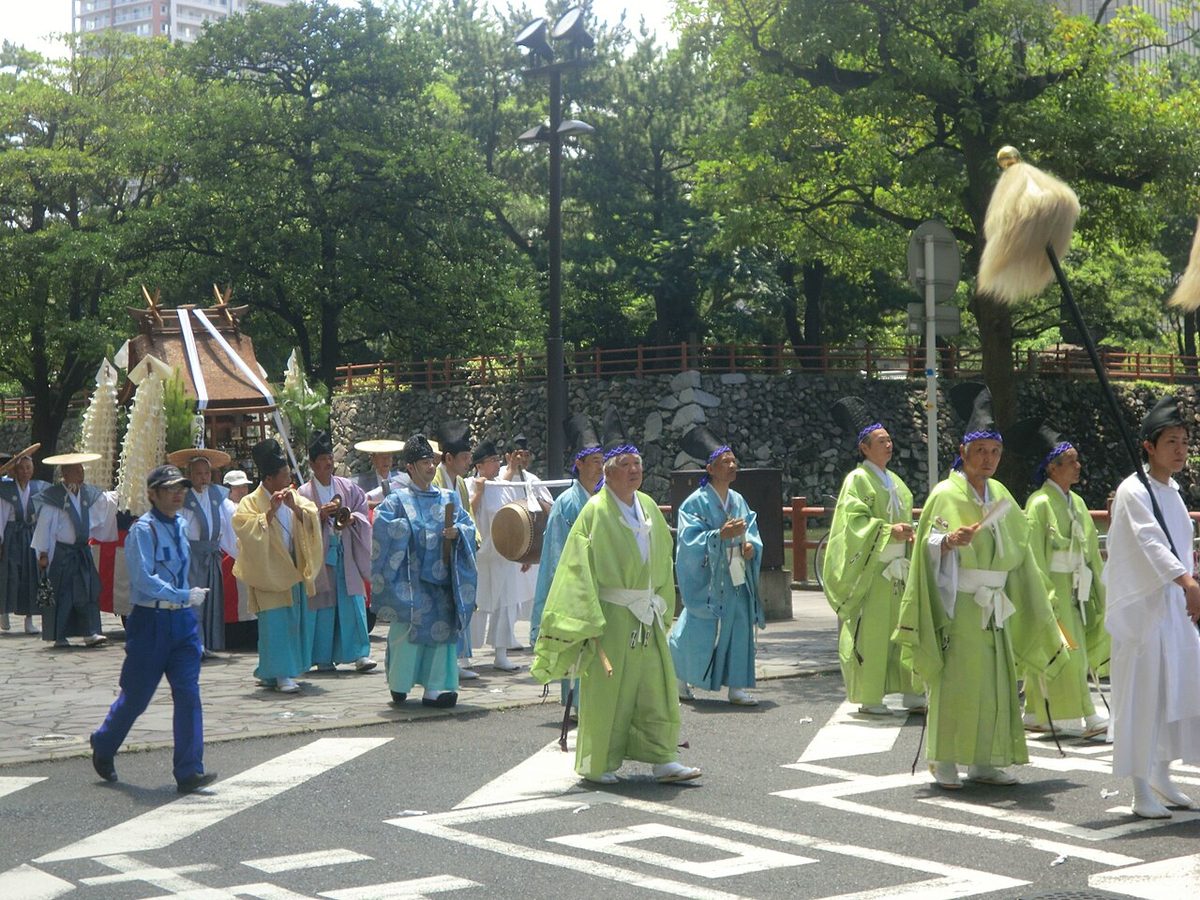
This is Kokura Gion Daiko, and it is not a festival you watch. It is a festival you feel. The taiko drums are enormous, the drummers hit them hard, and the sound waves are physical — you can feel the bass in your teeth. It has been happening in Kokura every July for over 390 years, and in 1958 the event was designated an intangible folk cultural asset of Fukuoka Prefecture. For something intangible, it hits surprisingly hard.
What Is Kokura Gion Daiko?
The festival is built around taiko drumming. Not the polished, choreographed taiko performances you might have seen at concerts or cultural shows — this is raw, competitive, full-volume street drumming. Every neighbourhood and company group in Kokura builds a dashi — a decorated cart — and mounts two large taiko drums on it, one at the front and one at the rear. Four drummers ride the cart and beat the drums in sync, accompanied by jangara (metal gongs) and the chant “Yassa Yare Yare” that echoes through the streets.
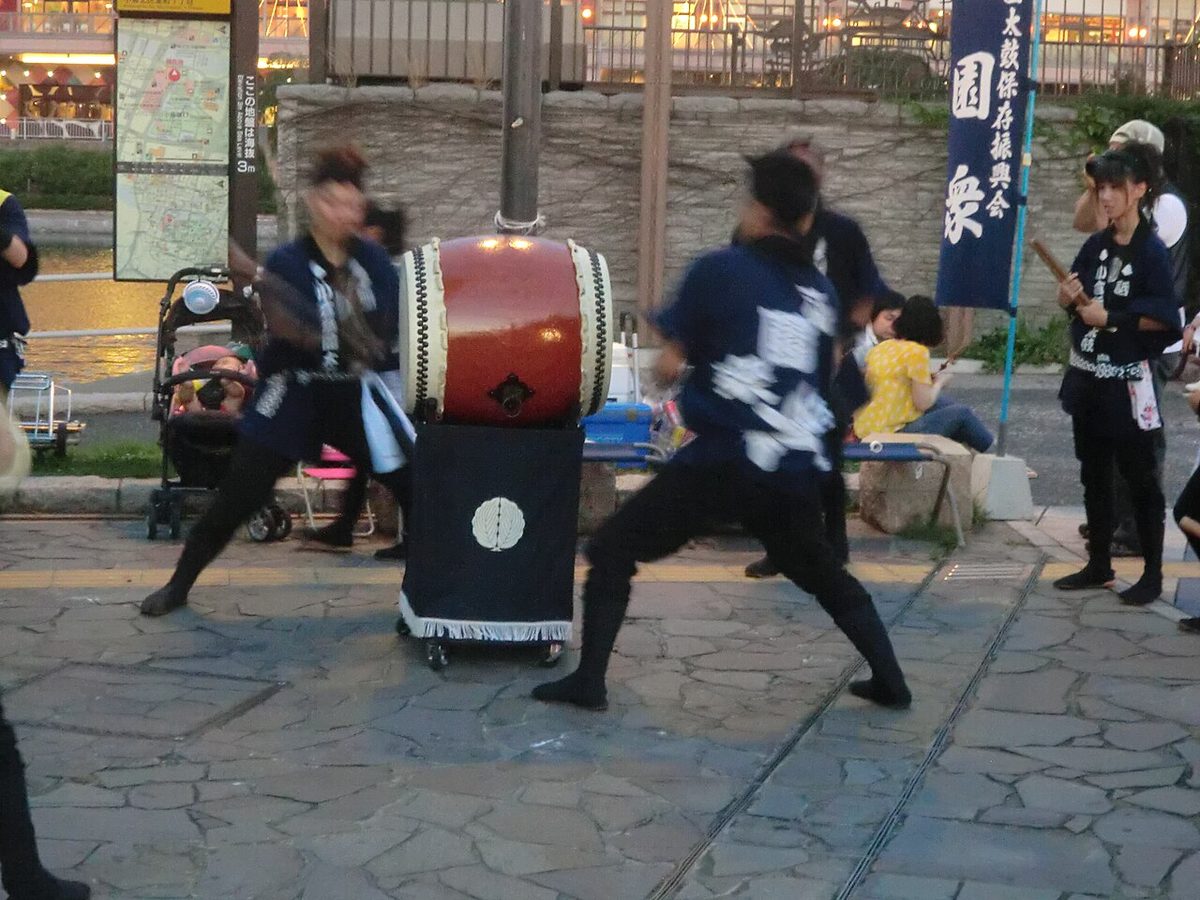
The drumming style is called suedaiko, and it is specific to Kokura. The drummers face outward from the cart, not inward toward each other, which changes the technique and the sound. It is louder, more aggressive, and more rhythmically complex than you might expect from what is technically a religious purification ceremony. The teams practice for months before the festival. Competition between neighbourhoods is fierce — nobody says it is a competition, but nobody wants to be the team that loses the rhythm in front of the whole town.
The Festival Schedule
Kokura Gion Daiko runs during the third week of July, typically from Friday to Sunday. The build-up starts on July 1st with the Uchizome-shiki — the ceremony that inaugurates the taiko practice season. From that day until the festival, you can hear drums echoing through Kokura every evening as the teams rehearse.
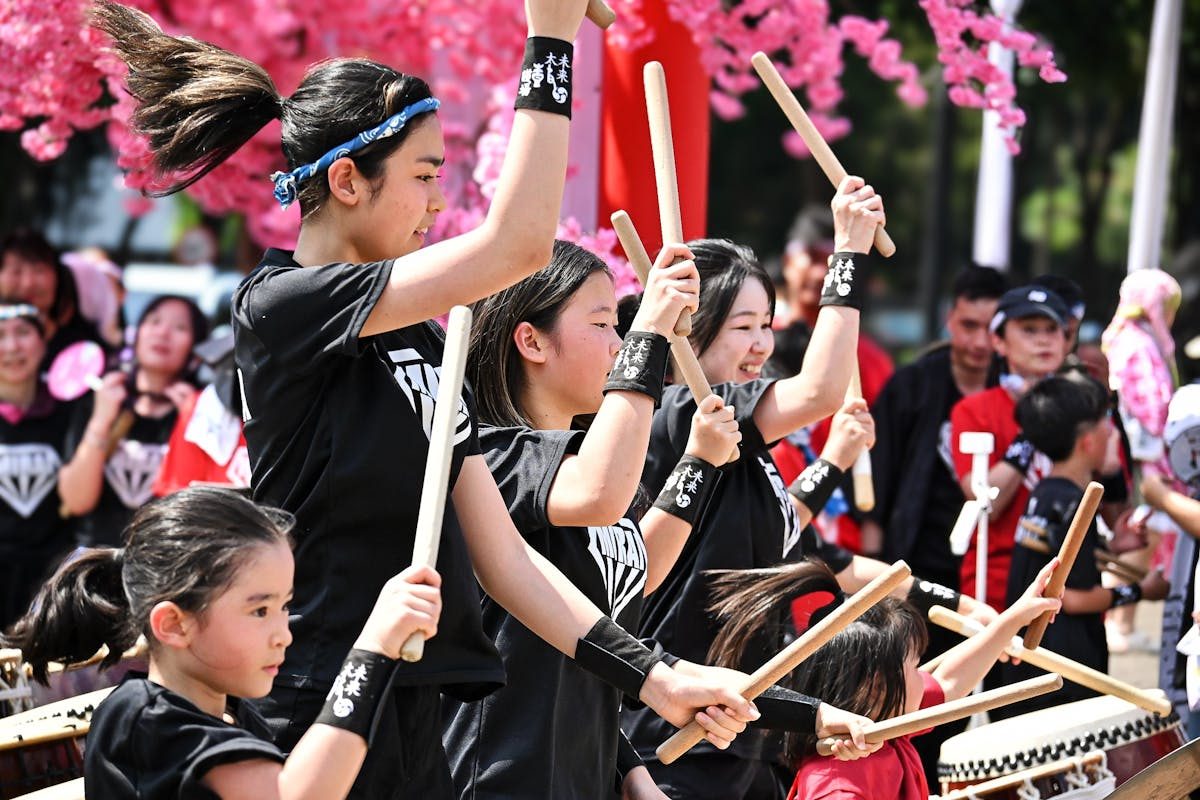
The Taiko Performing Contest is held at Kokura Castle, usually on July 16th. This is the formal competition where teams are judged on technique, rhythm, coordination, and power. Watching it from the castle grounds, with the keep as a backdrop and the drums reverberating off the stone walls, is one of the best experiences in Kitakyushu.
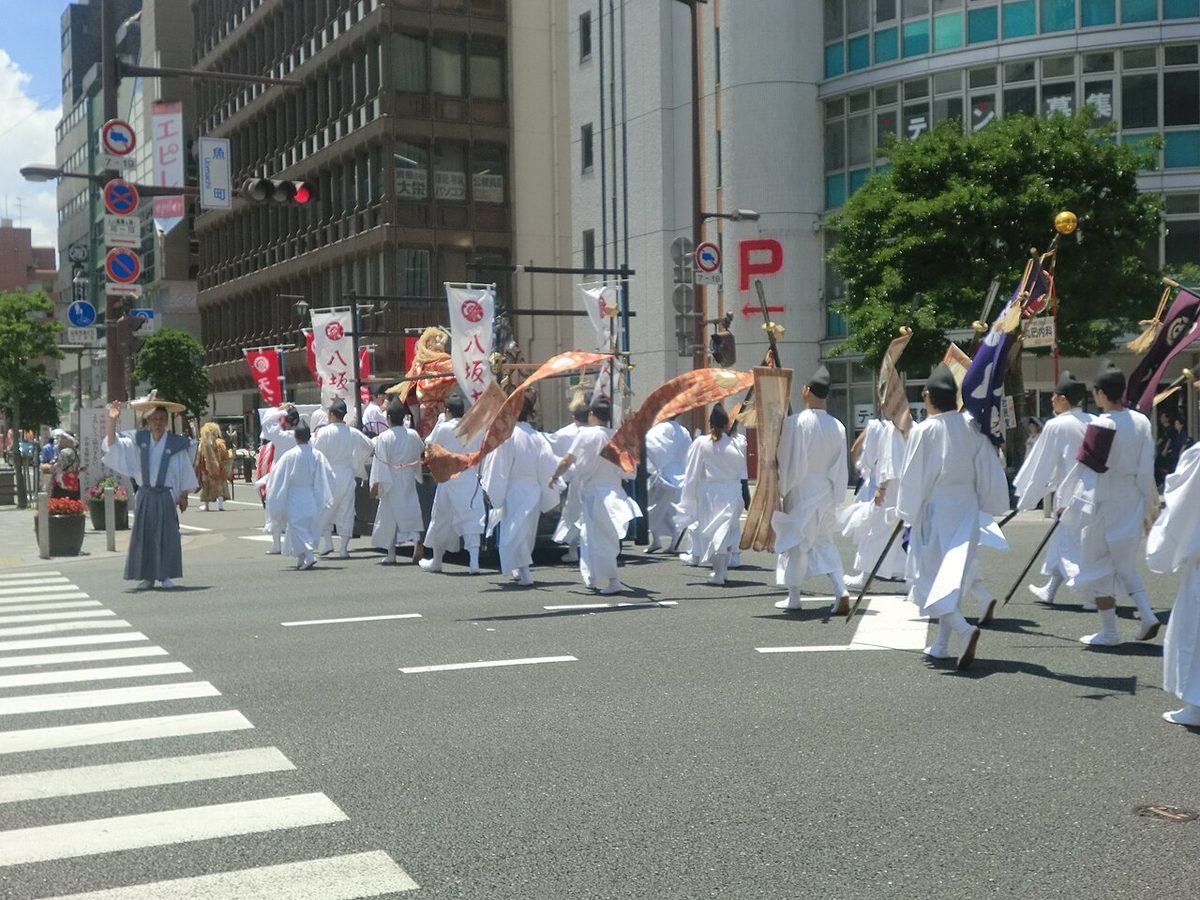
The Taiko Performing Parade is the main public event, held on the Sunday of the third week. The dashi carts are pulled through Komonji-dori, Kokura’s main street, in a procession that lasts hours. Each team performs as they pass, and the sound builds as more carts join the parade. By the end, the drumming from a dozen or more carts overlaps into a continuous wall of rhythm that you feel in your bones.
The Dashi Carts
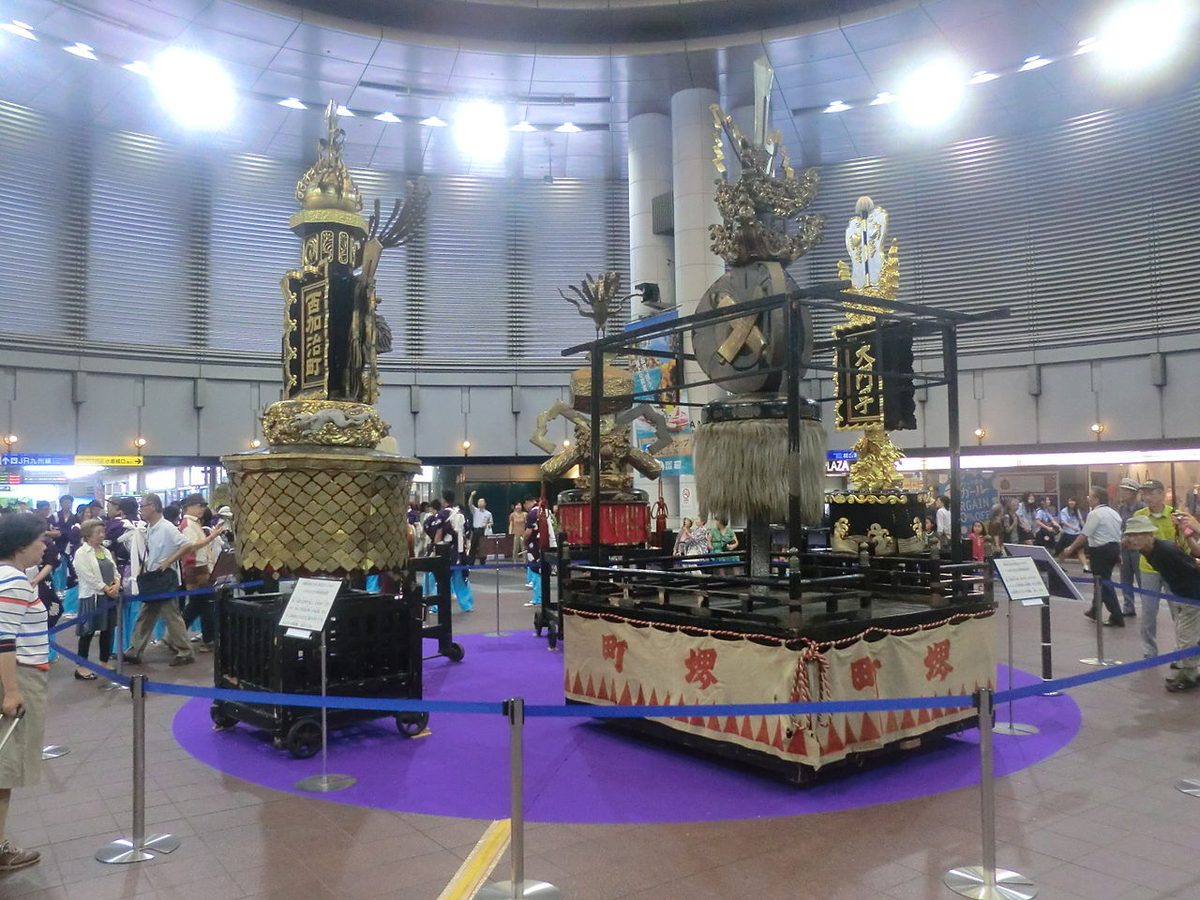
The dashi carts are decorated differently by each neighbourhood, but they all share the same basic structure — a wheeled platform carrying two large taiko drums with space for four drummers. Some are traditional wooden carts decorated with lanterns and banners. Others are more modern. A few are sponsored by local companies and decorated in corporate style, which sounds terrible but somehow works when there is a 200-kilogram drum on top.
The carts are pulled through the streets by teams of 20-30 people on ropes, similar to the hikiyama floats at Karatsu Kunchi — though here the focus is entirely on the drums, not the cart. The float is just a stage. The performance is what matters.
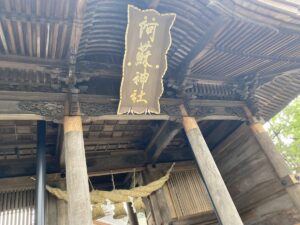
Yasaka Shrine — The Spiritual Home
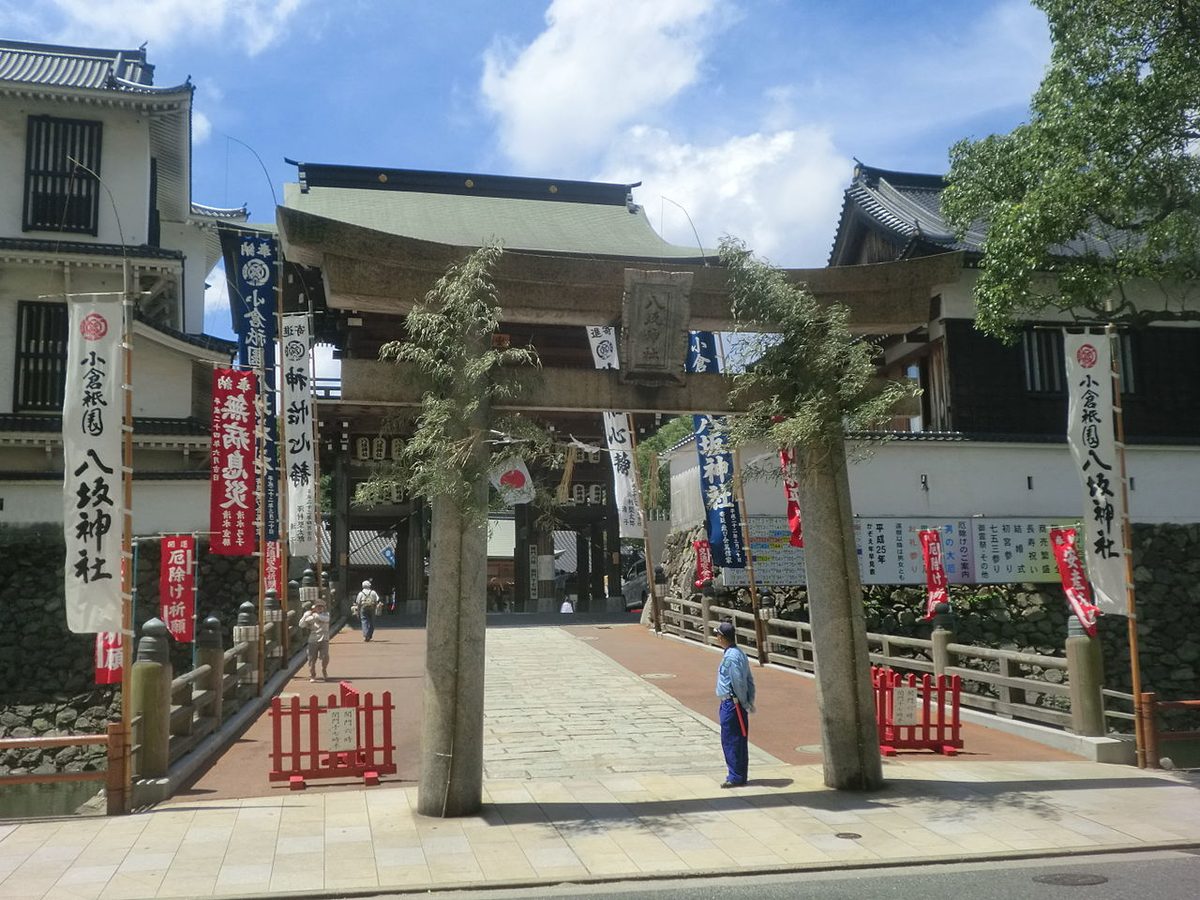
Like most Japanese festivals, Kokura Gion Daiko is rooted in a shrine. Yasaka Shrine in central Kokura is the spiritual home of the festival. The event originated as a Gion matsuri — a purification ceremony to drive away plague and evil spirits during the summer months. The taiko drumming was believed to have spiritual power, literally beating the bad luck out of the air. Whether you believe in the spiritual side or not, standing in front of a wall of taiko drums and feeling your rib cage vibrate makes it easy to understand why people thought sound could purify.
The shrine itself is small and unremarkable for most of the year. During the festival it becomes the gathering point — the dashi carts start and finish their routes here, the ceremonies happen in the shrine grounds, and the food stalls cluster around the entrance. If you visit outside of festival season, there is not much to see beyond a quiet neighbourhood shrine, but the connection to the festival gives it a weight that bigger, flashier shrines sometimes lack.
Getting to the Festival
Kokura Gion Daiko takes place in central Kokura, which is the main urban district of Kitakyushu. Everything happens within walking distance of Kokura Station.
By Shinkansen: Kokura Station is on the Sanyo Shinkansen line. From Hakata (Fukuoka) it is about 15 minutes by Shinkansen (¥2,160) or 80 minutes by local JR train (¥1,310). From Hiroshima about 60 minutes, from Osaka about 2 hours 15 minutes.
From Fukuoka: The cheapest option is the JR local train from Hakata to Kokura (about 80 minutes, ¥1,310). The Shinkansen is faster but significantly more expensive for such a short distance.
Once in Kokura: The castle grounds and Komonji-dori are both within 10 minutes walk of Kokura Station. The Tanga Market and covered shopping arcades are between the station and the festival route — grab dinner on the way.
Practical Information
When: Third week of July, Friday to Sunday. The Taiko Contest at Kokura Castle is usually July 16th. The main parade on Komonji-dori is Sunday.
Cost: Free to watch. The parade and contest are open to everyone.
How long: The parade lasts 2-3 hours. The contest at the castle is shorter — about 90 minutes. If you have one day, see the parade. If you have two, add the castle contest.
Accommodation: Hotels in Kokura fill up during the festival week. Book well in advance or stay in Hakata and take the Shinkansen — it is only 15 minutes.
Combine with: Kokura Castle is a 5-minute walk from the festival route. The Tanga Market (Kokura’s covered food market) is between the station and the parade. Fukuoka’s ramen scene is a quick Shinkansen hop away.
Kokura Gion Daiko is a summer festival that works on a frequency you do not usually get from cultural events. It is not delicate. It is not subtle. It is four people hitting a drum the size of a bath as hard as they can while being pulled down a street on a cart, and it has been happening here since the 1630s. If you are in Kyushu in July, change your plans.