
The dragon was 5 metres tall and it was coming straight at me. Fifty men in white happi coats were hauling it on ropes, chanting in unison, and the crowd was pressed so tight against the buildings that I had nowhere to go. The float passed close enough to touch — lacquered scales glinting gold in the afternoon sun, wooden eyes staring down at the street. Behind it came a giant red lion, then a samurai helmet the size of a car, then a golden sea bream with its mouth open. Each one was being dragged on wooden wheels by teams of men who had been doing this since before dawn.
In This Article
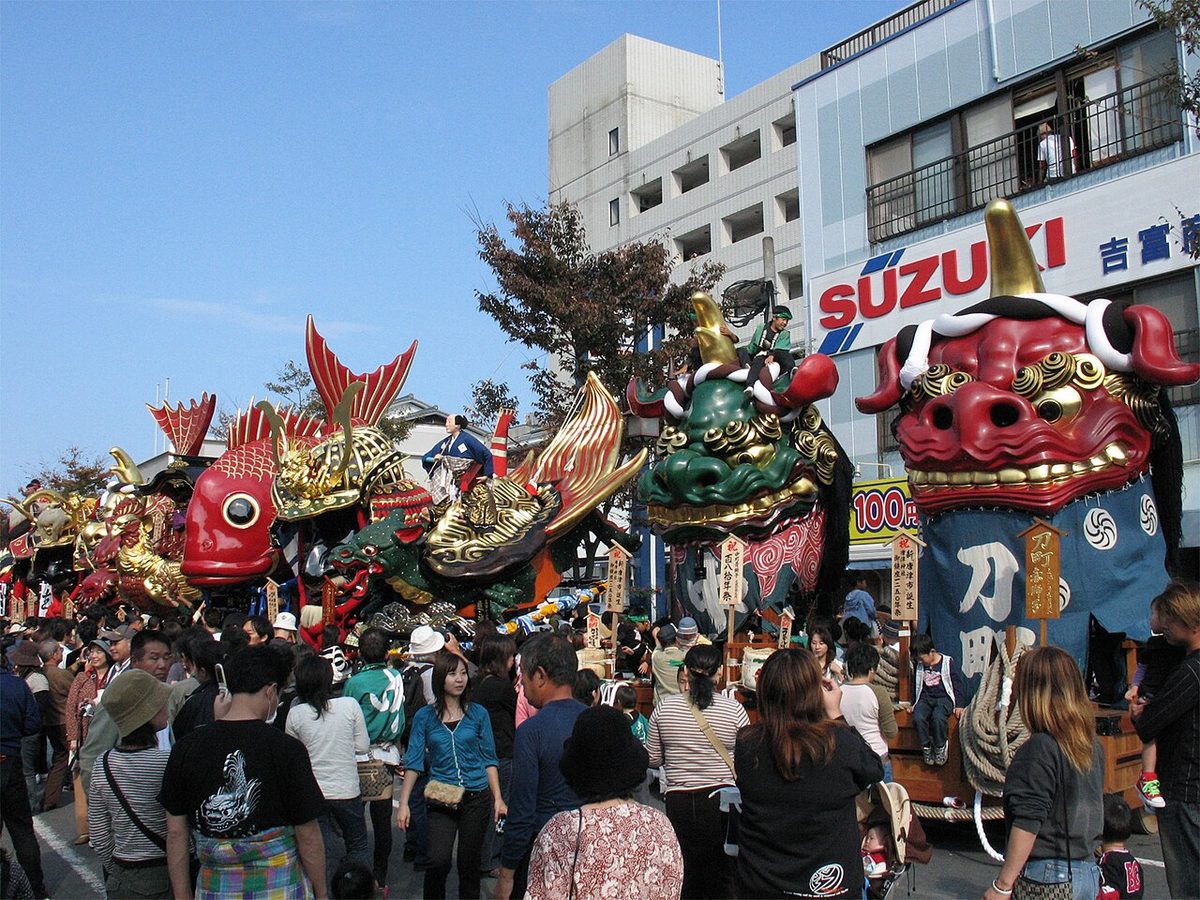
This is Karatsu Kunchi, and it has been happening every November for over 400 years. It is one of the biggest festivals in Kyushu, and one of the most physically intense — 14 massive floats are hauled through the streets of Karatsu over three days by teams who train for months. The floats are not decorated wagons. They are enormous lacquered sculptures — lions, dragons, helmets, fish — built on wooden frames and finished with gold and silver leaf. Some of them took three years to make. The oldest surviving float dates to 1819.
The Three Days
Karatsu Kunchi runs from November 2 to November 4 every year, without exception. The dates do not move for weekends. If November 2 falls on a Tuesday, the festival starts on a Tuesday and half the town takes time off work.
Day 1: Yoiyama — The Night Parade
The festival begins after dark on the evening of November 2. Each of the 14 hikiyama floats is decorated with paper lanterns — hundreds of them — and pulled through the streets of Karatsu’s old town. The effect is extraordinary. These massive sculptures, already impressive in daylight, become something otherworldly when lit from below by candlelight. The dragon’s scales flicker. The lion’s eyes glow. The streets are packed and the air smells like grilled food from the yatai stalls that line every corner.
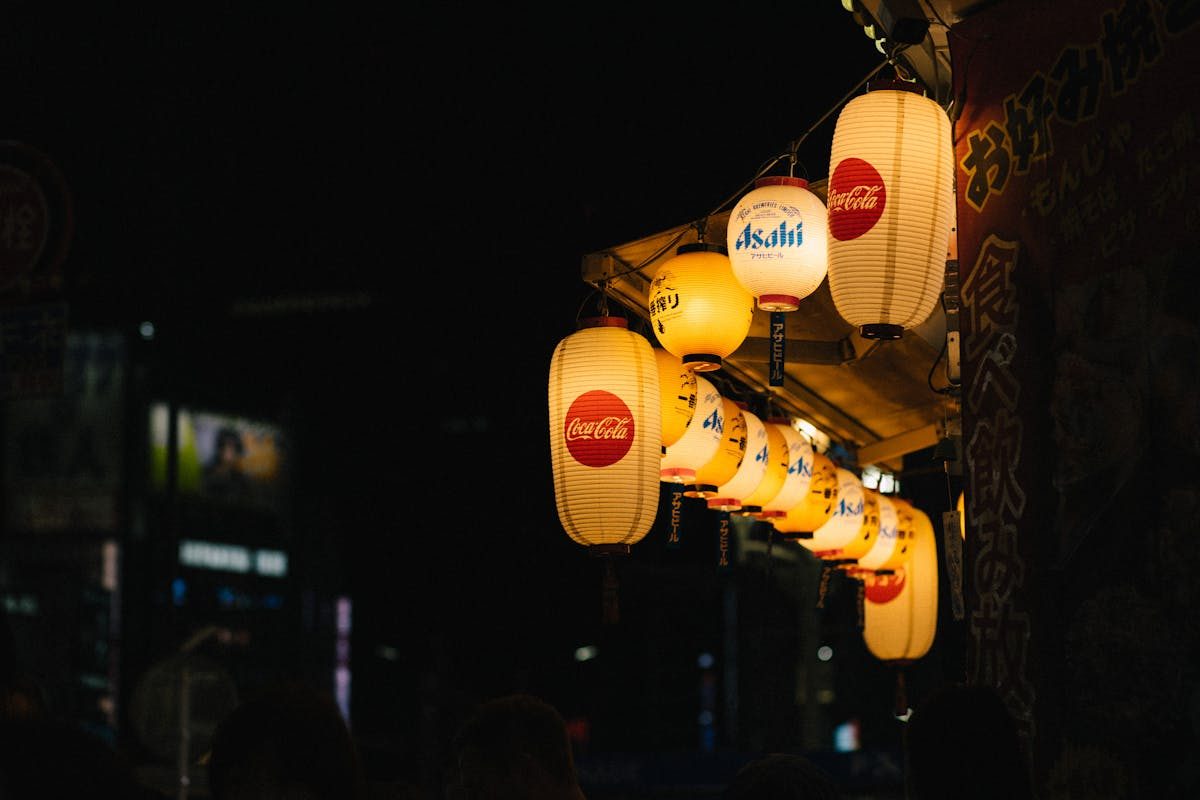
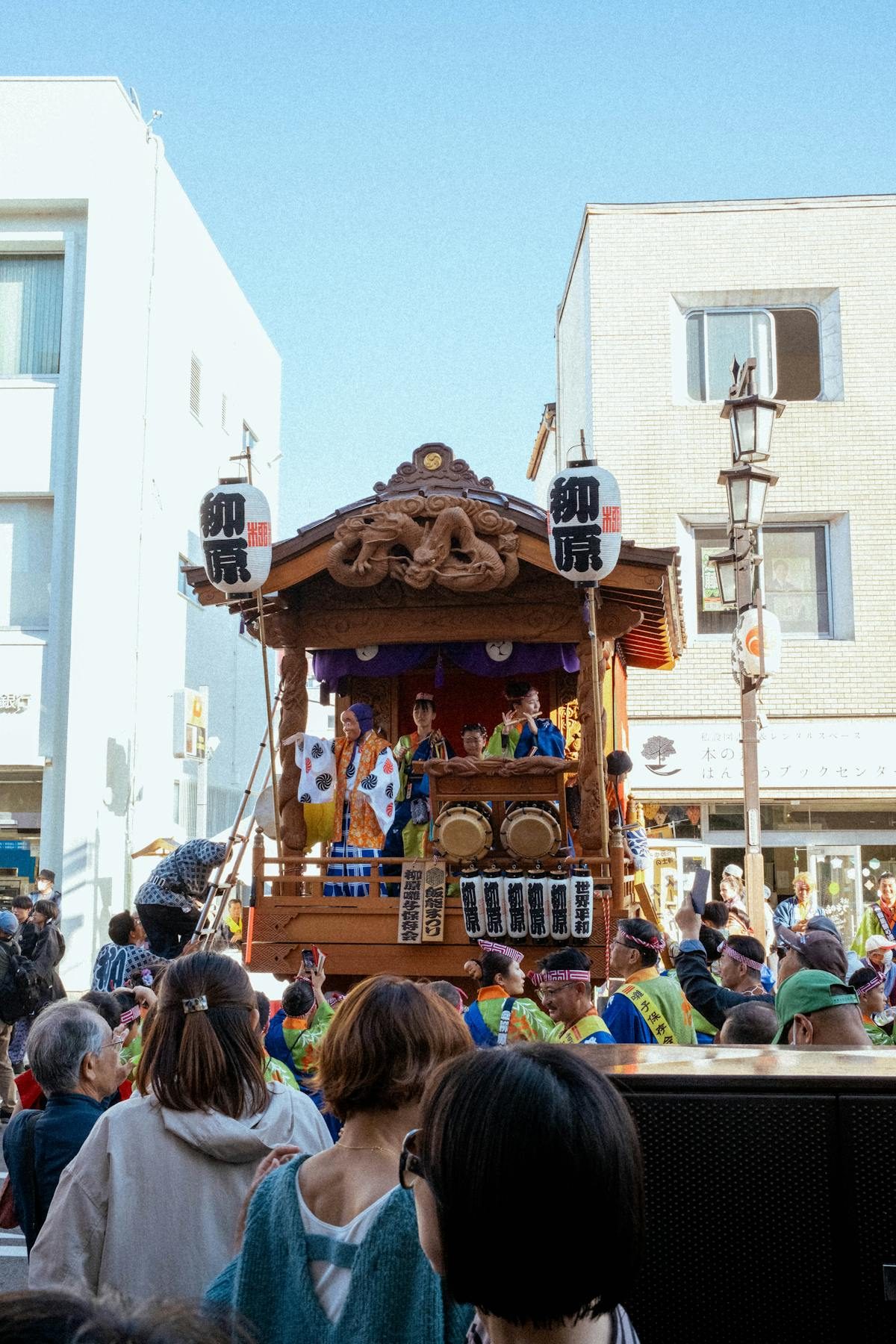
The soundtrack is drums and flutes — the same melodies that have been played at this festival for centuries. Each neighbourhood has its own float and its own team of musicians. The teams compete not formally but through pride. Nobody wants to be the neighbourhood whose float stalls on a corner or whose drummers lose the rhythm.
Day 2: Otabisho Shinko — The Beach Pull
This is the main event and the image that defines Karatsu Kunchi. On the morning of November 3, all 14 floats are hauled from the town centre to Nishinohama Beach. When they reach the sand, the pulling teams do not stop. They drag the floats — each one weighing several tonnes — directly across the beach to their resting positions near the water.
Pulling a multi-tonne float across sand is exactly as difficult as it sounds. The wooden wheels sink. The ropes strain. The teams dig in, lean forward, and haul in coordinated bursts while the crowd roars. It is raw, physical, and completely thrilling. When a float gets stuck — and they do — the team regroups, the chanting intensifies, and they pull harder. There is no backup plan. No tractors. Just ropes and muscle and 400 years of practice.
Day 3: The Return
On November 4, the floats are pulled back through town to their storage sheds at Karatsu Shrine. The atmosphere on the final day is different — less spectacle, more emotion. The festival is ending for another year. The teams are exhausted. Some of the older participants are visibly moved as their float goes back into storage. Then the town goes quiet, the yatai stalls pack up, and Karatsu goes back to being a sleepy castle town until next November.
The Hikiyama Floats
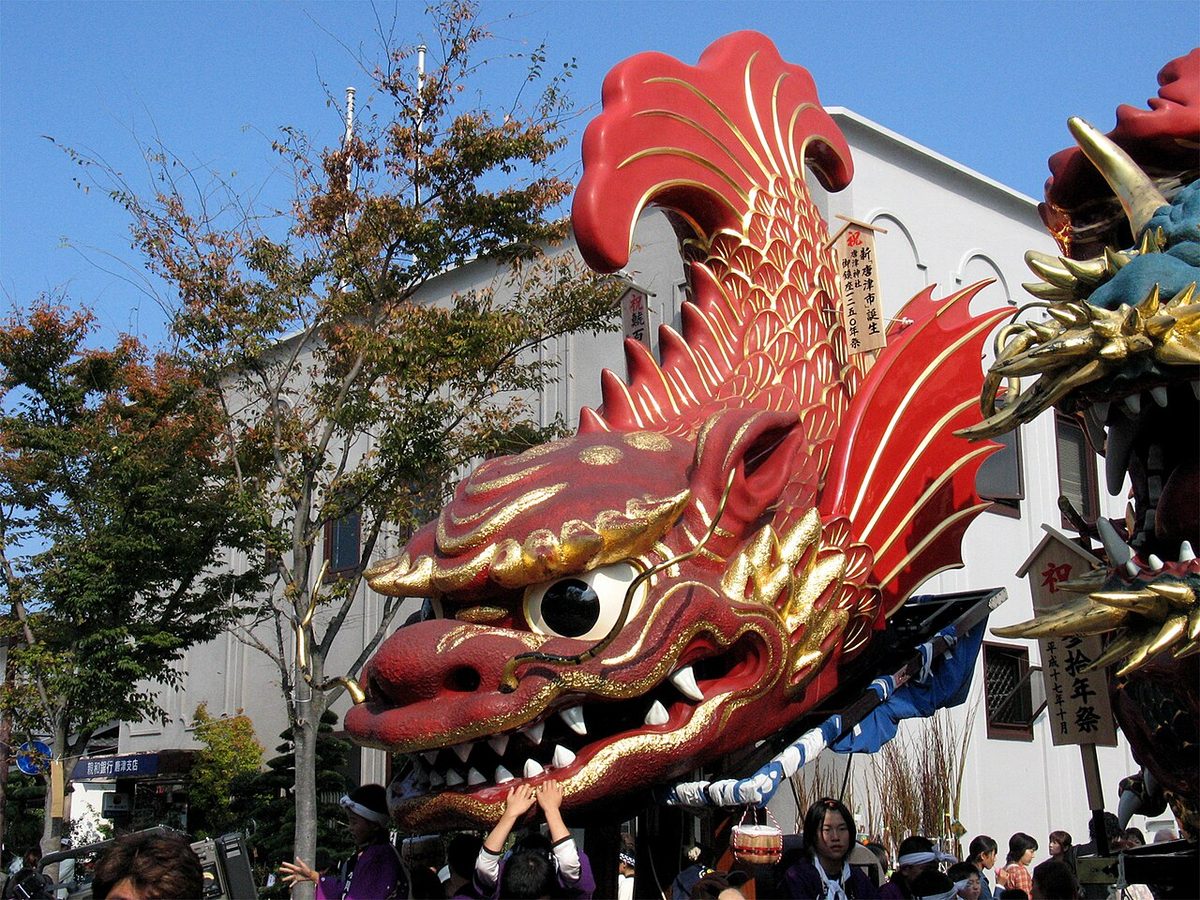
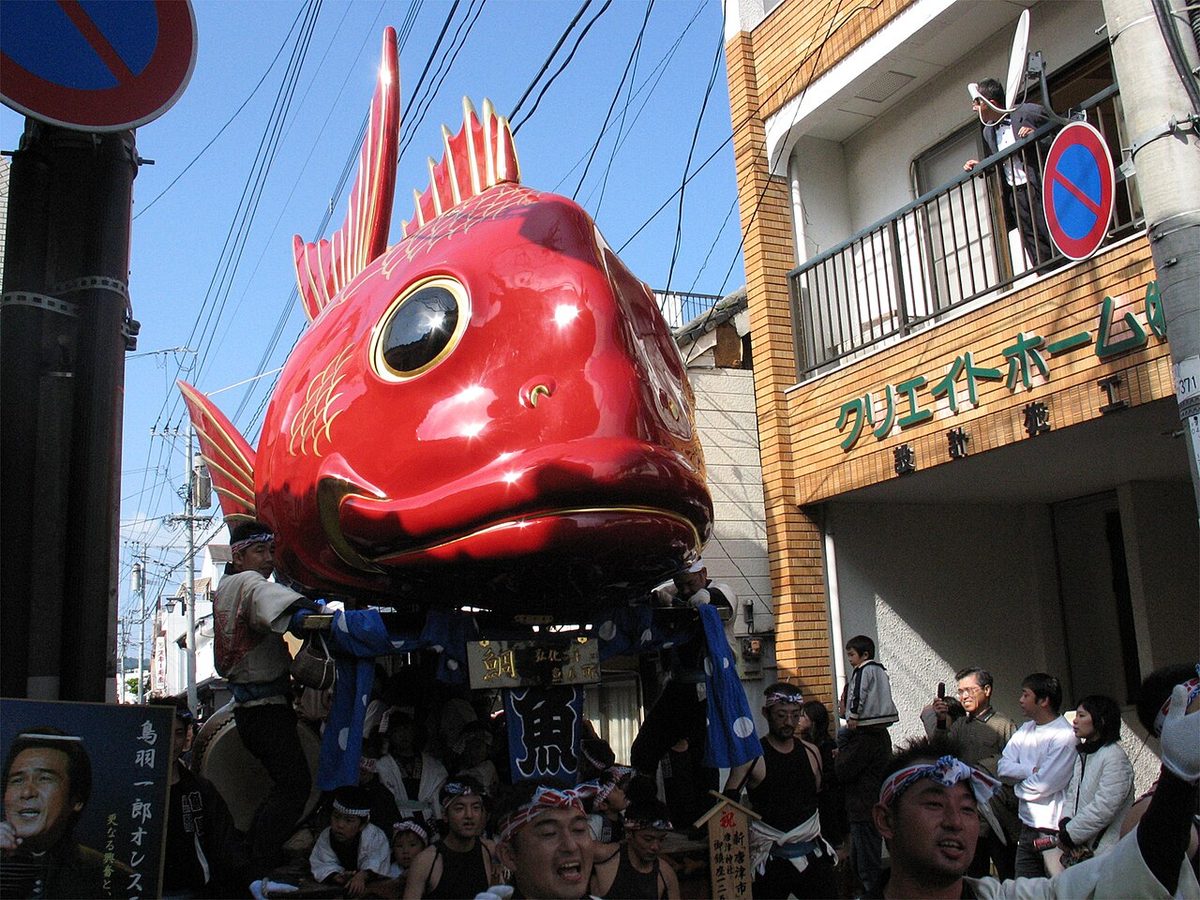
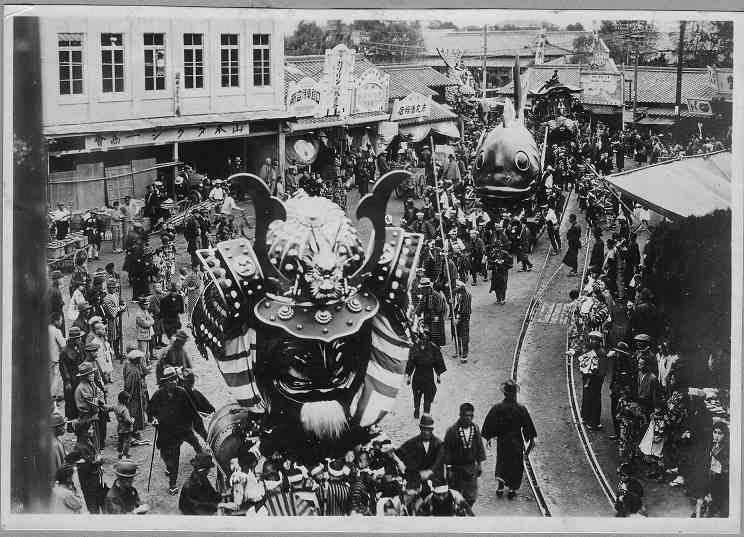
There are 14 hikiyama floats in total, each one representing a different neighbourhood of Karatsu. They are not decorated platforms like most Japanese festival floats. They are three-dimensional sculptures — full figures moulded over wooden frames, then layered with washi paper, lacquered, and finished with gold and silver leaf. The craftsmanship is museum-quality.
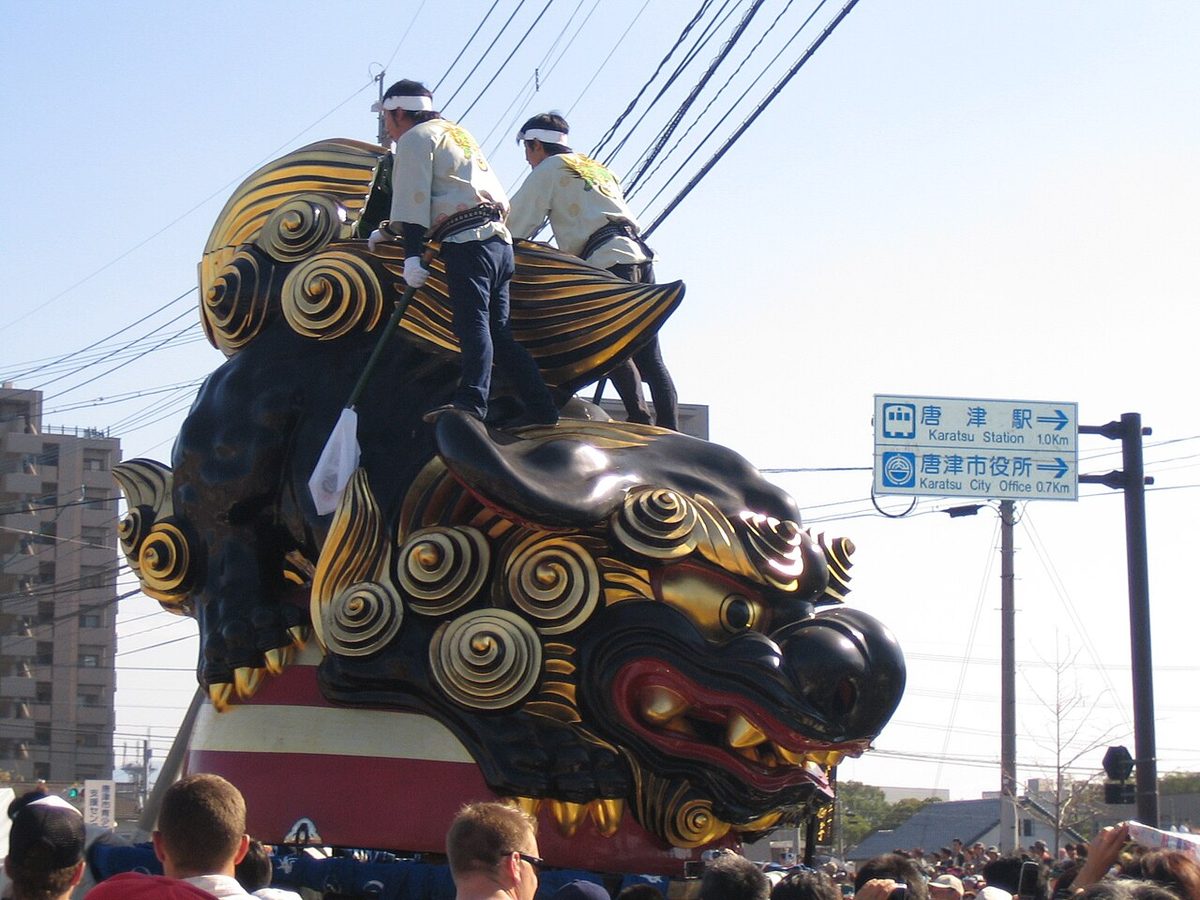
The designs range from animals to objects to mythological creatures. There is a red lion, a golden lion, a sea bream (tai — the symbol of celebration in Japan), a dragon, a phoenix, a samurai helmet, and a turtle, among others. Each one is between 3 and 7 metres tall. The oldest surviving float, the Akajishi (red lion), was built in 1819. The newest was added in 1876 — no new floats have been built since, making each one irreplaceable.
Seeing the Floats Year-Round
If you cannot visit during the festival, the floats are on permanent display at the Hikiyama Float Exhibition Hall (曳山展示場) next to Karatsu Shrine. The hall is climate-controlled to preserve the lacquer and gold leaf, and all 14 floats are arranged in their parade order. Seeing them up close, without the crowds, gives you a chance to appreciate the craftsmanship — the individual scales on the dragon, the texture of the lion’s mane, the precision of the gold leaf work. Entry is ¥310.
Karatsu Shrine
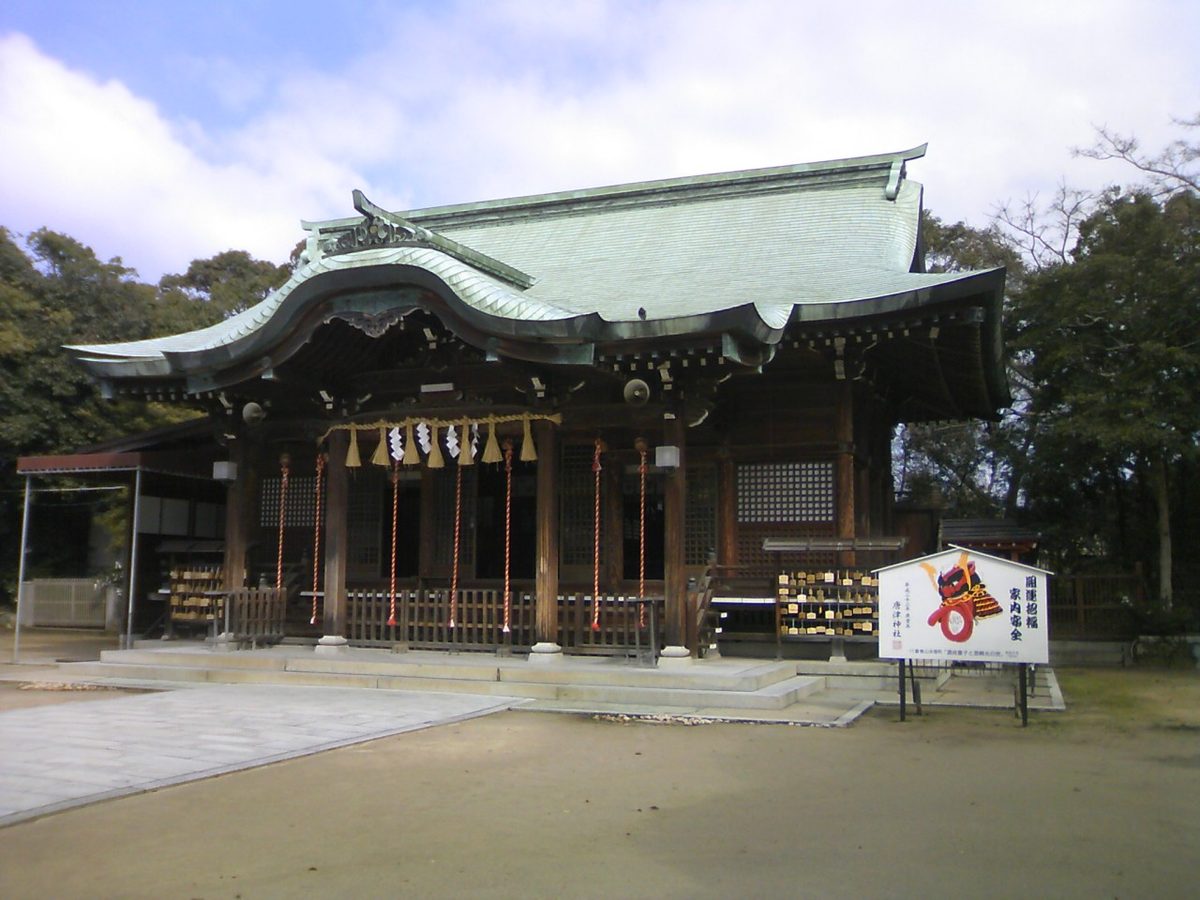
Karatsu Kunchi is technically a festival of Karatsu Shrine (唐津神社), and the whole event is a religious procession — the floats escort the shrine’s portable mikoshi (divine palanquin) on its annual journey through the town. The shrine itself is modest, tucked into a wooded hillside near the coast. It has been here since the 8th century, though the current buildings are more recent. On festival days the shrine grounds are packed with food stalls and worshippers. The rest of the year it is quiet and worth a brief stop on the way to the exhibition hall.
Getting to Karatsu
Karatsu is in Saga Prefecture, on the north coast of Kyushu facing the Sea of Japan. It is surprisingly close to Fukuoka — about an hour by train.
From Fukuoka: Take the JR Chikuhi Line from Hakata or Tenjin-Minami to Karatsu Station. About 70 minutes, around ¥1,200. During the festival, extra services run and the trains are packed — go early.
By car: About 70 minutes from central Fukuoka via the Nishi-Kyushu Expressway. Parking during the festival is extremely limited — use the train.
From other Kyushu cities: Karatsu is also accessible from Saga City (40 minutes by JR) and makes a good stop between Fukuoka and Nagasaki if you are doing a road trip along the north coast.
Practical Information
Festival dates: November 2-4, every year. Dates are fixed — they do not move for weekends.
Best day to visit: November 3 for the beach pull (Otabisho Shinko). November 2 evening for the lantern parade (Yoiyama). November 4 is quieter.
Cost: Free to watch. The exhibition hall is ¥310.
Accommodation: Book months in advance if you want to stay in Karatsu during the festival. The town has limited hotel capacity and everything fills up. Alternatively, stay in Fukuoka and take the early morning train — the JR Chikuhi Line runs direct.
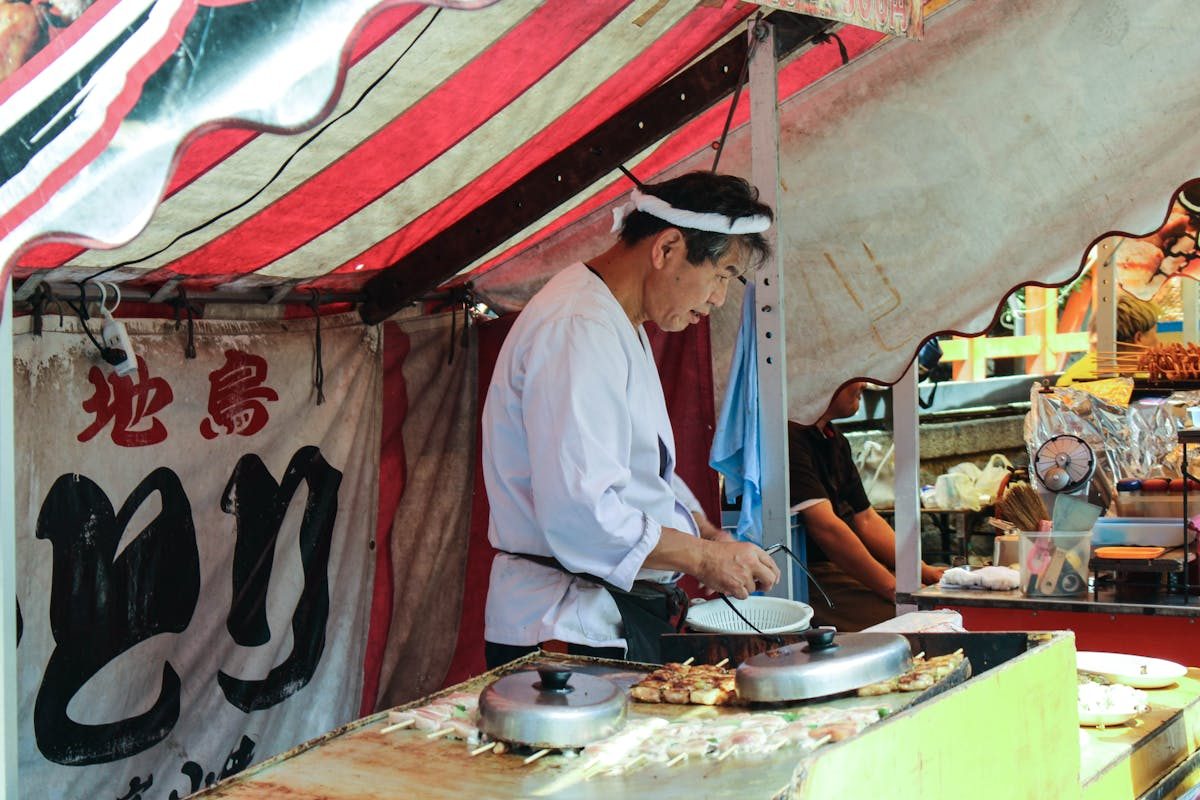
Food: The yatai stalls during the festival are excellent. Look for ikayaki (grilled squid — Karatsu is famous for squid), yakitori, and takoyaki. The stalls are concentrated around Karatsu Shrine and along the main parade route.
Also visit: Karatsu Castle and the pine forest at Niji-no-Matsubara are both walking distance from the festival route. If you are in town anyway, combine them.
Karatsu Kunchi is not a polished tourist event. It is a real working festival — loud, crowded, physical, and deeply tied to the identity of every neighbourhood in the town. The floats are not props. They are 200-year-old works of art being dragged across a beach by people whose grandparents did exactly the same thing. That combination of beauty and brute force is what makes it one of the best festivals in Japan.
You Might Also Enjoy
 Visiting Kokura Castle — A Shinkansen Stopover Worth Making
 Nagasaki Kunchi — The 400-Year-Old Festival You Have Never Heard Of
 Kitsuki Castle and the Sandwich Town — Japan’s Smallest Castle and Best-Preserved Samurai District
 Kyokusui-no-en at Dazaifu Tenmangu — A Thousand-Year-Old Poetry Ceremony in Kyushu