Eight million people visit this shrine every year. Most of them are students. They come with the same desperate hope — that a man who died in exile over a thousand years ago will help them pass their exams. The shrine sells good luck charms by the box and the ema boards are buried under thousands of handwritten prayers. It sounds like pure superstition until you learn who Sugawara Michizane actually was, and then it makes a strange kind of sense.
In This Article
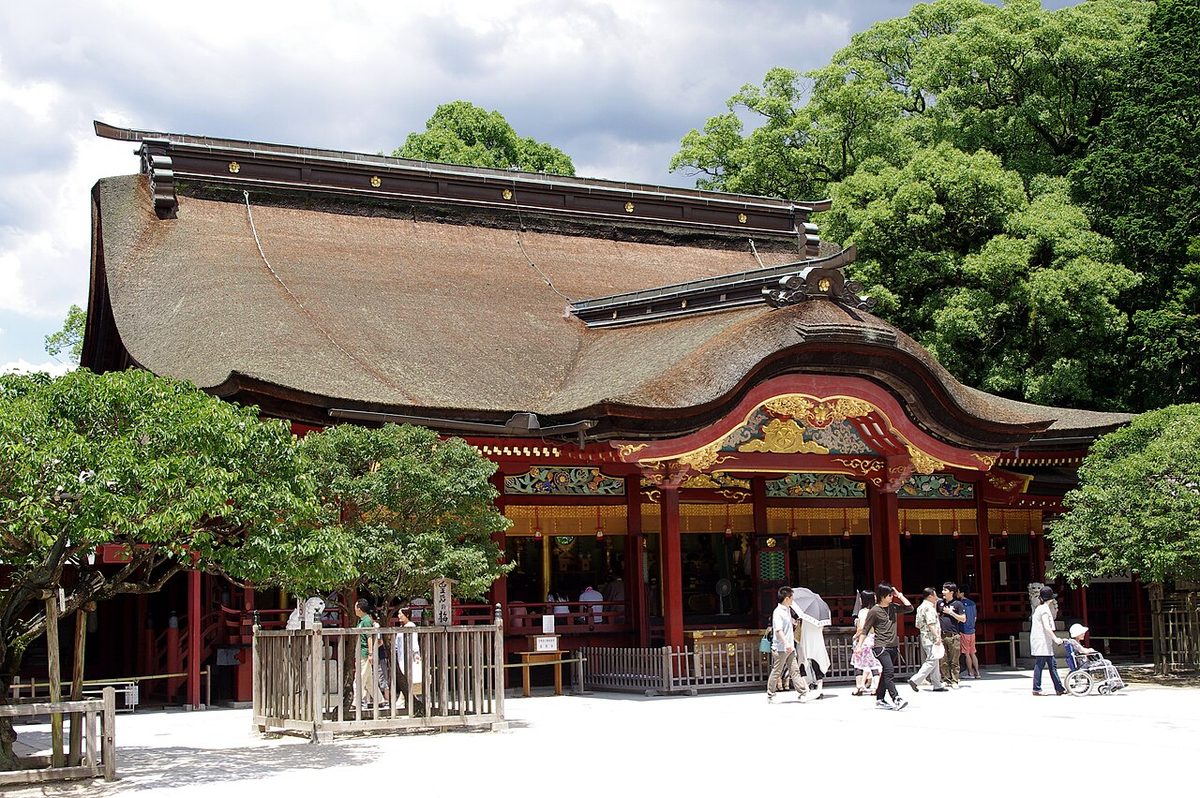
Dazaifu Tenmangu is the most important of the hundreds of Tenmangu shrines across Japan (the other major one is Kitano Tenmangu in Kyoto). It was built on the grave of Sugawara Michizane, a 9th-century scholar, poet, and politician who was falsely accused by his rivals, exiled to Dazaifu, and died here in 903. After his death, a series of disasters in Kyoto convinced the court that his angry spirit was taking revenge, and they deified him as Tenjin — the god of learning. The full story is told in our article on the Kyokusui-no-en ceremony, which takes place in the shrine’s garden every March.
The Approach
From Dazaifu Station, the approach to the shrine is a straight 250-metre walk through a covered shopping street. Every shop on this street sells one of three things: umegae mochi (grilled rice cakes stamped with a plum blossom), lucky charms, or souvenirs. The mochi are the reason to stop — they have been sold here since the Kamakura period and they are still grilled fresh in front of you. About ¥130 each. Eat one warm while you walk.
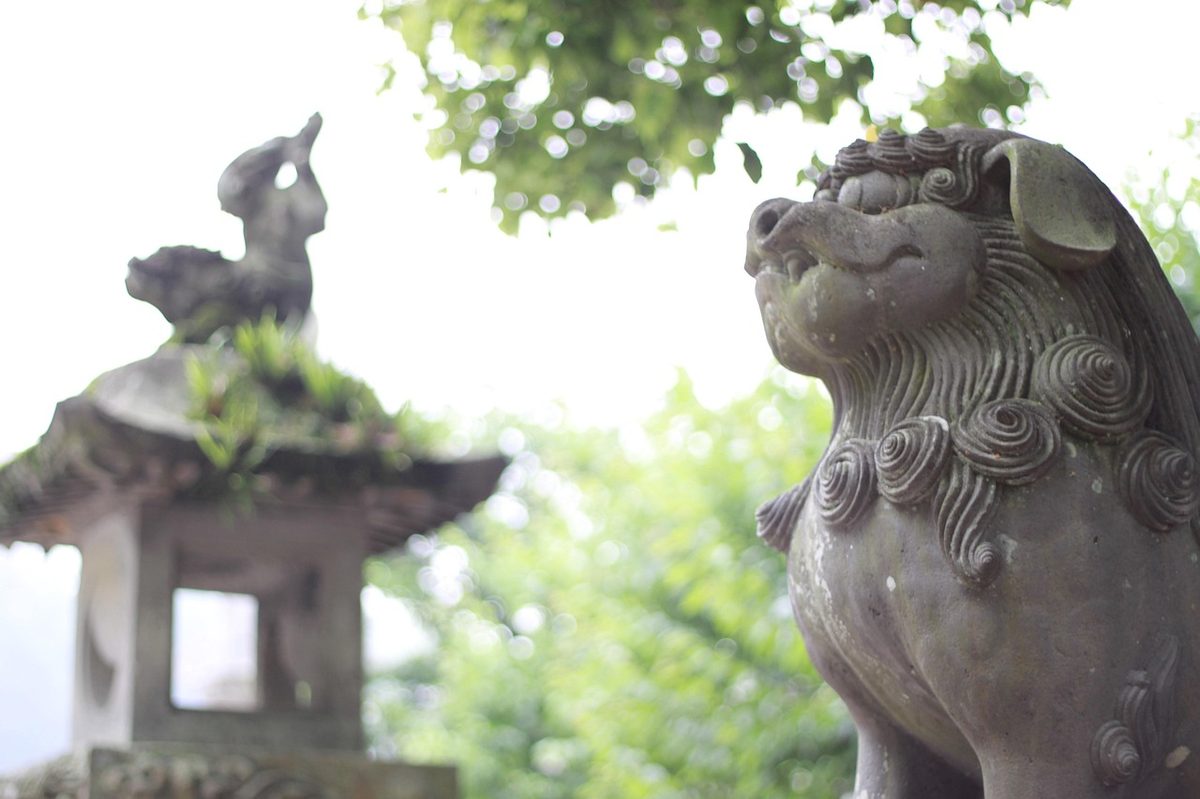
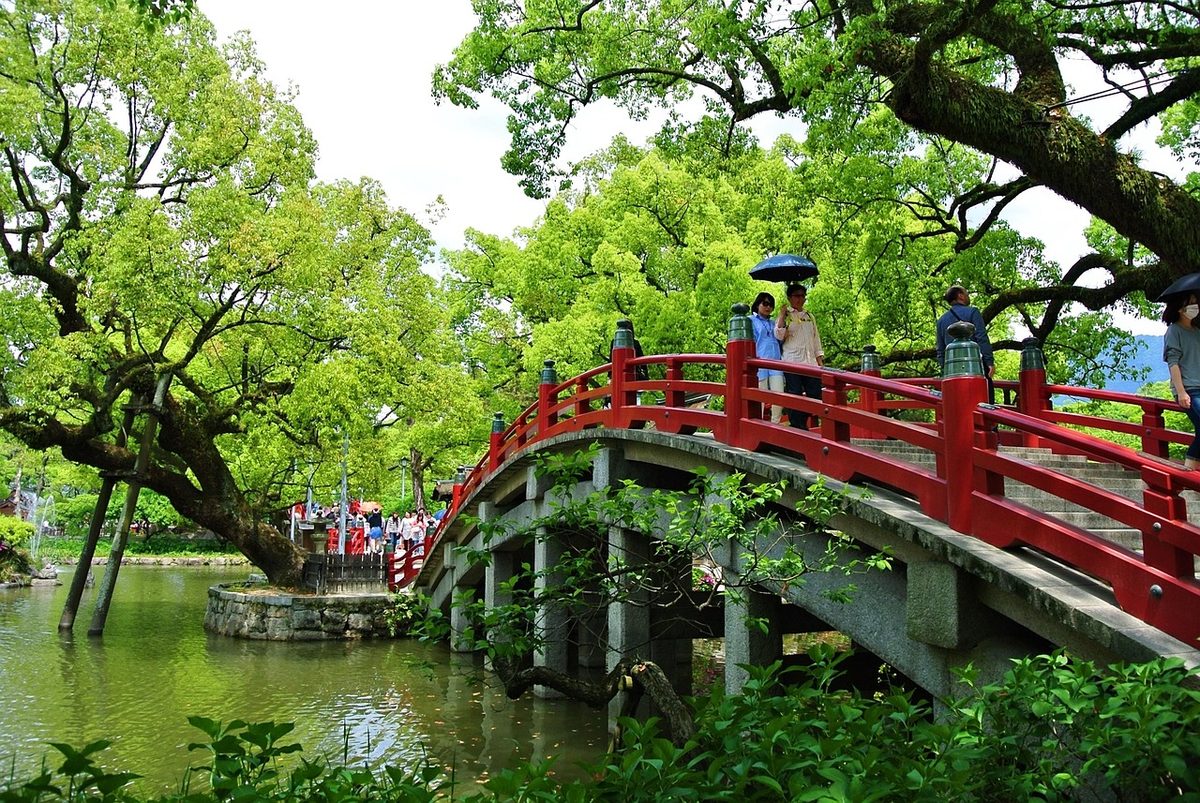
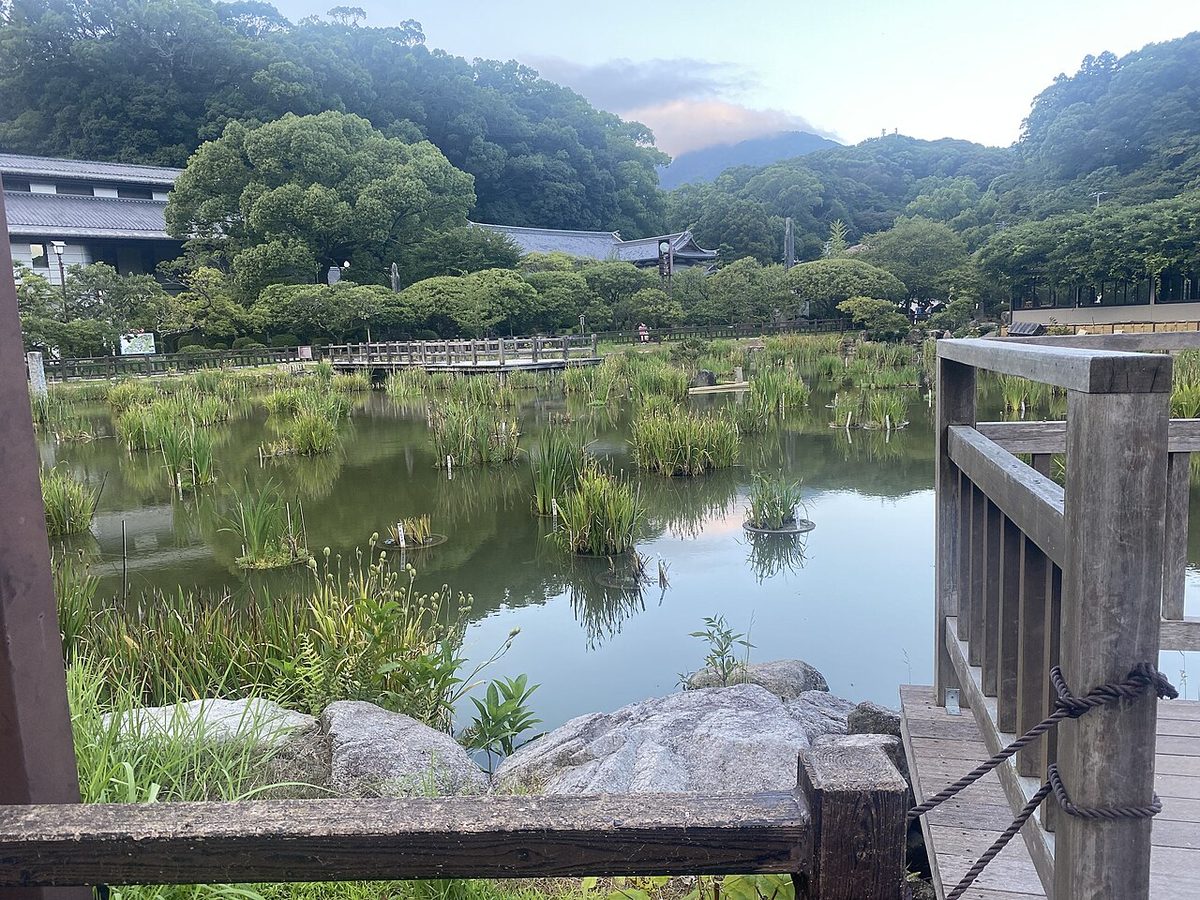
At the end of the shopping street, you pass through a large torii gate and enter the shrine grounds. The first thing you see is the pond — built in the shape of the Japanese character for “heart” (心), though you need to be fairly high up to notice the shape. Three arched bridges cross the pond, representing the past, present, and future.
The Main Hall and Tobiume
Beyond the bridges, a walled courtyard holds the main hall — the honden. The current building dates to 1591 and is one of the finest examples of Momoyama-period shrine architecture in Kyushu. It sits directly over Michizane’s burial site. The shrine has never been moved, even when the building was rebuilt.
Important note: The main hall has been undergoing major renovation since May 2023, expected to continue until around May 2026. During the renovation, a temporary offering hall has been built in front of the main hall — it has a living garden planted on its roof, with grass and trees growing on top. It is genuinely striking and worth seeing in its own right, though it may be gone by the time you visit if the renovation finishes on schedule.
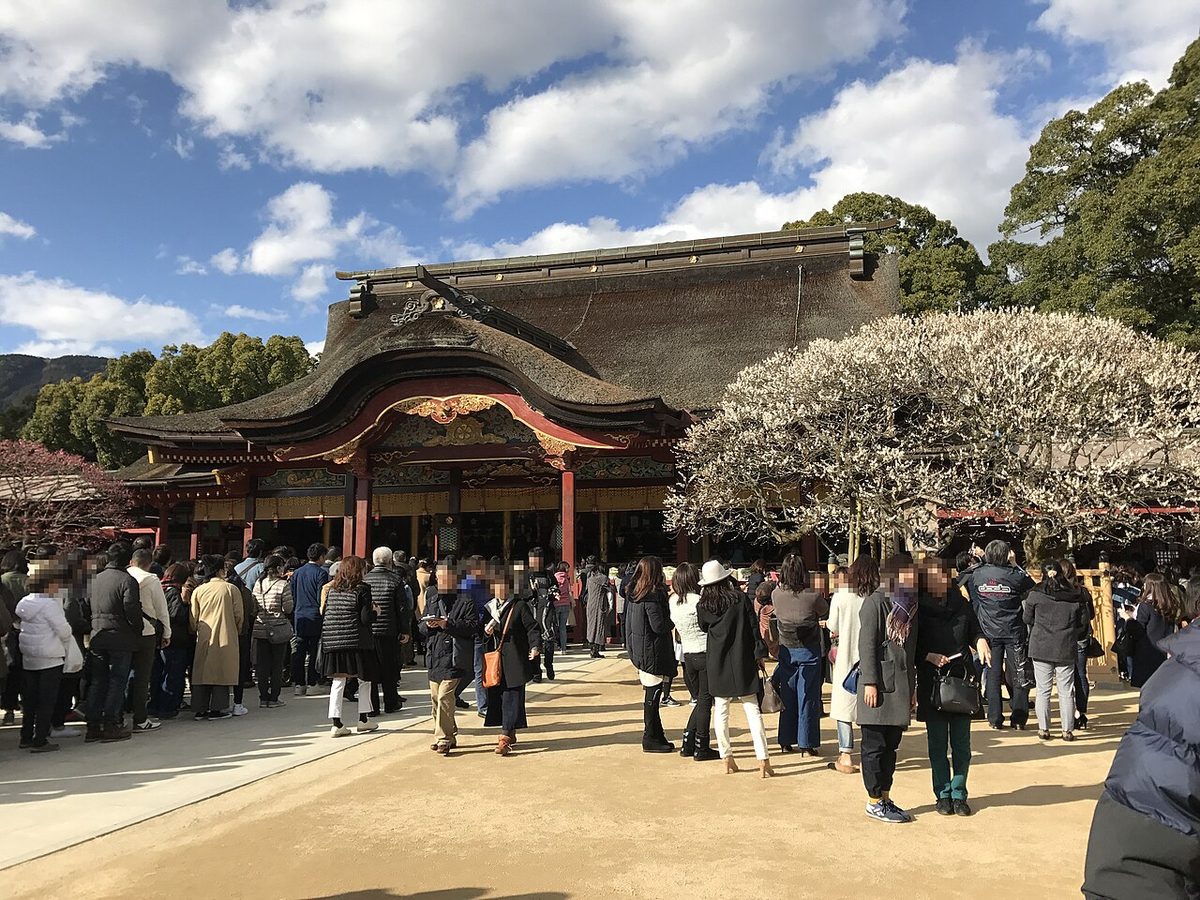
To the right of the main hall stands the tobiume — the legendary “flying plum tree.” When Michizane was forced to leave Kyoto, he wrote a famous poem to the plum tree in his garden, asking the blossoms to follow him. According to tradition, the tree uprooted itself and flew to Dazaifu. The plum tree that stands here today is said to be that tree, and it is always the first to bloom on the shrine grounds — usually in late January or early February, ahead of the other 6,000 plum trees.
Students and Luck
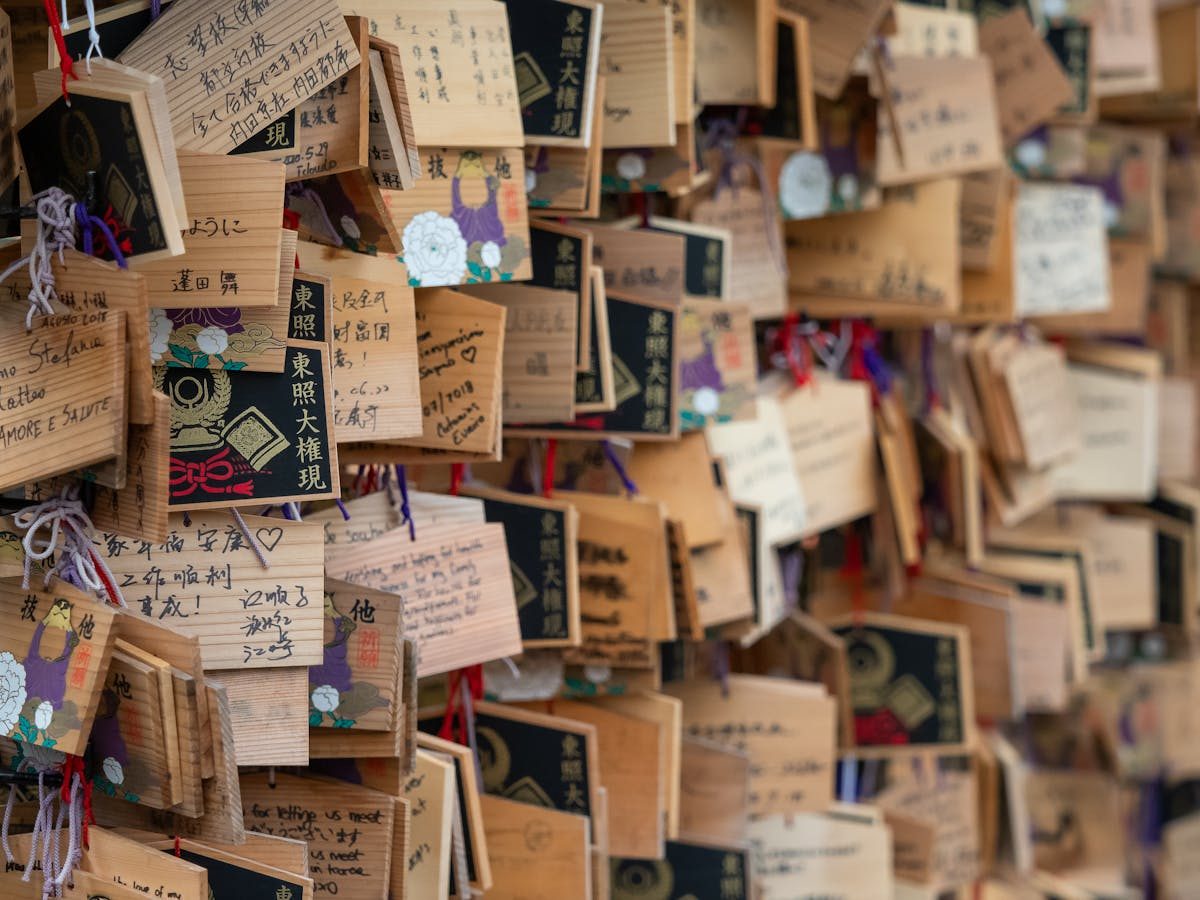
Because Michizane was one of the greatest scholars of his era, his spirit is associated with academic success. Dazaifu Tenmangu sells more education-related good luck charms than any other shrine in Japan. During entrance exam season — January through March — the shrine is packed with students buying charms, writing wishes on ema boards, and praying at the main hall. The atmosphere during exam season is intense. You can feel the anxiety.
The charms range from simple wooden plaques (ema) where you write your wish, to elaborate omamori bags that you carry in your pocket or hang on your school bag. There are charms for university entrance exams, high school exams, professional certifications, and general academic improvement. The shrine does not discriminate — any kind of test is covered.
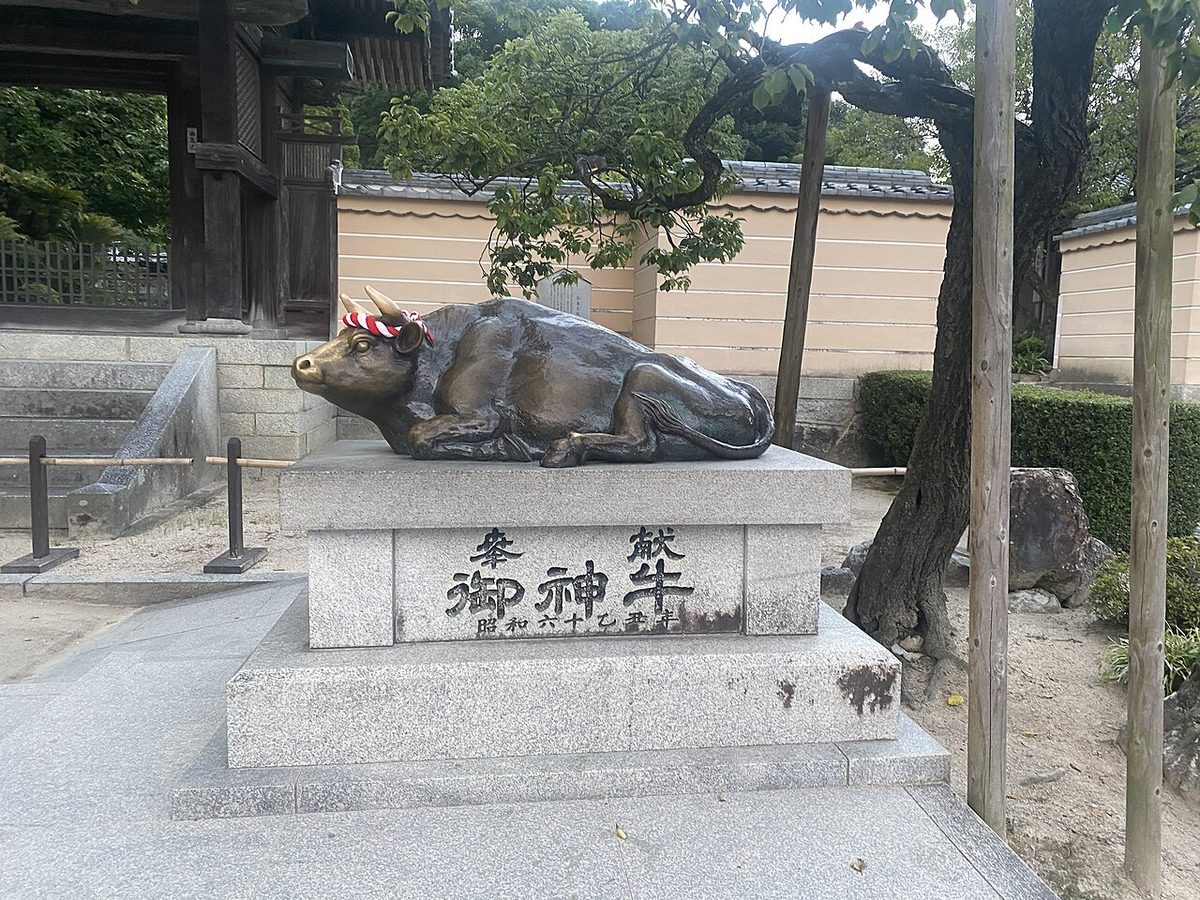
The bronze bull statues around the shrine are another tradition. According to legend, the ox that carried Michizane’s body refused to move from the burial site — which is why the shrine was built here. Rubbing the bull’s head is supposed to improve your own intelligence. The noses and foreheads are polished to a mirror shine by millions of hopeful hands.
The Grounds
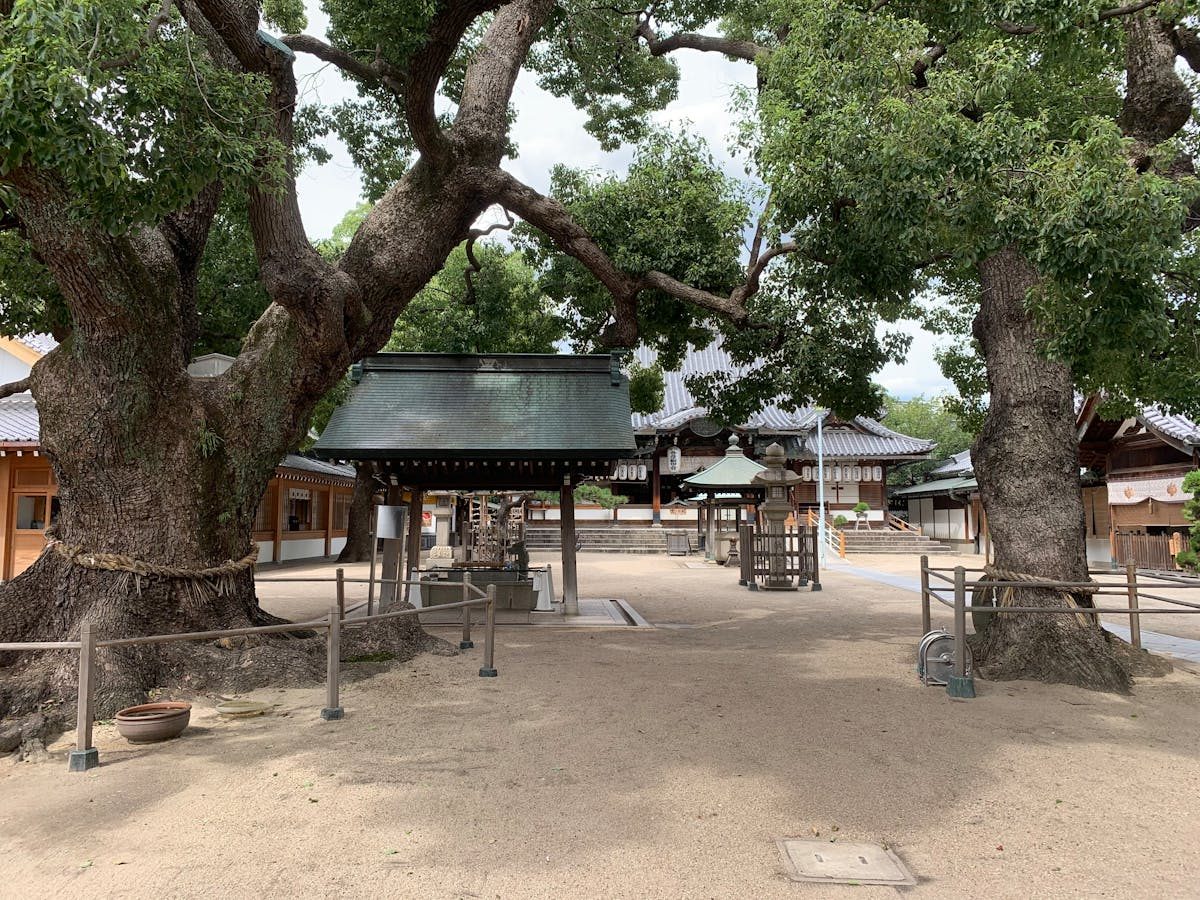
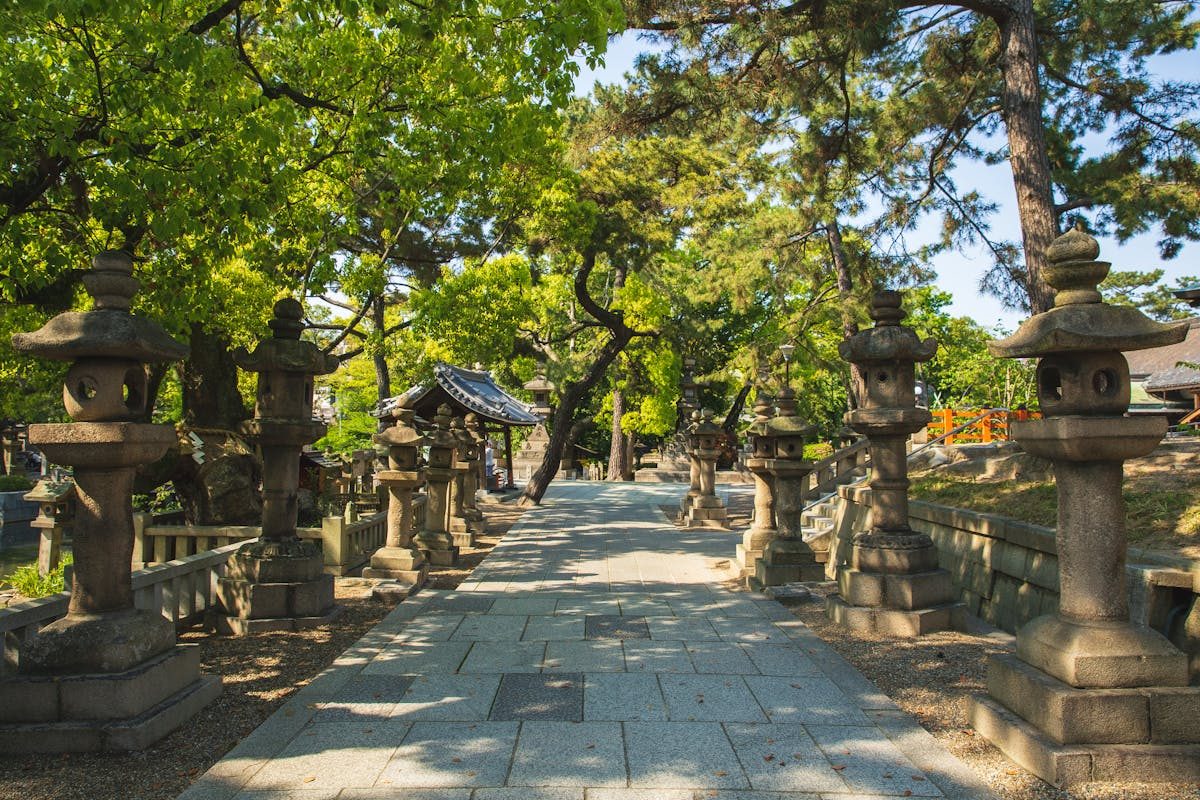
Most visitors do not go beyond the main hall. That is a mistake. Behind the honden, the grounds open up into a forest of ancient camphor trees — some over a thousand years old. The paths wind through sub-shrines, stone lanterns, and wooded areas where the noise of the crowds disappears completely. It is a different world from the busy main approach.
The shrine has two museums on the grounds. The Dazaifu Tenmangu Museum (between the pond and the main hall) houses artefacts related to the shrine’s history. The Kanko Historical Museum (behind the main hall) tells Michizane’s story through small dioramas — the signs are in Japanese but an English pamphlet is available.
Kyushu National Museum
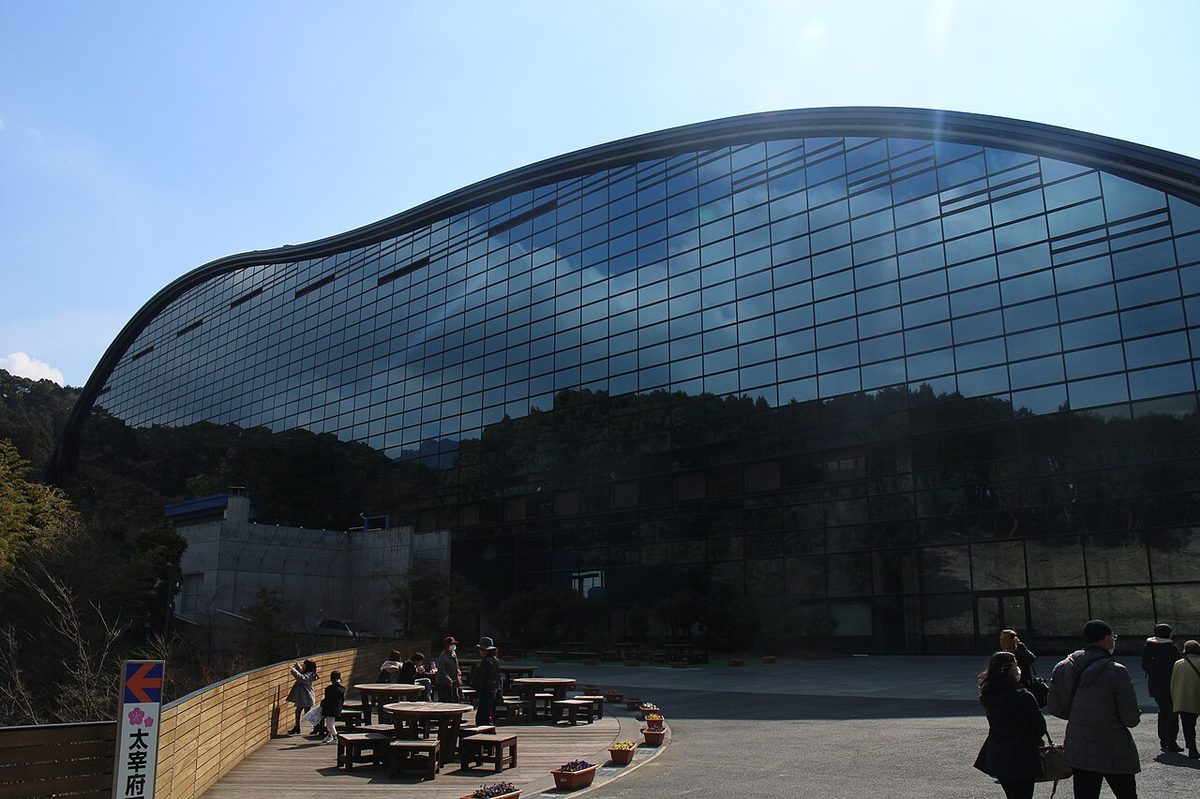
At the southeastern end of the shrine grounds, a covered escalator walkway leads through the forest to the Kyushu National Museum. It is Japan’s fourth national museum and the building is extraordinary — a massive curved glass structure that looks like a spaceship landed in the forest. The permanent exhibition focuses on Kyushu’s history as Japan’s gateway to Asia, covering trade, culture, and religion across centuries. It is one of the best museums in Kyushu and easily worth 1-2 hours. Entry is ¥700.
Plum Blossom Season
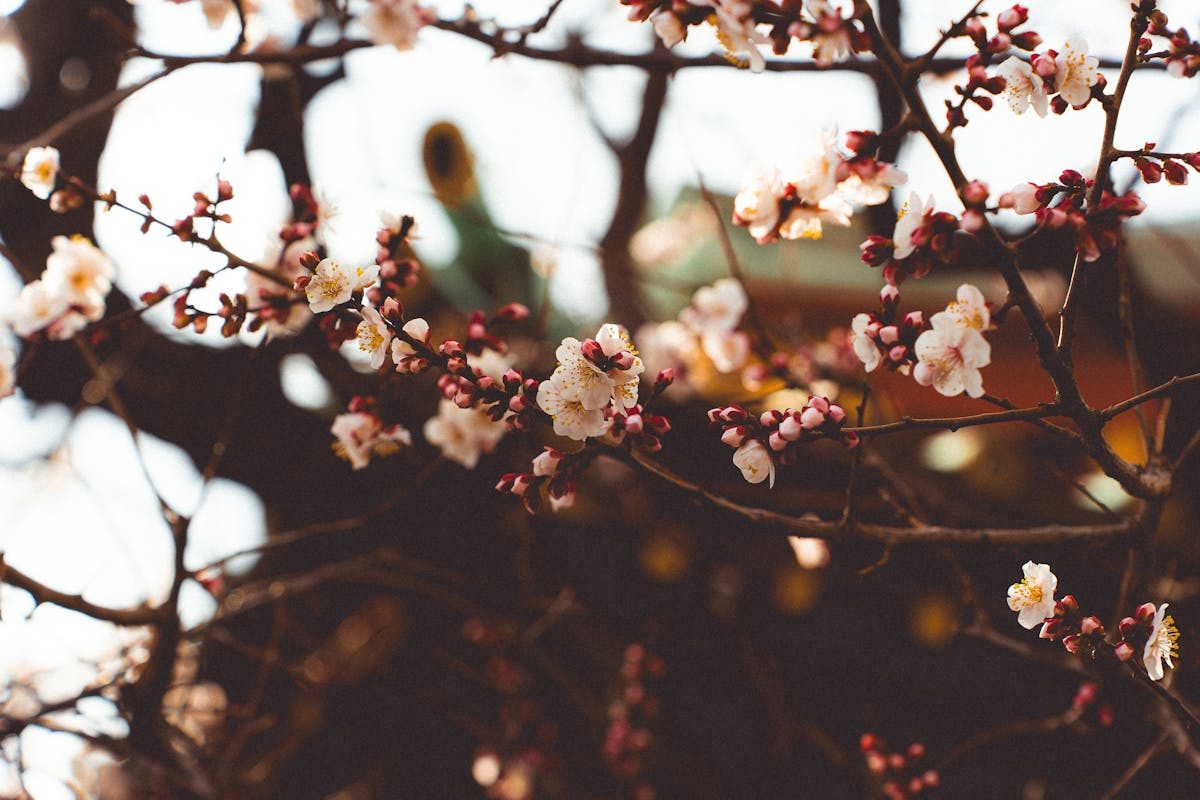
Dazaifu Tenmangu has about 6,000 plum trees — more than almost any other shrine in Japan. Michizane’s love of plum blossoms is the reason. The trees bloom from late February to mid March, and the timing is deliberate — it coincides with the Kyokusui-no-en ceremony, the ancient poetry ritual held in the shrine’s garden on the first Sunday of March. If you time your visit for early March, you get the plum blossoms and the ceremony in one trip.
Cherry blossoms follow in late March and early April, but at Dazaifu the plum blossoms are the main event. They are smaller and more delicate than cherry blossoms, with a sweet fragrance that cherry blossoms lack. The whole shrine grounds smell of plum blossoms during peak bloom.
Getting to Dazaifu
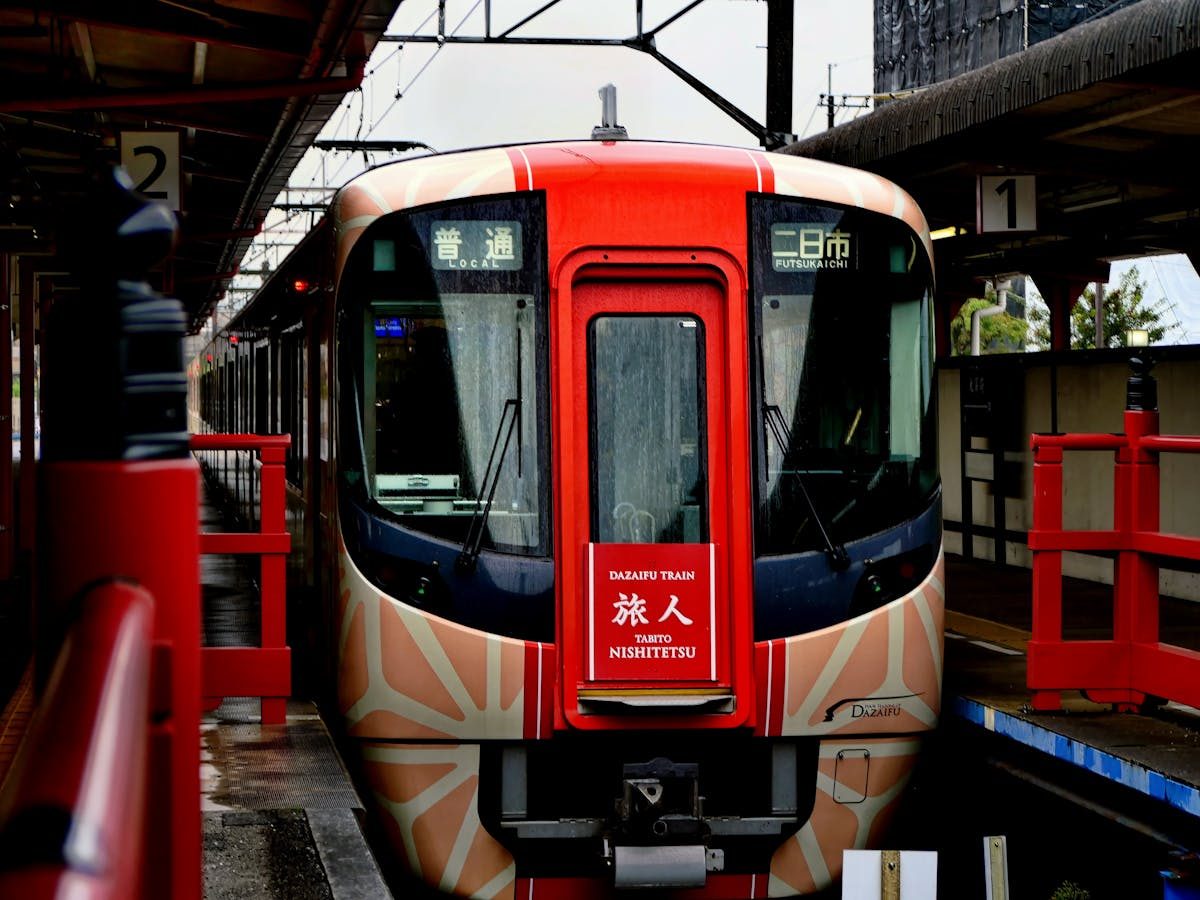
Dazaifu is about 40 minutes from central Fukuoka by train. Take the Nishitetsu line from Tenjin Station to Futsukaichi, then transfer to the Dazaifu branch line (two stops). From Dazaifu Station, the shrine is a 5-minute walk straight ahead through the shopping street.
If coming from Hakata Station, take the subway to Tenjin first, then switch to Nishitetsu. The JR line goes to Futsukaichi too, but the Nishitetsu route is more direct.
Practical Information
Entry: Free. The shrine grounds are open from 6:00 to 19:00 (extended to 19:30 on Fridays and Saturdays). The museums have separate admission fees.
Kyushu National Museum: ¥700, closed Mondays. Allow 1-2 hours.
How long: The main shrine visit takes about 45 minutes. Add the back paths and museums for 2 hours. Add the Kyushu National Museum for 3-4 hours total.
Best time: Late February to mid March for plum blossoms. First Sunday of March for the Kyokusui-no-en ceremony. January-February for the exam season atmosphere (crowded but culturally interesting). Any time of year is fine — the camphor forest is beautiful in every season.
Combine with: The Kyokusui-no-en ceremony happens in the shrine’s garden in March. Fukuoka’s ramen scene is 40 minutes back by train. Karatsu and Kokura are both accessible by train for a multi-stop Kyushu itinerary.
Dazaifu Tenmangu is a shrine built on guilt, grief, and the fear of a dead man’s anger. That is not the version you will read on the tourist signs. But knowing the real story — a poet destroyed by politics, deified by terror, and worshipped by students ever since — makes the experience something more than a pretty shrine with good mochi. Michizane would probably appreciate the irony. He was, after all, one of history’s greatest scholars, and the students praying to him are doing exactly what he spent his life doing: trying to prove they are good enough.