
Most people who visit Beppu never make it to Kitsuki. It is only 25 kilometres up the coast, but the hot springs pull so hard that few visitors think to look north. Their loss. Kitsuki has Japan’s smallest castle, a perfectly preserved samurai town, and one of the strangest urban layouts I have seen anywhere — a sandwich.
In This Article
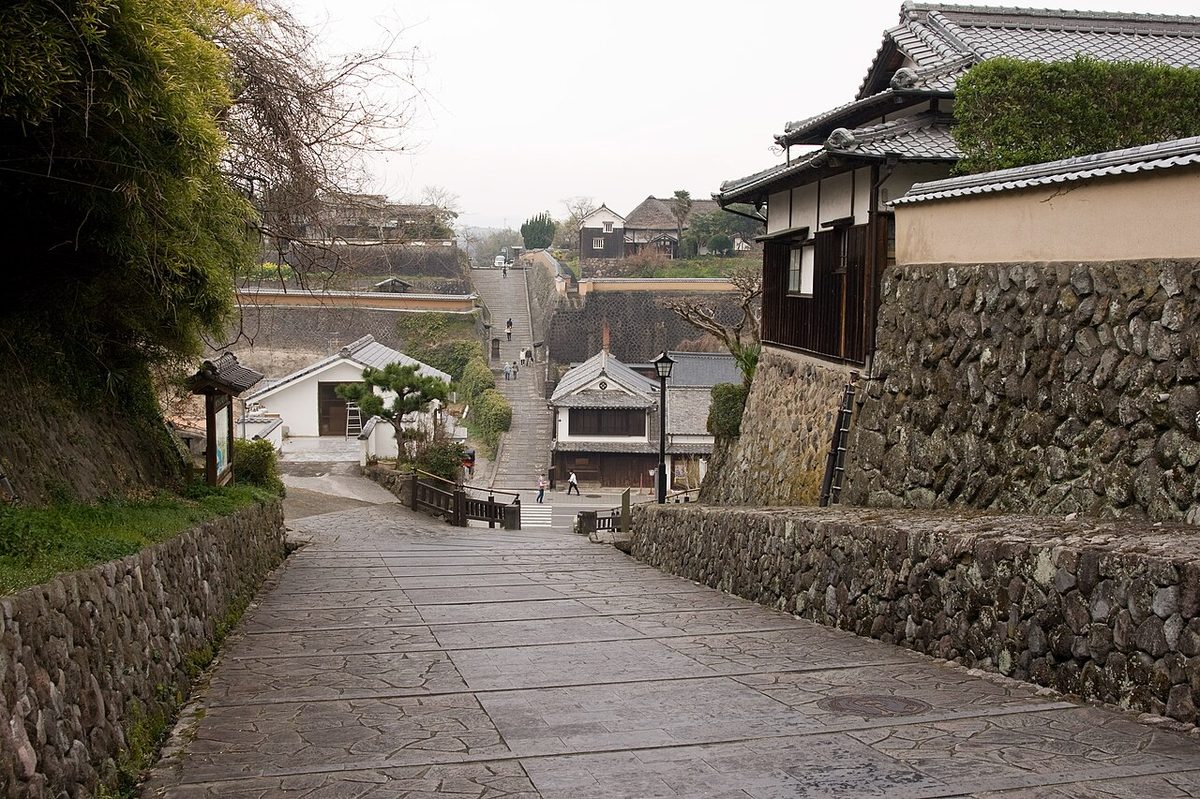
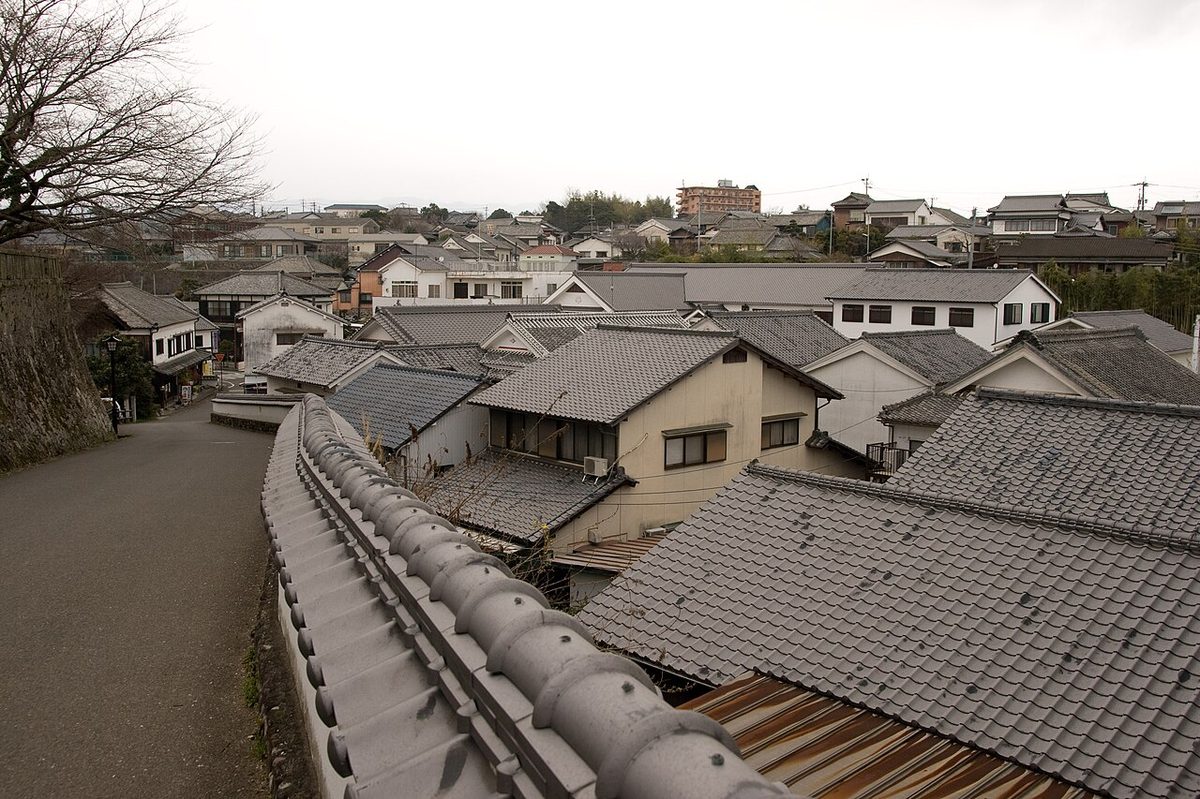
The town is built on two parallel ridges with a valley running between them. The samurai lived on the hills. The merchants lived in the valley. This is the only place in Japan where this layout survives intact, and the locals have a name for it — a “sandwich castle town.” Walk through it and you can feel the old hierarchy: stone-walled estates up on the ridges looking down at the commercial streets below. The geography enforced the class system.
The Sandwich Castle Town
Kitsuki’s layout is what makes it special. There are two samurai districts — one on each ridge — with the merchant quarter in the valley between them. The samurai districts are called the Kita-dai (north plateau) and Minami-dai (south plateau). Each has its own distinct character.
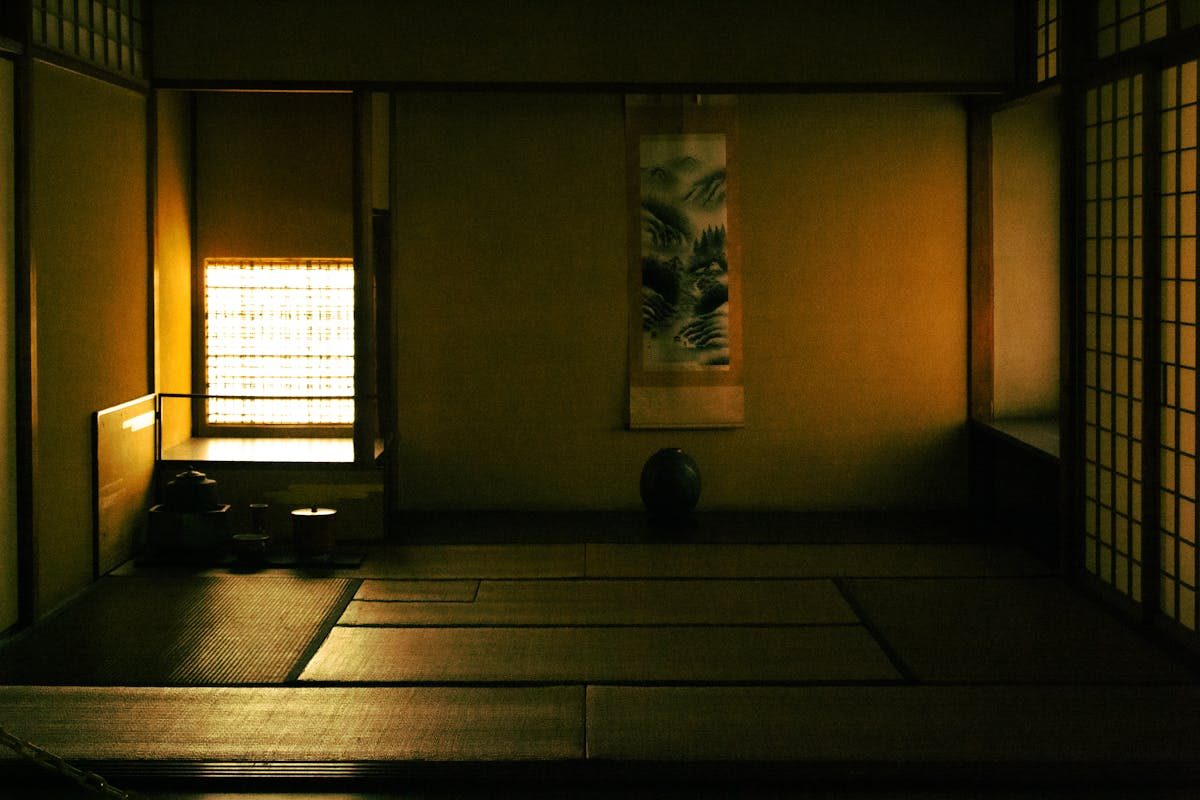
The northern district is the more formal of the two. Wide stone-walled lanes run between the gates of samurai residences, most of which are open to visitors. The Ohara residence and the Isoya residence are the best preserved — you can walk through the tatami rooms, look at the gardens, and get a sense of how a mid-ranking samurai family actually lived. It is not grand. These were not wealthy lords. But the simplicity is part of the appeal.
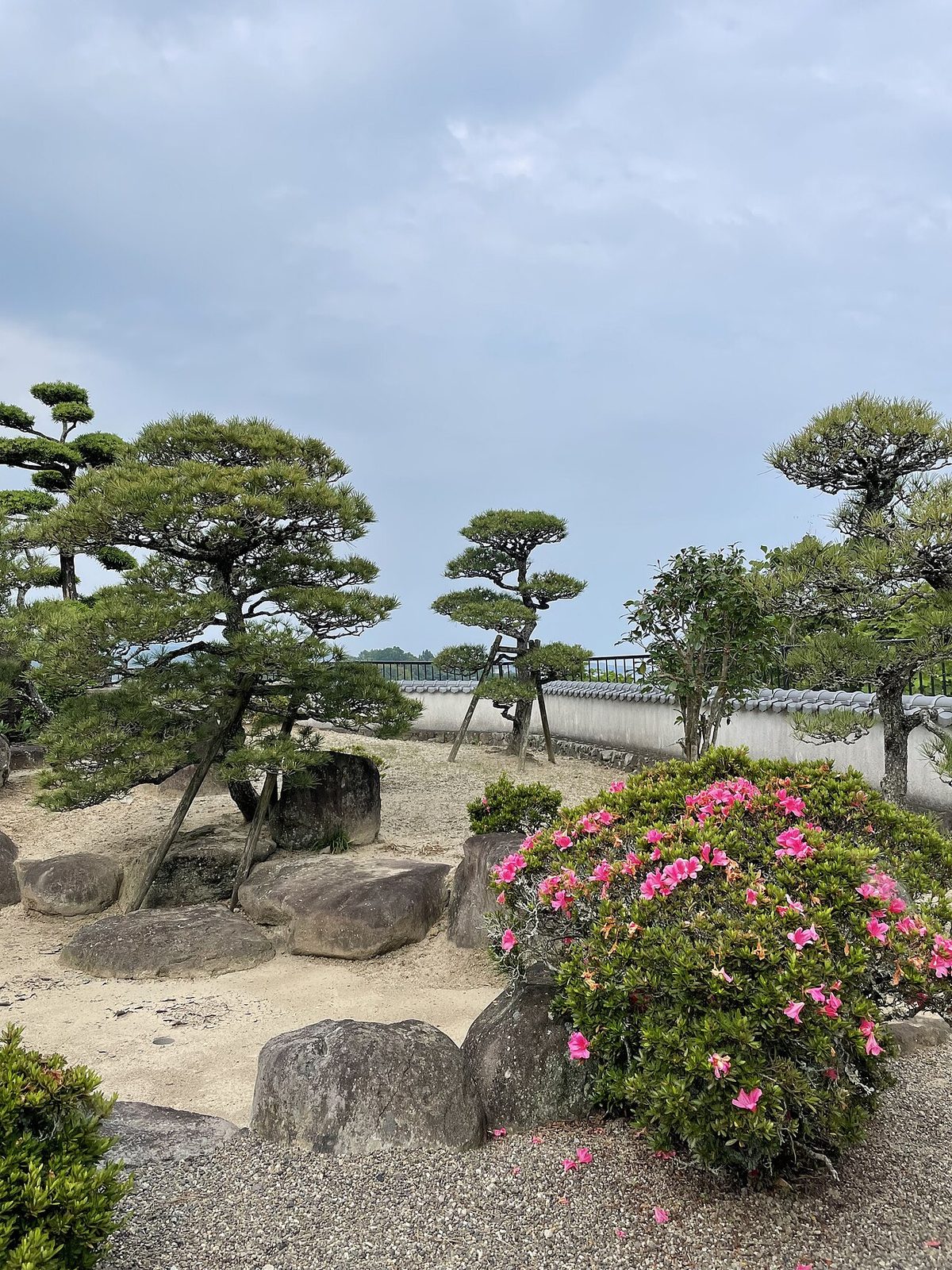
The southern district has the Hitotsumatsu residence, which is the highlight. The villa has one of the best small Japanese gardens I have seen in Kyushu — a tiny, perfectly composed space that manages to include a pond, moss-covered stones, shaped trees, and a borrowed view of the valley below. It is not Kenroku-en. But it does not need to be. Sometimes a garden that fits in a photograph is more impressive than one that takes an hour to walk through.
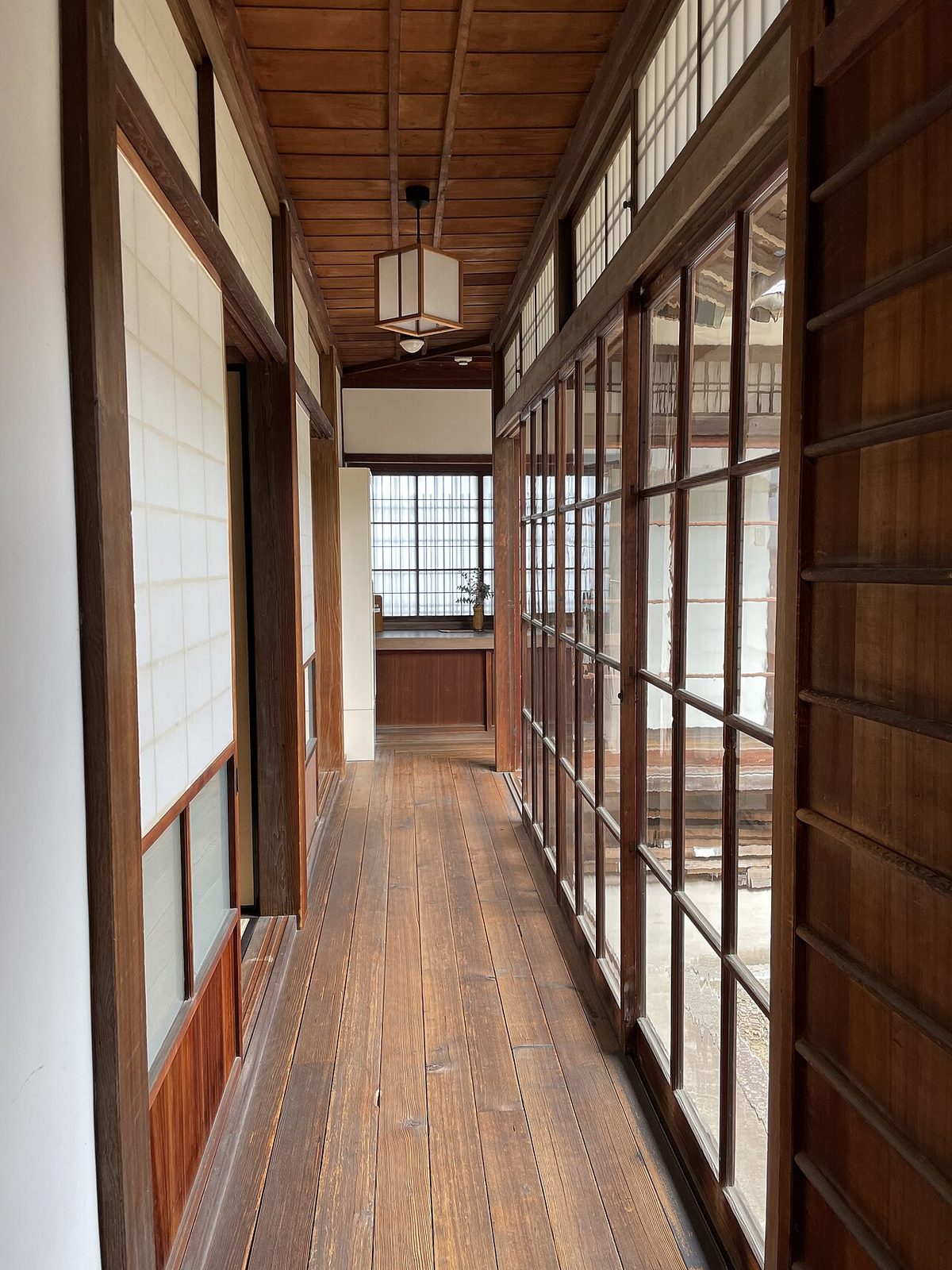
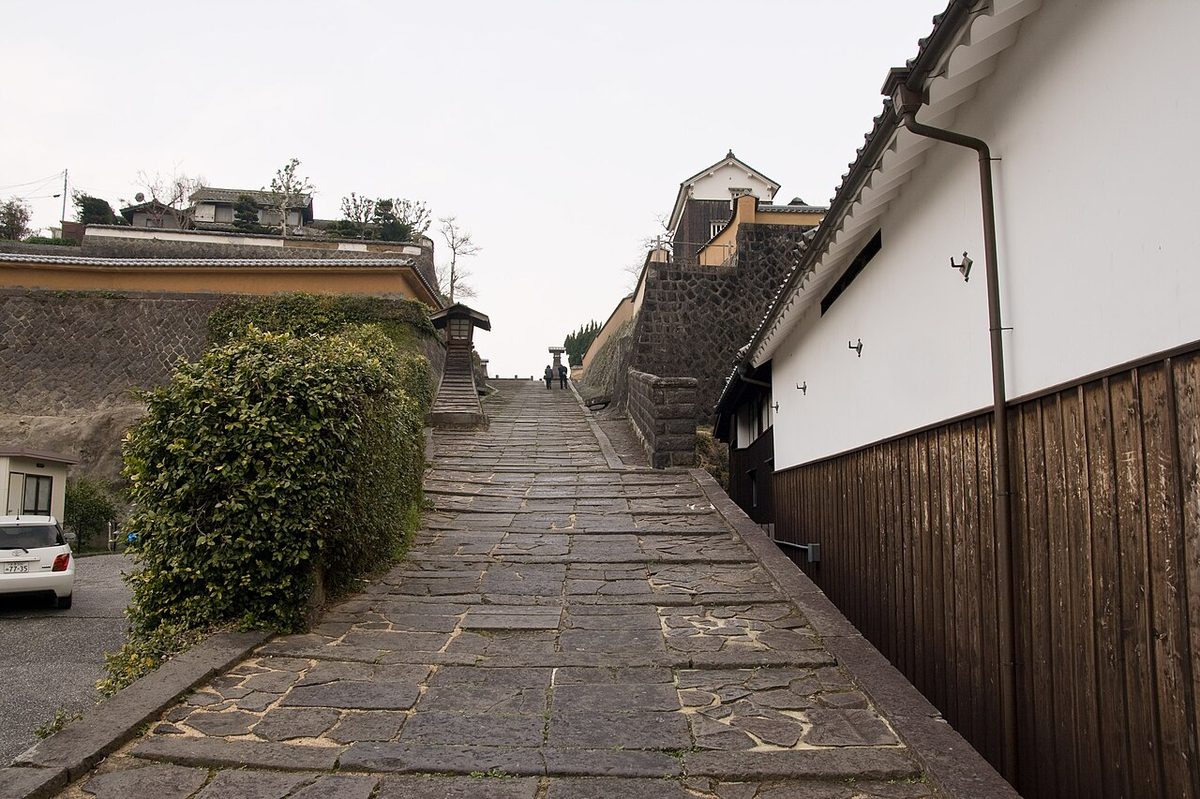
Between the two samurai ridges, the merchant quarter sits in the valley. It is narrower, busier, and less polished — which is exactly how it was designed. The merchants were essential to the town’s economy but socially inferior to the samurai above them. Walking from the merchant street up the slope to the samurai district, you climb stone stairs that were built to emphasise the transition from one world to the other. The physical act of going uphill to reach the higher class was not an accident.
The Castle
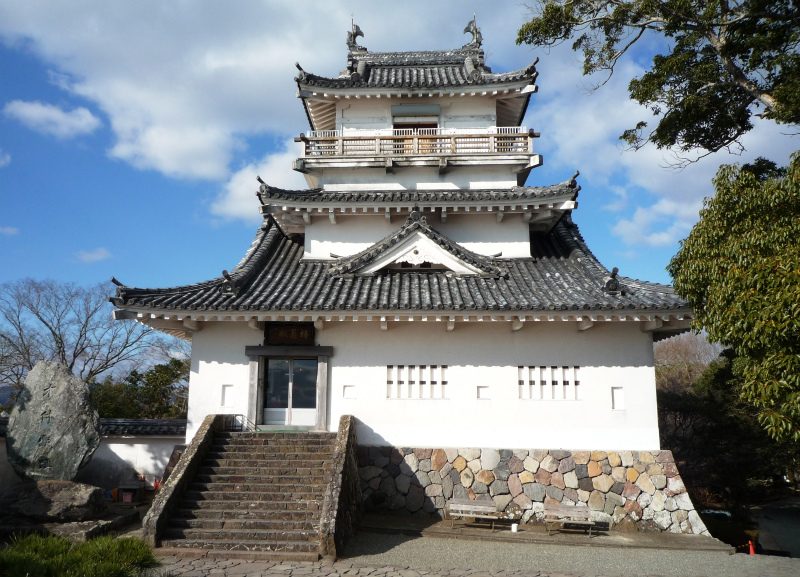
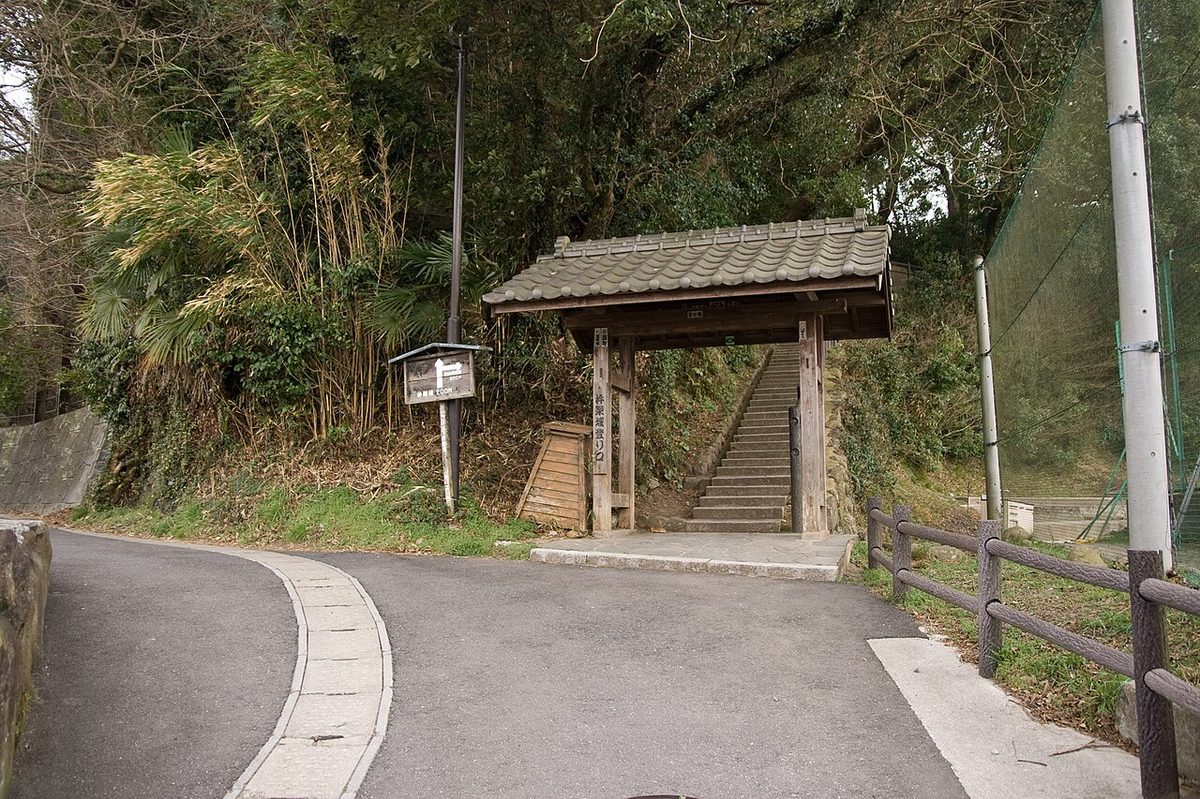
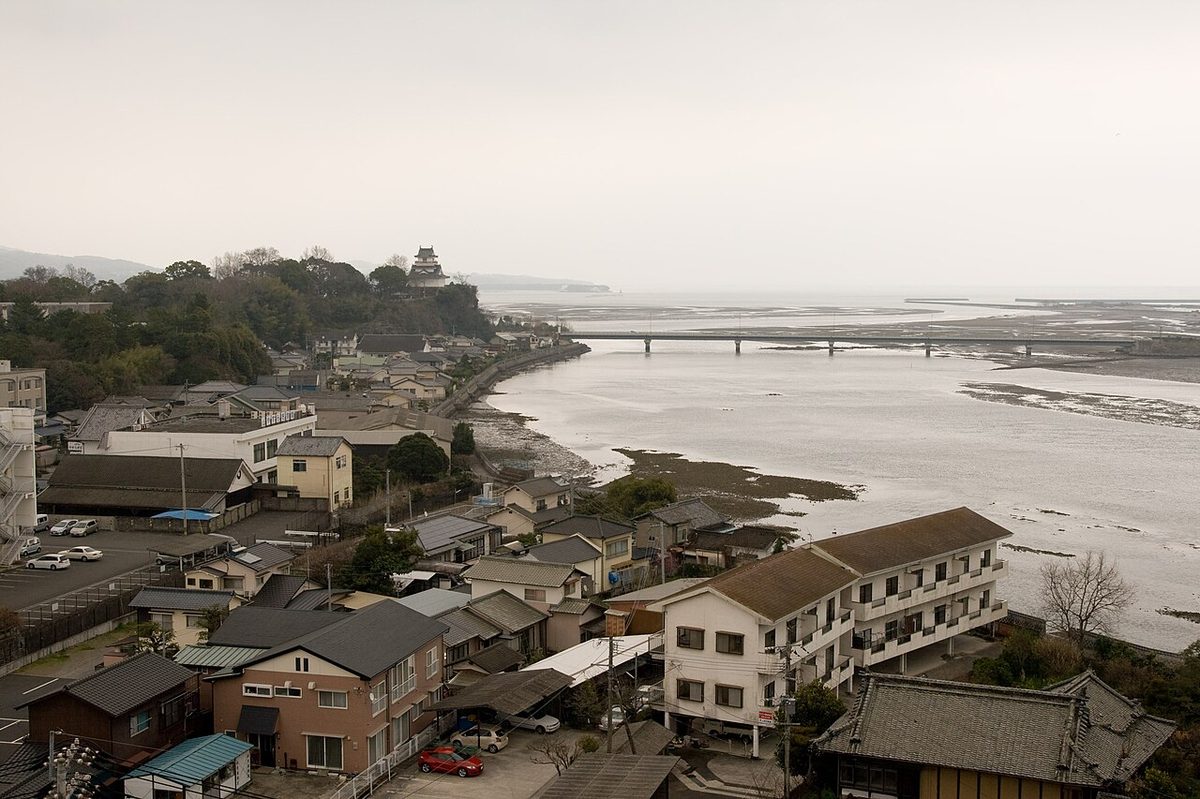
Kitsuki Castle is the smallest castle in Japan. That sounds like a gimmick but it is genuine — the keep is tiny, perched on a small headland overlooking the Yasaka River and the sea beyond. The original castle was built in 1394 by the Kitsuki clan, passed through various lords during the feudal period, and was eventually demolished after the Meiji Restoration when castles were declared obsolete. The current keep is a 1970 reconstruction built by the local council.
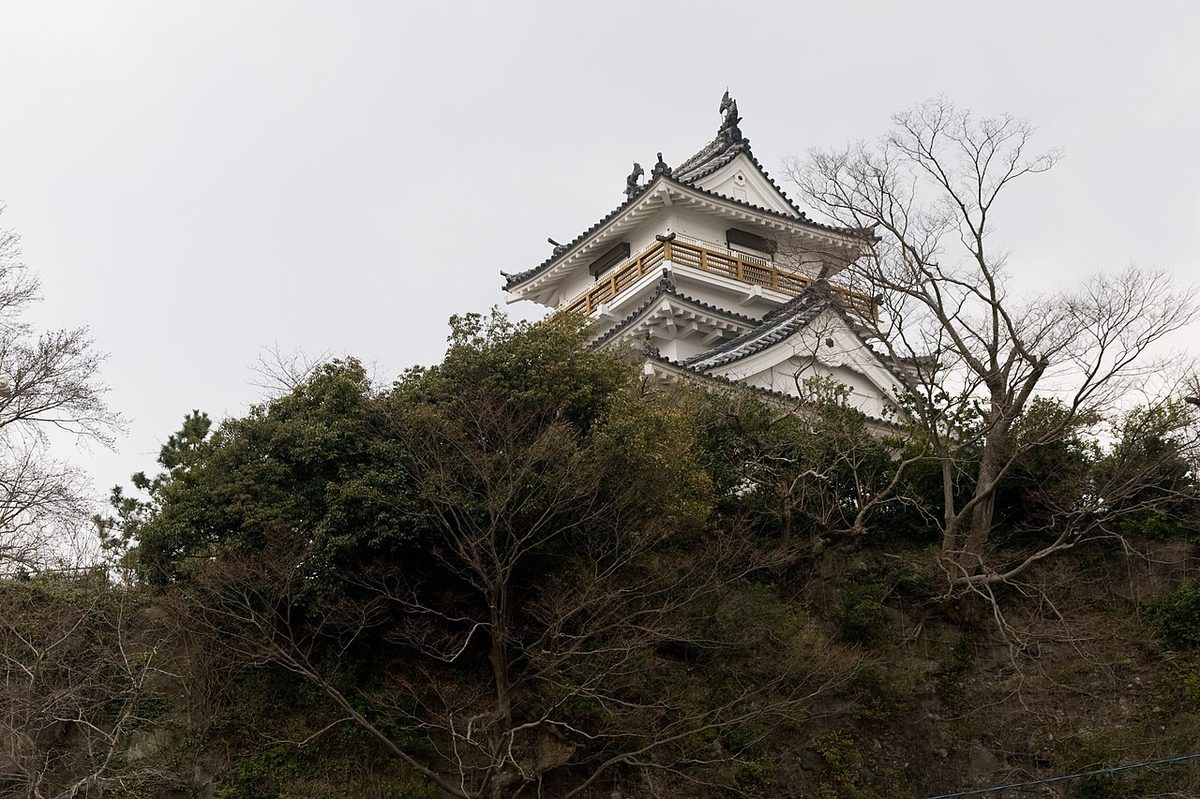
The approach to the castle takes you through Shiroyama Garden, a park built on the former castle grounds. The park contains about 170 stone pagodas — tombstones, memorial markers, and carved pillars collected from around the Kitsuki area and relocated here for preservation. It is a strange, atmospheric place. Some of the pagodas are over 500 years old. Walking through them feels like walking through a stone forest with a story behind every pillar.
Inside the castle keep is a small museum with artefacts from the town’s history — armour, swords, maps, old photographs. The top floor is an observation deck with panoramic views of the town, the river, and the Seto Inland Sea. It is a modest castle, but the view is not modest at all. On a clear day you can see across to Shikoku.
Why Kitsuki Survived
The reason Kitsuki looks the way it does is partly luck and partly geography. After the Meiji Restoration in 1868, most of Japan’s castle towns were modernised — the samurai districts demolished, the streets widened, the old order literally bulldozed. Kitsuki was too small and too remote for anyone to bother. The samurai left, but nobody moved into their houses. The merchants kept trading. The town froze.
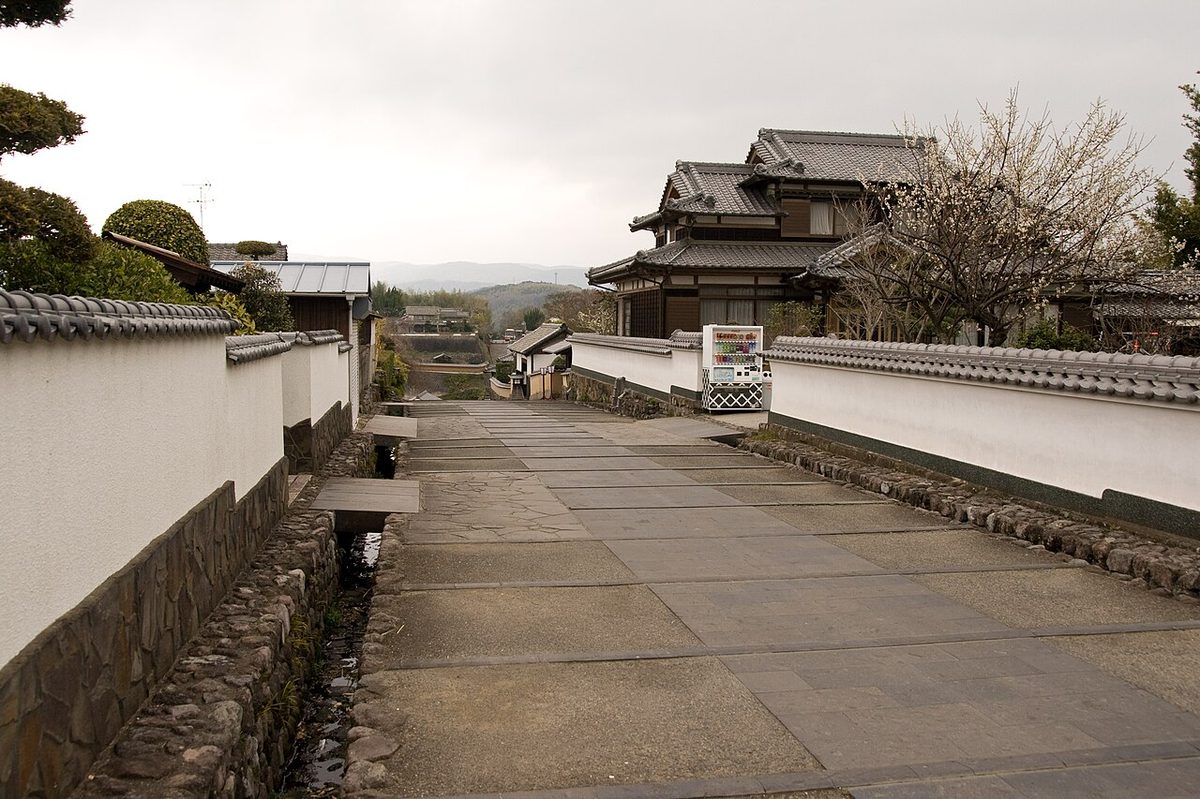
By the time Japan started caring about preservation in the mid-20th century, Kitsuki still had its original layout, original stone walls, and several original samurai residences. The town was designated a national Important Preservation District for Groups of Traditional Buildings — a mouthful of a title, but it means the government considers it irreplaceable. And it is. You cannot rebuild a feudal class system in stone.
Getting to Kitsuki
Kitsuki is in Oita Prefecture, on the coast about 25 kilometres north of Beppu. It makes an easy day trip from Beppu, or a stop on the way between Beppu and the Kunisaki Peninsula.
By train: JR Kitsuki Station is on the Nippo Main Line. From Beppu it is about 25 minutes by local train (¥480). From Oita Station, about 40 minutes. The station is about 3 kilometres from the castle town — take the bus from the station to Kitsuki Bus Terminal (10 minutes, ¥200), or walk in about 35 minutes.
By bus: Buses run from Beppu and Oita to Kitsuki Bus Terminal. From the terminal, the castle town is a 10-minute walk.
By car: About 30 minutes from Beppu via Route 10 along the coast. There is free parking near the castle and the samurai districts.
Practical Information
Castle entry: ¥400 for the castle keep and museum. A combined ticket covering the castle and several samurai residences is available for about ¥900 — worth it if you plan to visit more than two residences.
Opening hours: 9:00 to 17:00. The castle and most samurai residences close by 17:00. The streets and gardens are accessible anytime.
How long: Allow 2-3 hours for the castle and both samurai districts. Add another hour if you want to explore the merchant quarter and the temple area. Half a day is comfortable.
Best time to visit: Spring for cherry blossoms around the castle grounds. Autumn for the colours on the samurai streets. Summer is hot with limited shade — bring water and sun protection. Winter is quiet and atmospheric.
Combine with: Beppu is 25 minutes south by train. The Kunisaki Peninsula with its ancient stone Buddhist sites is to the north. If you are doing a Kyushu road trip, Kitsuki fits naturally between Beppu and the ferry port at Oita.
Kitsuki is not a place that demands attention. It does not have a famous castle or a world-heritage listing or a bullet train stop. What it has is a complete feudal town, preserved almost by accident, where you can walk from the merchant quarter to the samurai district and back again in twenty minutes — and in those twenty minutes understand more about how Japan’s class system actually worked than any museum could teach you.
You Might Also Enjoy
 Visiting Kokura Castle — A Shinkansen Stopover Worth Making
 Karatsu Kunchi — Giant Floats, Beach Pulls, and 400 Years of Festival Chaos
 Visiting Oura Cathedral in Nagasaki — Japan’s Oldest Church and the Hidden Christians
 Kyokusui-no-en at Dazaifu Tenmangu — A Thousand-Year-Old Poetry Ceremony in Kyushu