
The bowl arrived in under two minutes. I had barely sat down and the woman behind the counter was already placing it in front of me — a pool of milky white broth with thin noodles, two slices of chashu pork, a scatter of chopped spring onions, and a sheet of nori leaning against the rim. The broth was so opaque I could not see the bottom. Steam was curling off the surface and the whole room smelled like pork bones that had been boiling since before I was born.
In This Article
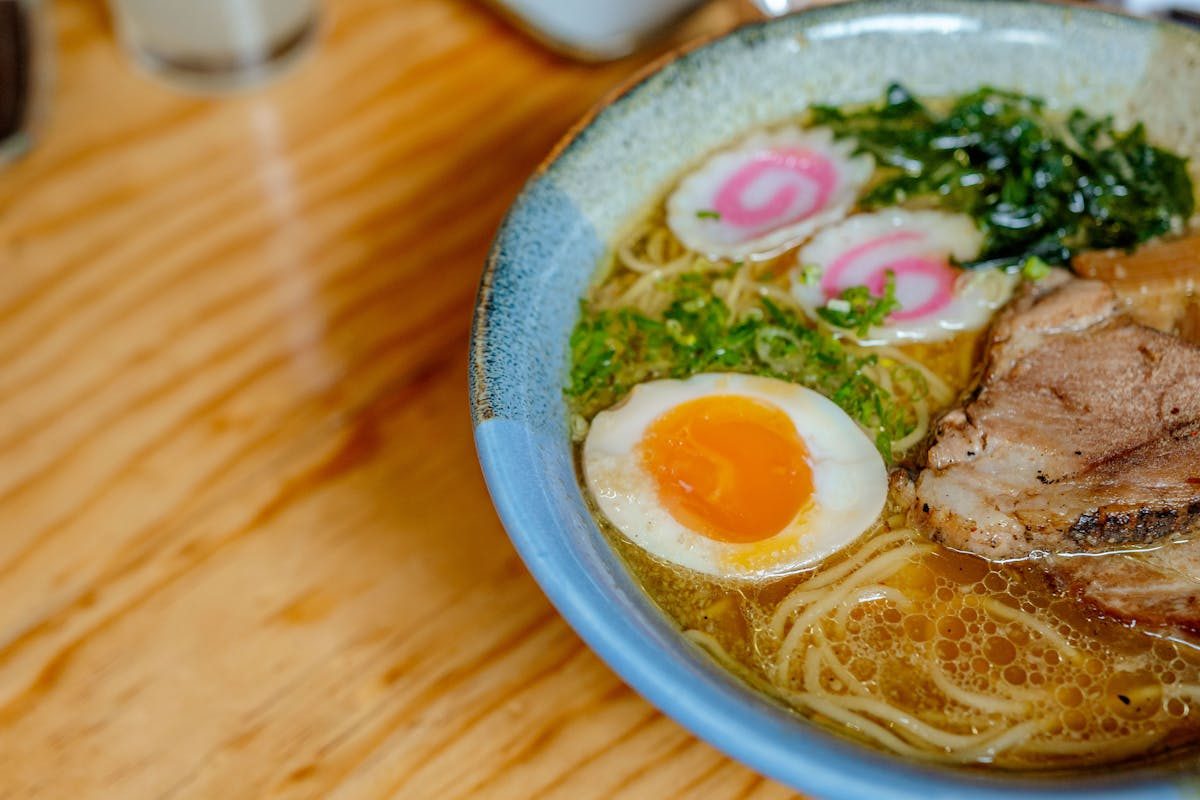
This is Nagahama ramen, and it was invented about a kilometre from Hakata port in the years after the Second World War. It is the original Fukuoka ramen — the milky, pork-bone soup that the city is famous for. Hakata ramen, the version most people know, is its more polished younger sibling. Nagahama is the rougher, faster, more working-class original.
What Makes Nagahama Ramen Different
If you have eaten ramen anywhere else in Japan, Nagahama will surprise you. The noodles are thin and straight — not the curly, chewy noodles you get in Sapporo or Tokyo. They cook in seconds, which is why the bowl arrives so fast. The broth is pure tonkotsu — pork bones boiled over a high flame for half a day or more until the collagen and marrow dissolve into a thick, creamy, pale white soup. There is nothing subtle about it. It hits you.
The toppings are minimal. Chashu pork, spring onions, maybe a slice of kamaboko or a sheet of nori. But the real customisation happens at your seat. Every table has a row of condiments: sesame seeds, crushed garlic, pickled red ginger (beni shoga), spicy mustard greens (karashi takana), and soy sauce. You add whatever you want, however much you want. The first few times I watched the locals before copying them — sesame seeds first, then a generous scoop of garlic, then ginger on the side. Then slurp.
Slurping is not optional. In Nagahama ramen shops — really in all ramen shops in Japan — you are expected to slurp loudly. It cools the noodles, aerates the broth, and signals to the cook that you are enjoying the food. If you eat your ramen in polite silence, you are the weird one.
Kaedama — The Refill
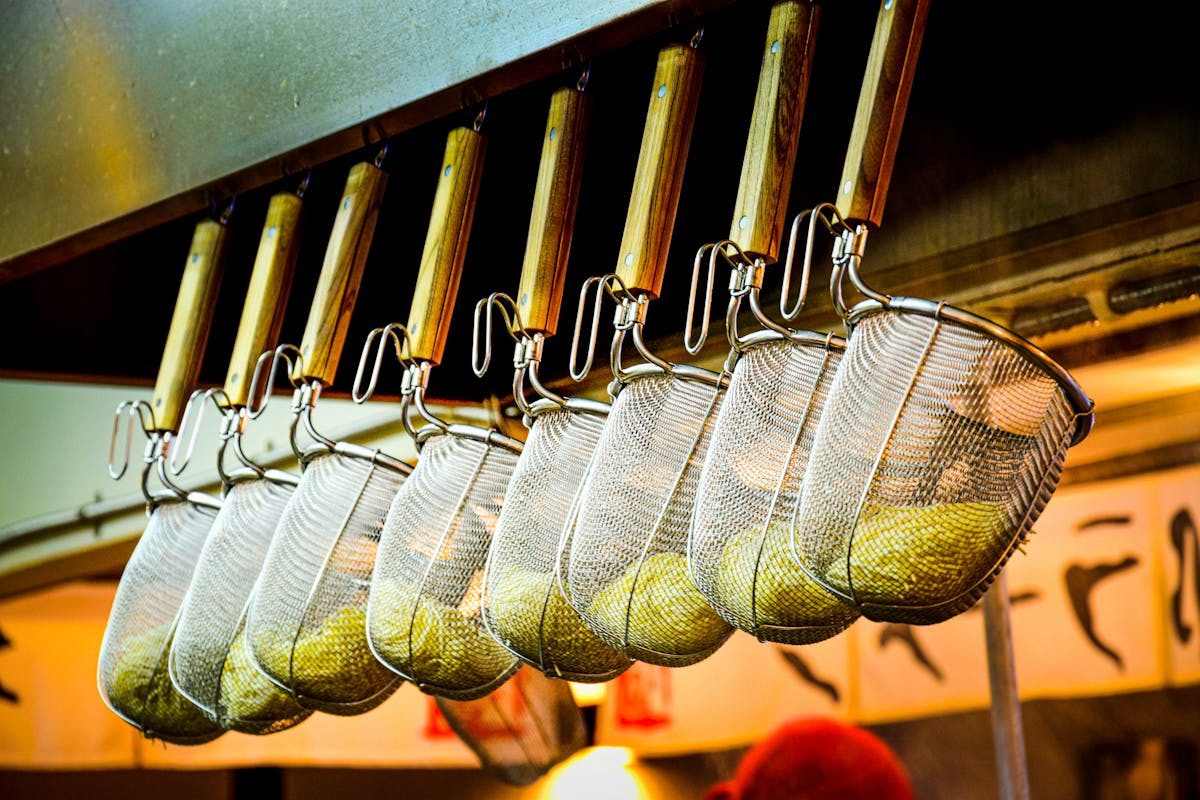
The most important thing to understand about Nagahama ramen is the kaedama system. Because the noodles are so thin, they start to soften and lose texture in the broth within a few minutes. So the portions are deliberately small. You eat your first serving fast, then call out “kaedama!” and they cook you a fresh batch of noodles and drop them into your existing broth. A kaedama is usually ¥100-150.
Most people order one or two kaedama. Some order three. The point is that you always have fresh, firm noodles — never a bowl of soggy mush. This is why Nagahama ramen noodles are cooked so fast and served so quickly. It is a system designed for speed and freshness, not presentation. You are not here for Instagram. You are here to eat.
Where to Eat Nagahama Ramen
Ganso Nagahamaya
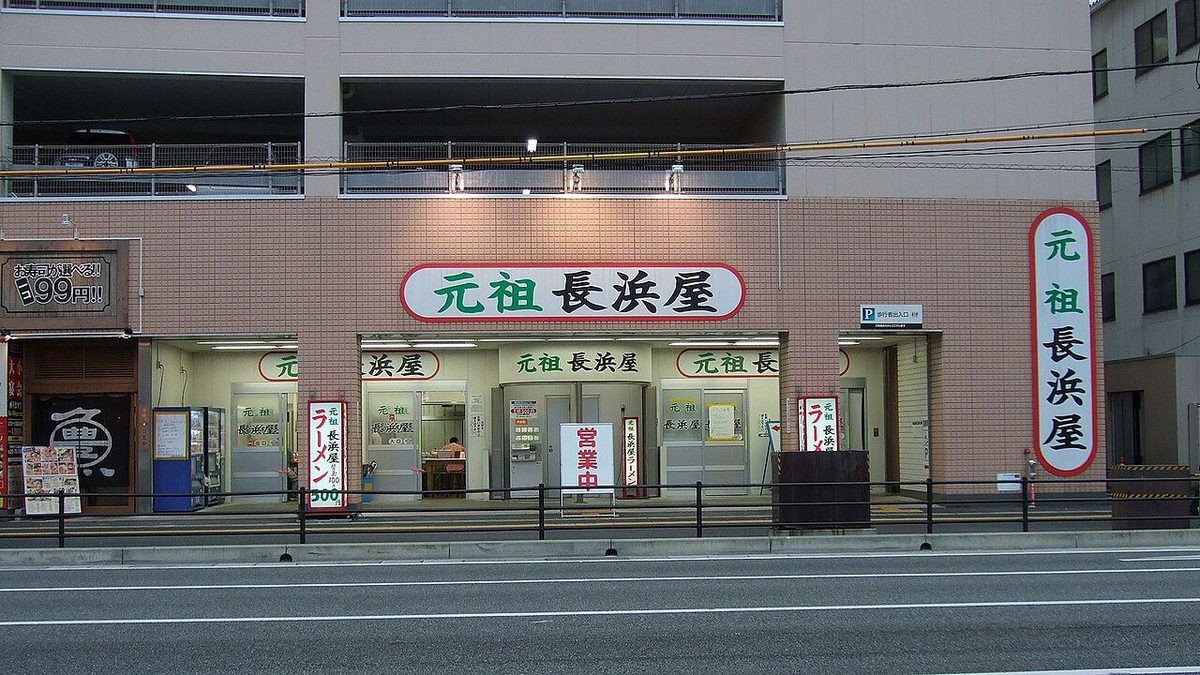
This is the one. Ganso Nagahamaya has been serving Nagahama ramen since the early 1950s and it is still the benchmark. The place looks like a hospital canteen — fluorescent lights, communal tables, no decoration. You buy a ticket from the machine by the door (¥500 for a bowl, ¥100 for kaedama, ¥100 for extra pork), sit down, hand over your ticket, and the ramen appears almost immediately.
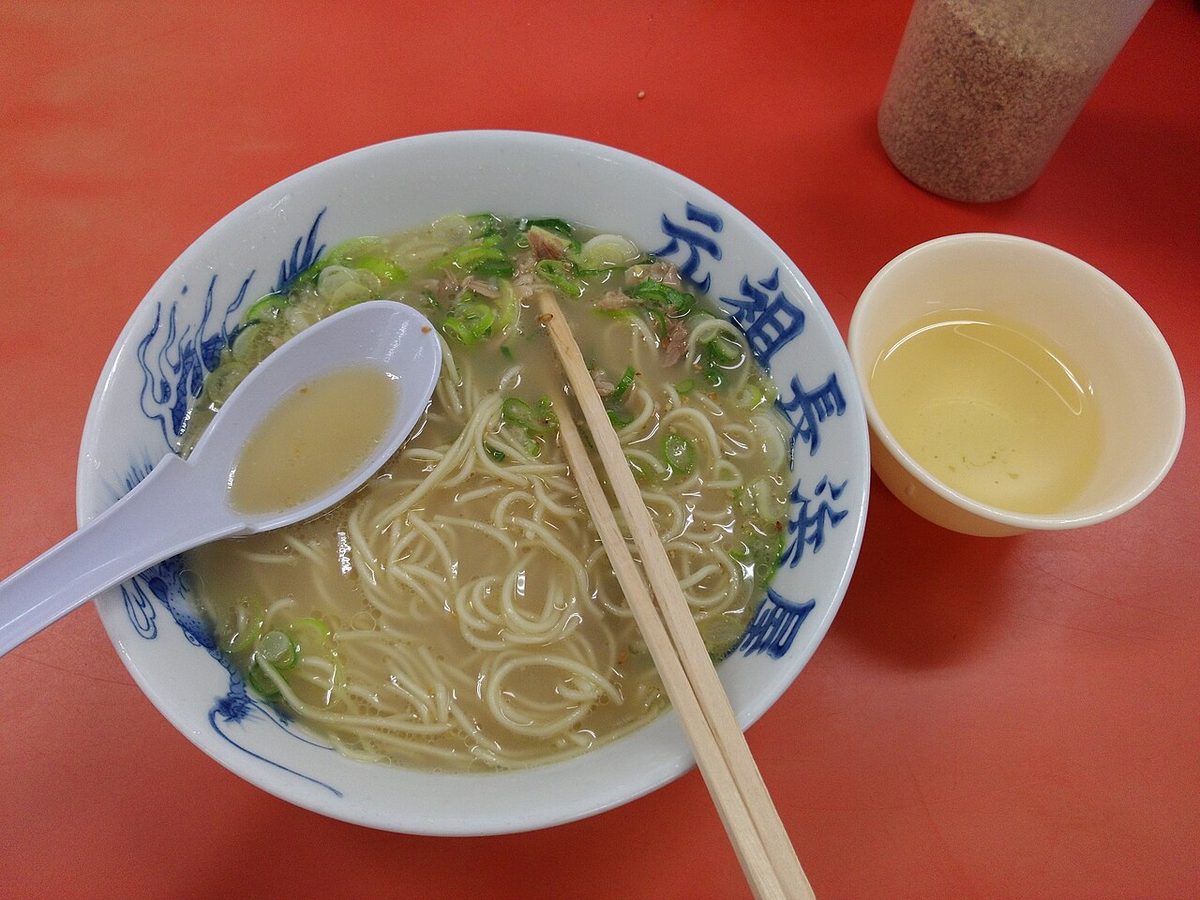
The broth is thick and rich without being heavy — you can taste the pork fat but it does not weigh you down. The noodles are ultra-thin and firm. The chashu is simple. The magic is entirely in the broth, and they have had 70 years to get it right.
Ganso Nagahamaya is on Nagahama Street, about a 15-minute walk from Hakata Station or 10 minutes from Tenjin. Open from 10:00 to roughly 02:00 (they close when the broth runs out). No English menu, but you do not need one — point at the machine and press the button.
Nagahama Number One
The other heavyweight. Nagahama Number One has multiple branches around Fukuoka, but the original on Nagahama Street is the one to visit. The broth is slightly lighter than Ganso Nagahamaya — a little less pork fat, a little more clarity. Some people prefer it. The shop is a bit more welcoming than Ganso’s clinical setup, with counter seating and slightly more space. A bowl is around ¥600.
The Yatai Stalls
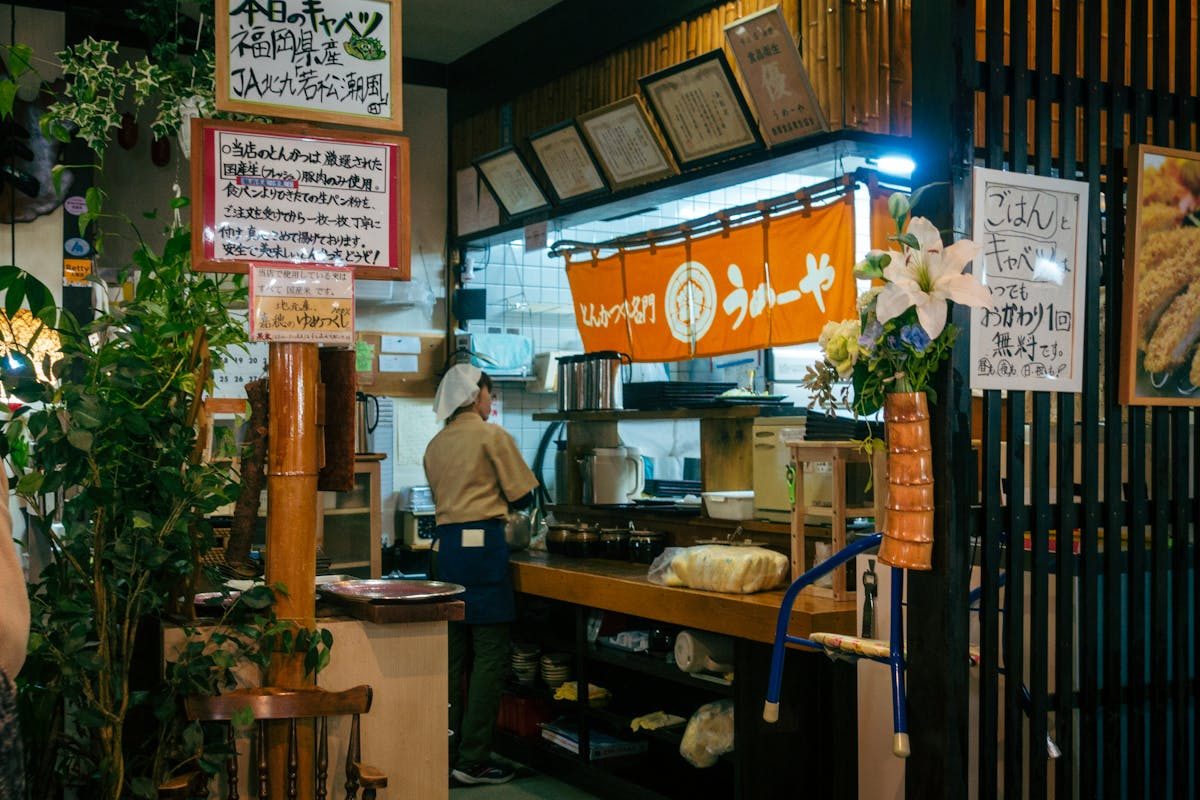
Fukuoka’s yatai — the outdoor food stalls that line the river in Tenjin and Nakasu every evening — serve their own versions of tonkotsu ramen. The quality varies wildly. Some are tourists traps, some are genuine. The ones along the Naka River near Nakasu tend to be better than the ones on Watanabe Street. Ask at your hotel or just look for the stalls with the longest queues of Japanese customers, not tourists.
The yatai experience is about more than the ramen. You sit on a tiny stool under a canvas roof with maybe six other people, all of you elbow-to-elbow, eating and talking and drinking beer while the cook works a metre in front of you. It is intimate, chaotic, and uniquely Fukuoka.
The History
Nagahama ramen came from the fish market. In the early post-war years, the Nagahama area was home to Fukuoka’s central fish market, and the ramen stalls that set up nearby had to work fast — the fishermen and auctioneers needed to eat and get back to work. This is why the noodles are thin (they cook quickly), the portions are small (eat fast, order more if you need it), and the service is instant. The whole system was designed around the rhythms of a working fish market at four in the morning.
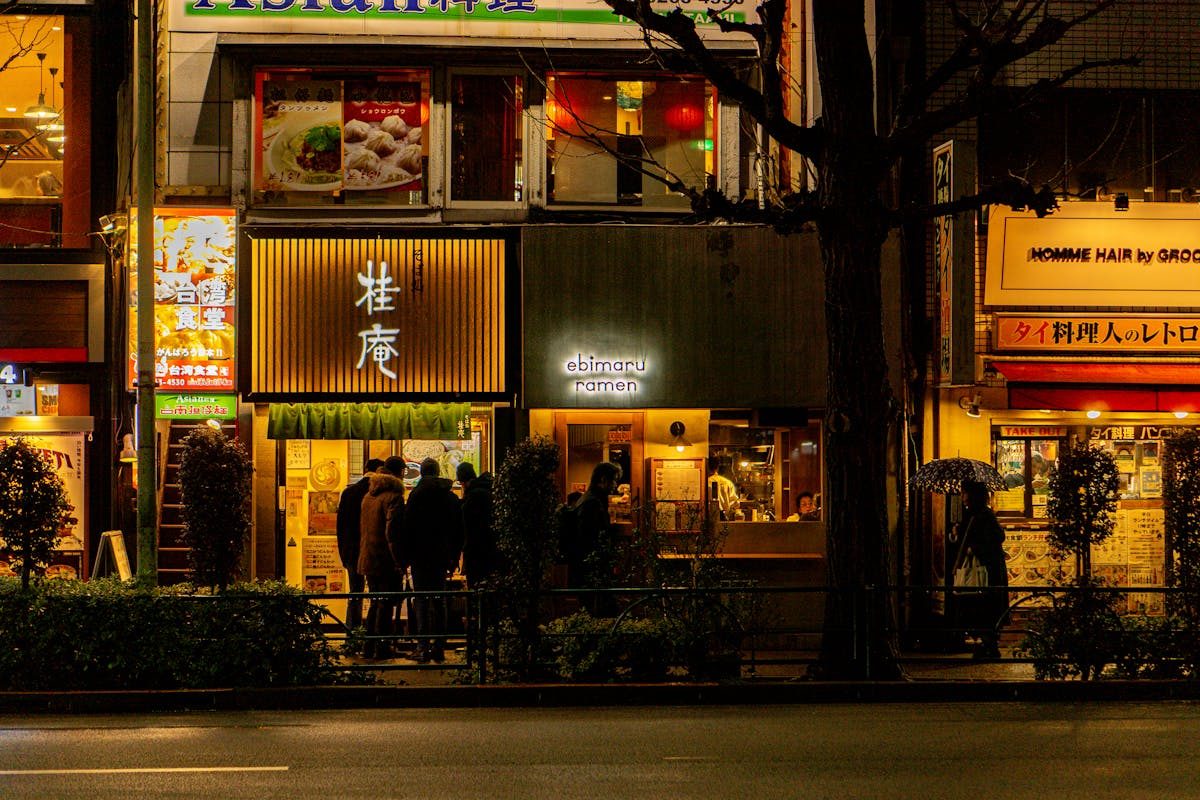
The fish market has since moved to a new location, but the ramen shops stayed. Nagahama Street is now a ramen pilgrimage destination, with Ganso Nagahamaya and Nagahama Number One anchoring opposite ends. The style spread across Fukuoka and eventually evolved into what the rest of Japan calls Hakata ramen — a slightly refined version with a wider range of toppings and more elaborate presentation. But the bones of it, literally, are Nagahama.
Nagahama vs Hakata Ramen
People in Fukuoka will argue about this. Nagahama and Hakata ramen are closely related but not identical. The key differences:
Broth: Nagahama tends to be a bit thicker and fattier. Hakata can be slightly cleaner.
Noodles: Both use thin, straight noodles, but Nagahama noodles are sometimes even thinner. Both systems rely on kaedama.
Toppings: Nagahama is minimal — pork, green onions, that is it. Hakata shops often add more: soft-boiled egg, wood ear mushrooms, additional seasoning.
Speed: Nagahama is the faster of the two. The fish market origins show. In and out in fifteen minutes.
Honestly, the difference matters more to locals than to visitors. Both are excellent. If you are in Fukuoka for a few days, try both — Ganso Nagahamaya for the pure Nagahama experience, then Ippudo or Shin Shin for the Hakata version. Your stomach will tell you which one wins.
Practical Information
Where: Nagahama Street is between Hakata port and Tenjin, in central Fukuoka. The closest subway station is Akasaka (Kuko Line), about 5 minutes walk. From Hakata Station, it is about 15 minutes walk or one subway stop to Tenjin plus a 10-minute walk.
When: Most Nagahama ramen shops open late morning and close in the early hours. Ganso Nagahamaya opens at 10:00 and runs until about 02:00. The yatai stalls start setting up around 18:00 and close around midnight.
Cost: A bowl of Nagahama ramen is ¥500-600. Kaedama (noodle refill) is ¥100-150. Extra pork is ¥100. A full meal with a beer costs under ¥1,000. This is probably the cheapest satisfying dinner in Japan.
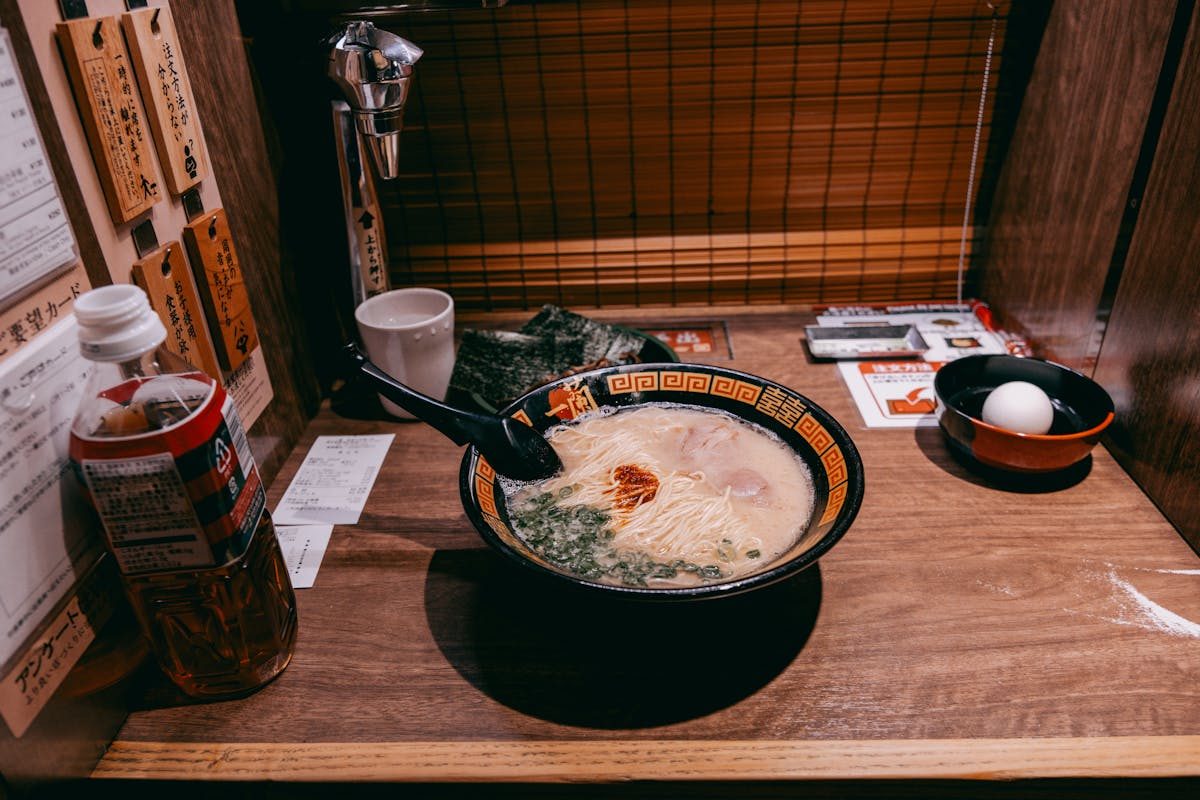
Ordering: Most Nagahama shops use a ticket machine by the door. Put money in, press the button for what you want, hand the ticket to staff when you sit down. No Japanese needed.
Noodle firmness: When you order, you can specify how firm you want your noodles — kata (firm), futsuu (normal), or yawa (soft). Start with kata. The noodles will soften in the broth anyway.
Combine with: Karatsu is about an hour from Fukuoka by train. The Hakata doll workshops are in the same part of the city. And if you are eating ramen on Nagahama Street, you are a short walk from the Naka River where the yatai stalls set up every evening.
Nagahama ramen is not pretty food. It comes in a plain bowl, in a plain room, from a cook who does not care whether you take a photo. But it is the original Fukuoka ramen — the version that came before the chains and the fame and the international branches. ¥500 and fifteen minutes is all it takes. You will not regret it.