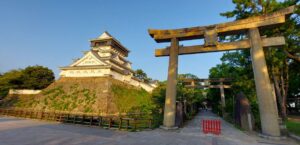
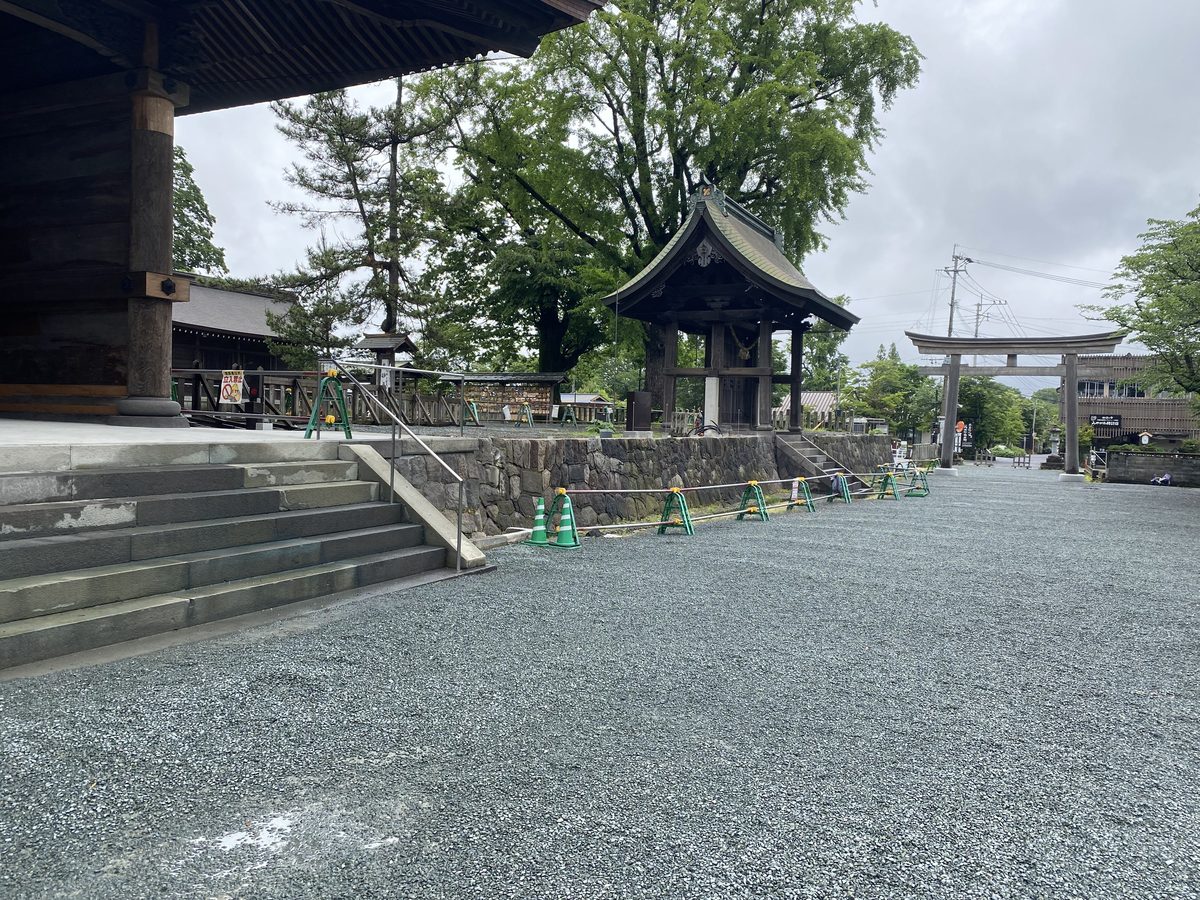
I visited Aso Shrine two years after the 2016 Kumamoto earthquake brought down its tower gate. Half the shrine was wrapped in scaffolding and construction barriers. Workers were carefully rebuilding the romon — a two-storey gate that had stood for almost 300 years before the quake toppled it in seconds.
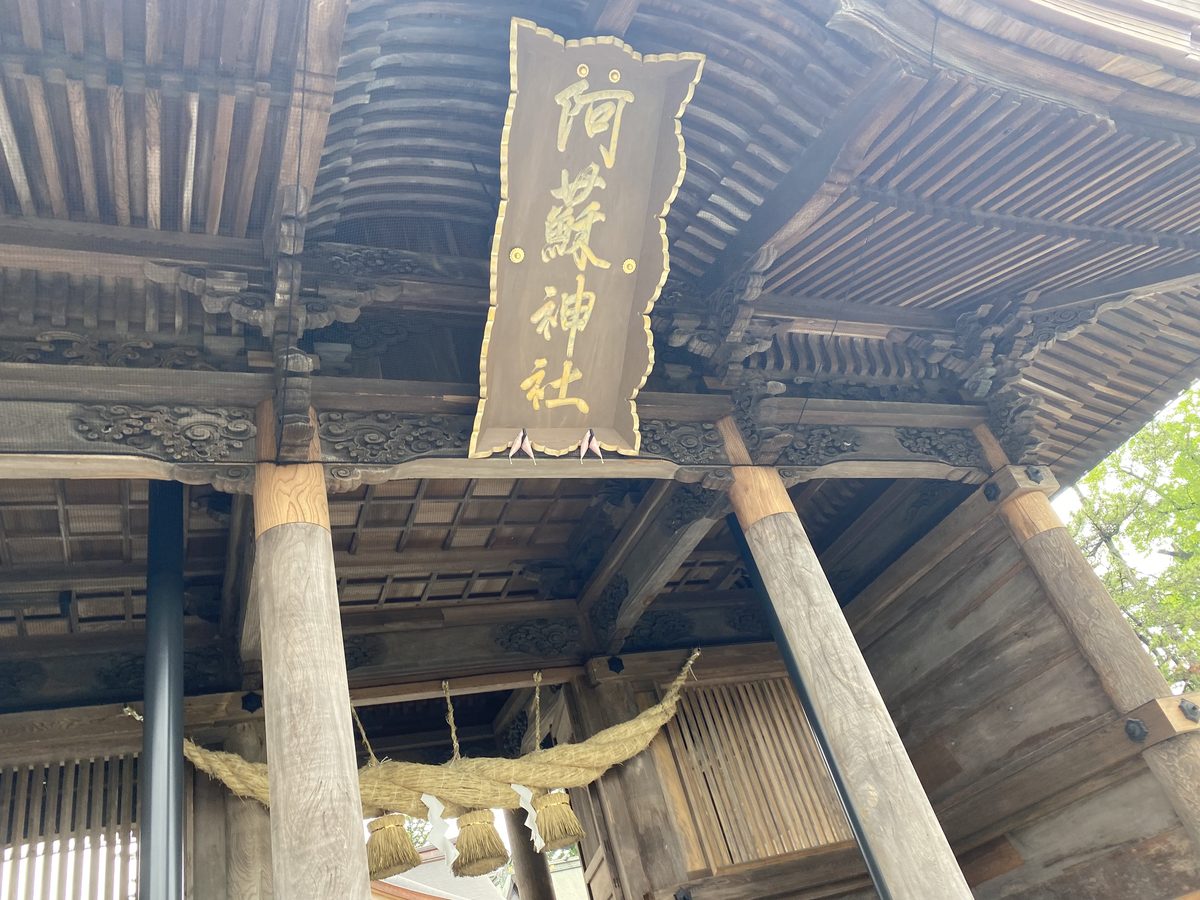
What struck me was not the damage. It was that the shrine was still open. People were still coming to pray, still tossing coins into the offering box, still buying charms at the little window next to the construction site. Aso Shrine has been here for over 2,000 years. An earthquake was not going to stop it.
One of Japan’s Oldest Shrines
Aso Shrine is not just old. According to tradition, it was founded in 281 BC — making it one of the oldest shrines in Japan. It sits at the foot of Mt Aso, right in the middle of the caldera, and it is dedicated to the deity Takeiwatatsu-no-Mikoto, the mythological grandson of the first emperor, Jimmu.
In practical terms, the shrine has been an important religious site in Kyushu for centuries. It heads a network of around 450 smaller shrines across the region, all connected to the worship of the Aso deities. During the Edo period, the shrine received patronage from the powerful Hosokawa clan who ruled Kumamoto.
The Earthquake and the Rebuild
The 2016 Kumamoto earthquakes were devastating for Aso Shrine. The romon (tower gate), which was one of only a few such gates in Japan and had been designated an Important Cultural Property, collapsed completely. The haiden (worship hall) was also severely damaged.
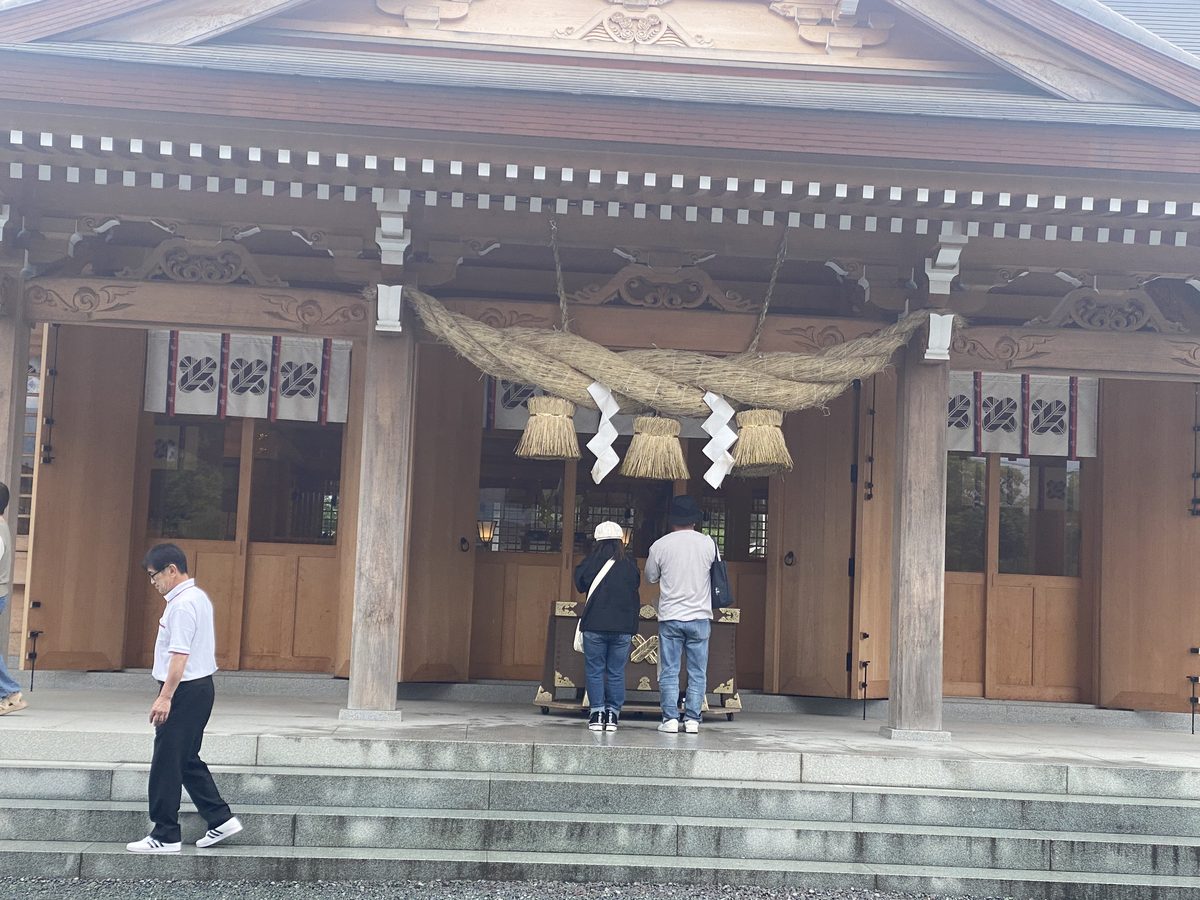
The rebuild has been a long, painstaking process using traditional construction techniques. The romon was fully restored and reopened in December 2023 — seven years after it fell. Watching the shrine slowly come back to life over the years has been one of the more quietly moving stories in Kyushu.
When you visit now, most of the restoration is complete. The new wood is lighter in colour than the old, and you can tell which parts are rebuilt. Give it a few decades of weathering and it will blend in.
Walking the Shrine Grounds
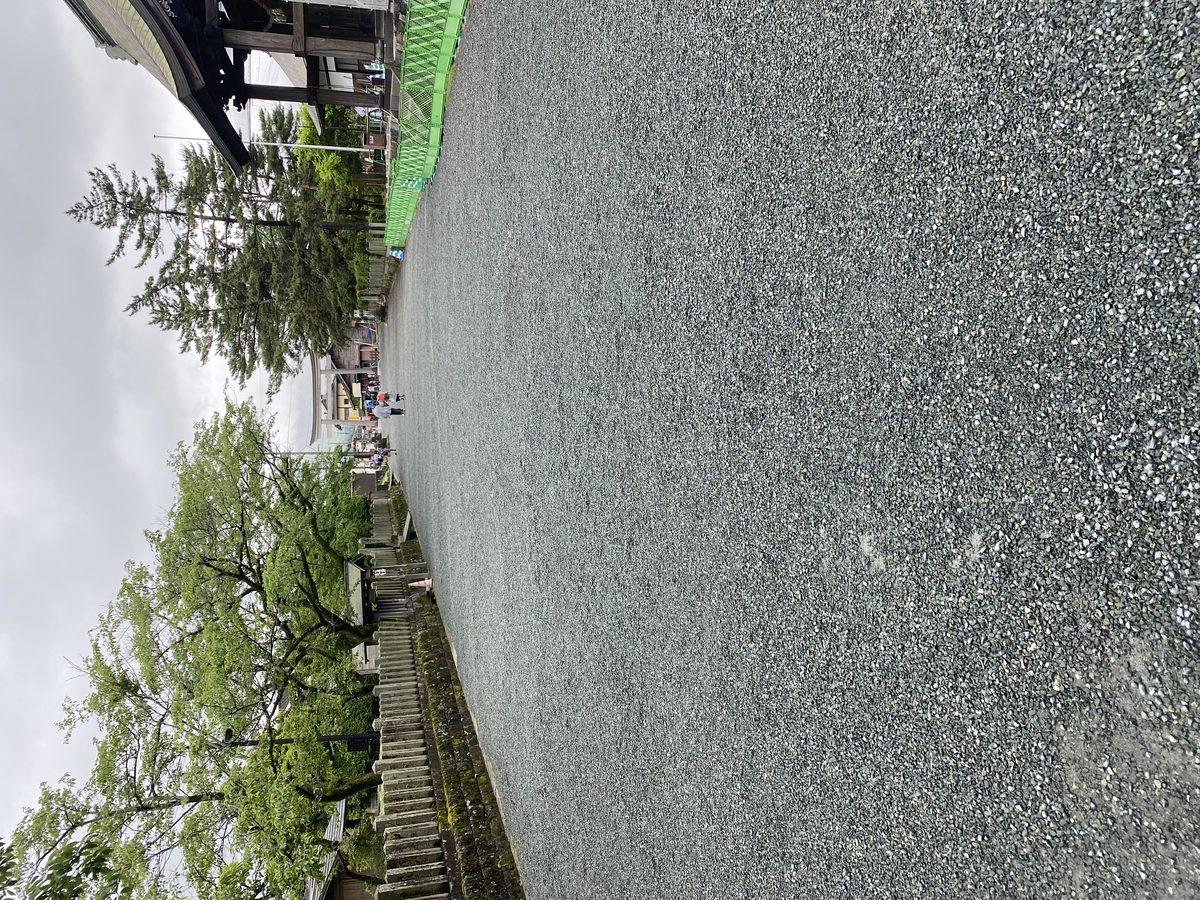
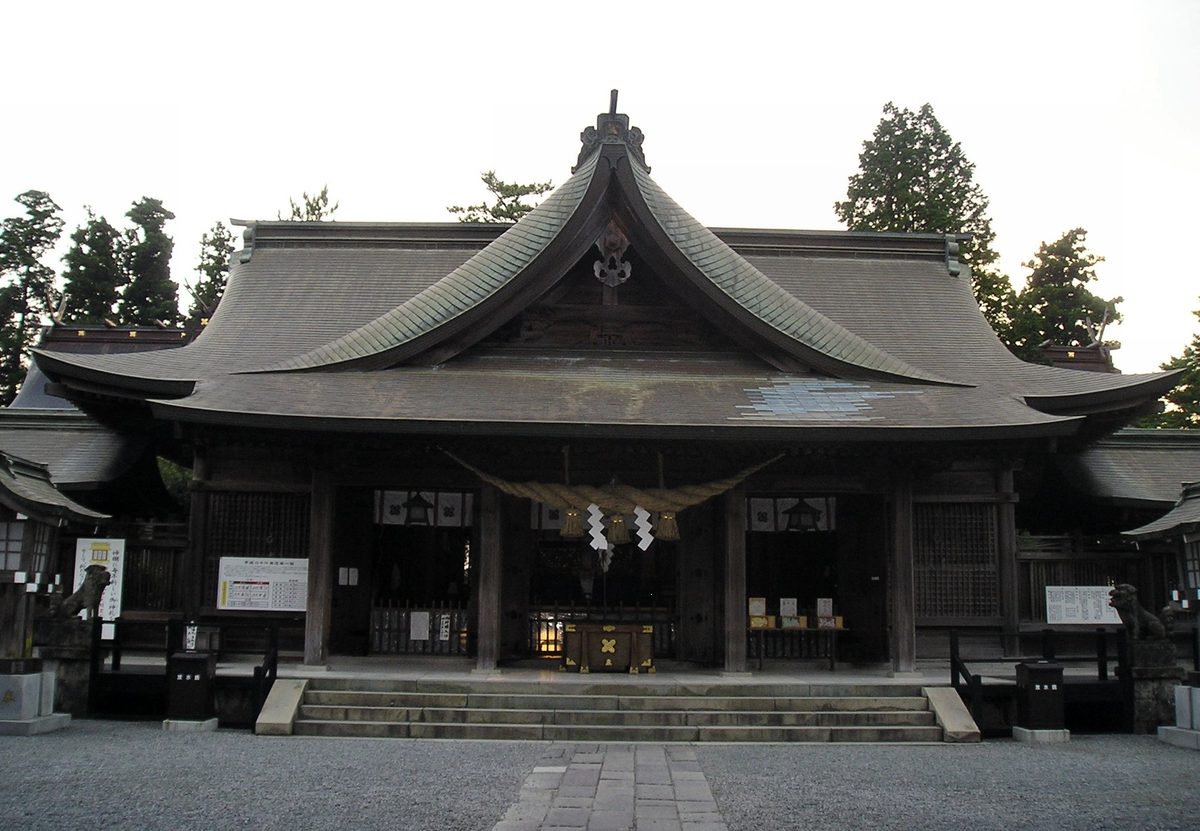
Aso Shrine is not a large complex. You can see everything in 20-30 minutes. But it rewards slow walking. The approach road from the small town has stone lanterns and old trees. The grounds themselves are compact — a central worship hall, the restored tower gate, some smaller subsidiary shrines, and a garden area.
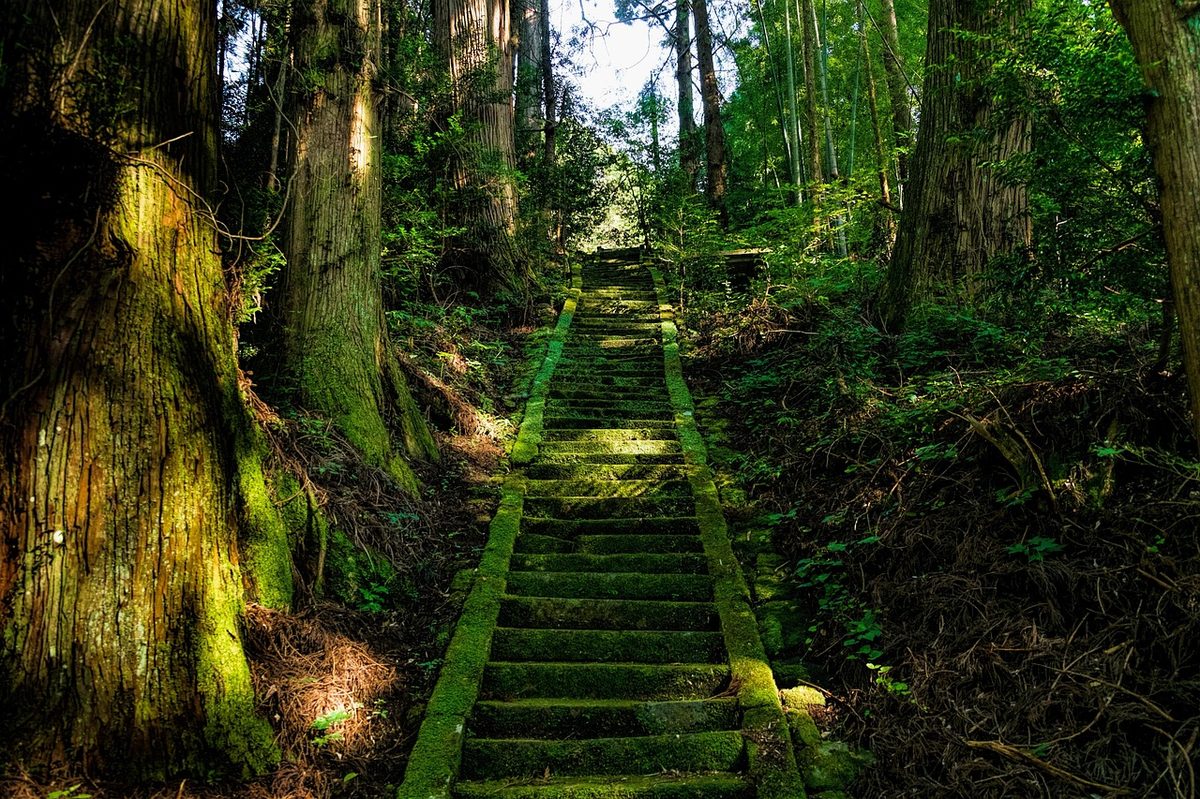
The side paths are where it gets interesting. There is a row of smaller torii gates leading through a wooded area that feels completely detached from the tourist trail. Moss on stone steps, light filtering through tall cedars, the sound of water somewhere you cannot quite see. This is the kind of shrine experience that makes you understand why Shinto is a religion of nature.
The Festivals
Aso Shrine hosts some of the most dramatic festivals in Kyushu, though you would need to time your visit carefully to catch them.
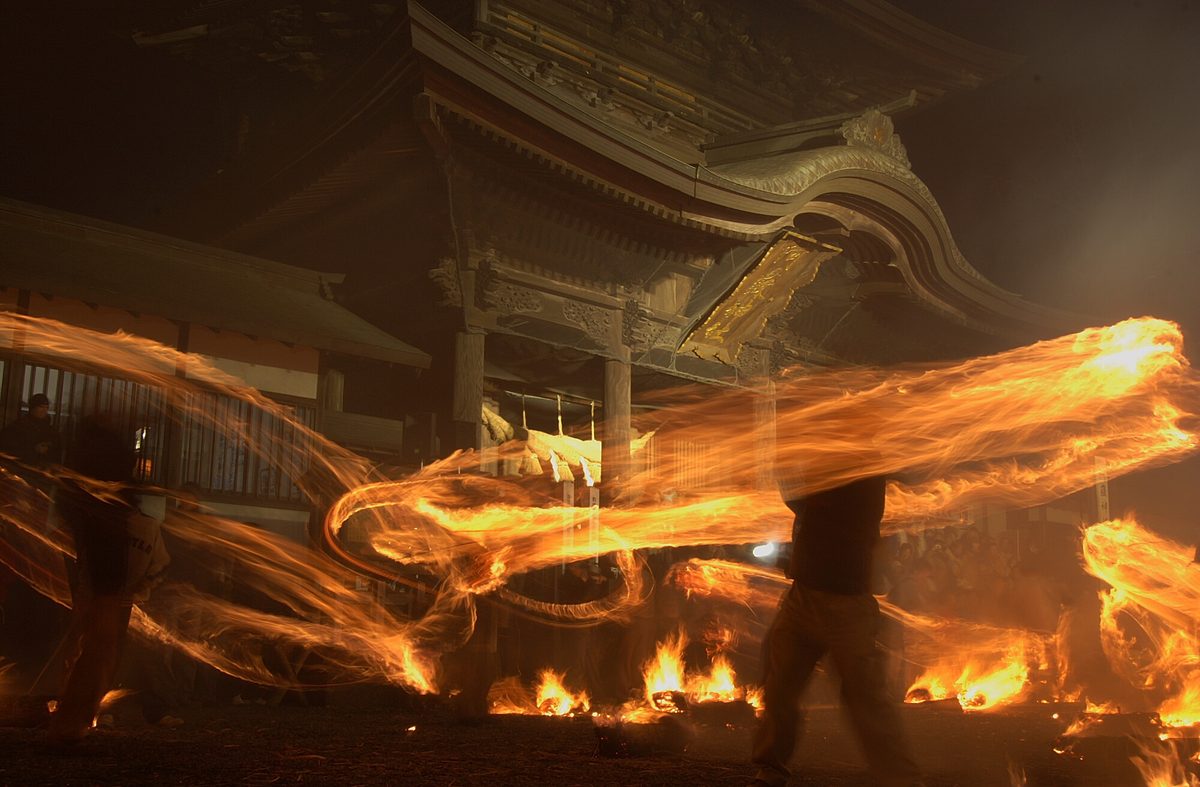
The most famous is the Onden Matsuri (rice field festival) in March, which includes the dramatic fire-swinging ceremony (hifuri-shinji). Participants swing burning bundles of straw in wide circles through the night, creating arcs of flame against the dark sky. It is one of the most visually striking shrine festivals in Japan.
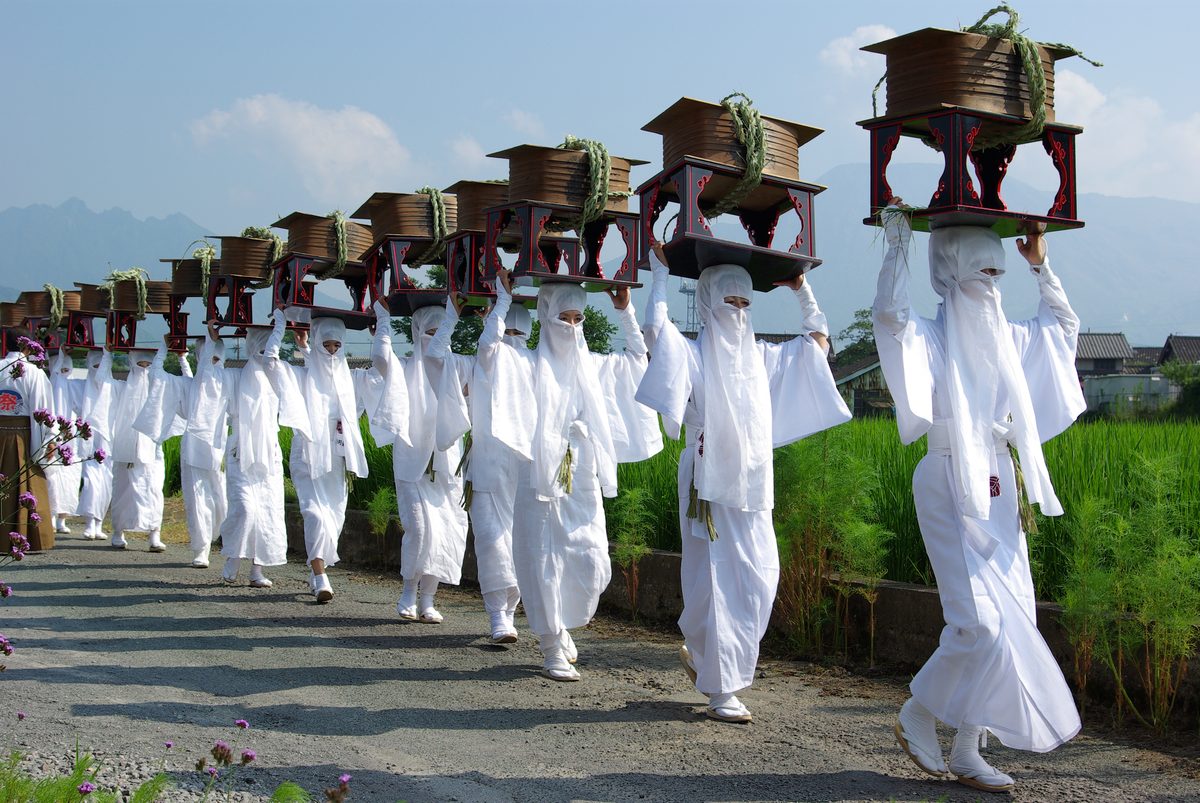
In July, there is a rice planting ceremony (otaue-matsuri) that connects the shrine to the agricultural life of the caldera. Aso’s farming communities have performed these rituals for centuries — praying to the volcano deity for good harvests and protection from eruptions.
The Shrine Street (Monzen-machi)
The small street in front of Aso Shrine — the monzen-machi or “temple town” — has a handful of shops and cafes that are worth a stop. There are a few places selling dango (rice dumplings), local pickles, and Aso milk products (the caldera grasslands are dairy country). Nothing touristy or overpriced — just a small Kyushu town going about its business next to a 2,000-year-old shrine.
Combining with Mt Aso
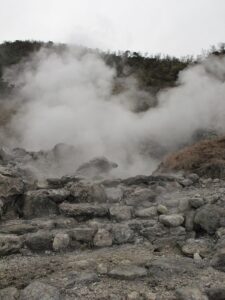
Most visitors combine Aso Shrine with a trip to the volcano. The shrine is in the town of Aso at the base of the caldera, about 15 minutes by car from the start of the road up to the Nakadake crater. If you are using public transport, JR Aso Station is a 15-minute walk from the shrine.
My suggestion: do the volcano in the morning when the weather is clearest and gas levels tend to be lowest, then come down to the shrine in the afternoon. The contrast is striking — from raw geological power to ancient spiritual calm in the space of a short drive.
Read my full guide to visiting Mt Aso and the Nakadake crater for practical details on getting to the volcano.
Visiting Details
Hours: Always open (shrine grounds). The office selling charms and stamps is open roughly 9:00 AM to 5:00 PM.
Admission: Free.
Time needed: 20-30 minutes for the shrine itself. Add 15-20 minutes if you want to explore the monzen-machi street.
Getting there: 15-minute walk from JR Aso Station. By car, there is a small free parking area near the shrine entrance.
Tips
- Combine with Mt Aso — volcano in the morning, shrine in the afternoon.
- The fire festival in March and rice planting in July are worth planning a trip around if you can.
- The shrine stamp (goshuin) is popular with collectors — available at the office window.
- The monzen-machi street has good dango and Aso milk soft-serve ice cream.
- Check the restoration status if visiting before 2025 — some buildings may still be under repair.