I had no idea what was happening. Thirteen people in silk robes were sitting on red felt mats beside a narrow stream in a garden, writing furiously on strips of paper. Plum blossoms were falling into the water. A wooden sake cup was floating downstream on a tiny board, drifting lazily toward a woman in a twelve-layered kimono. She finished her poem just in time, picked up the cup, and drank.
In This Article
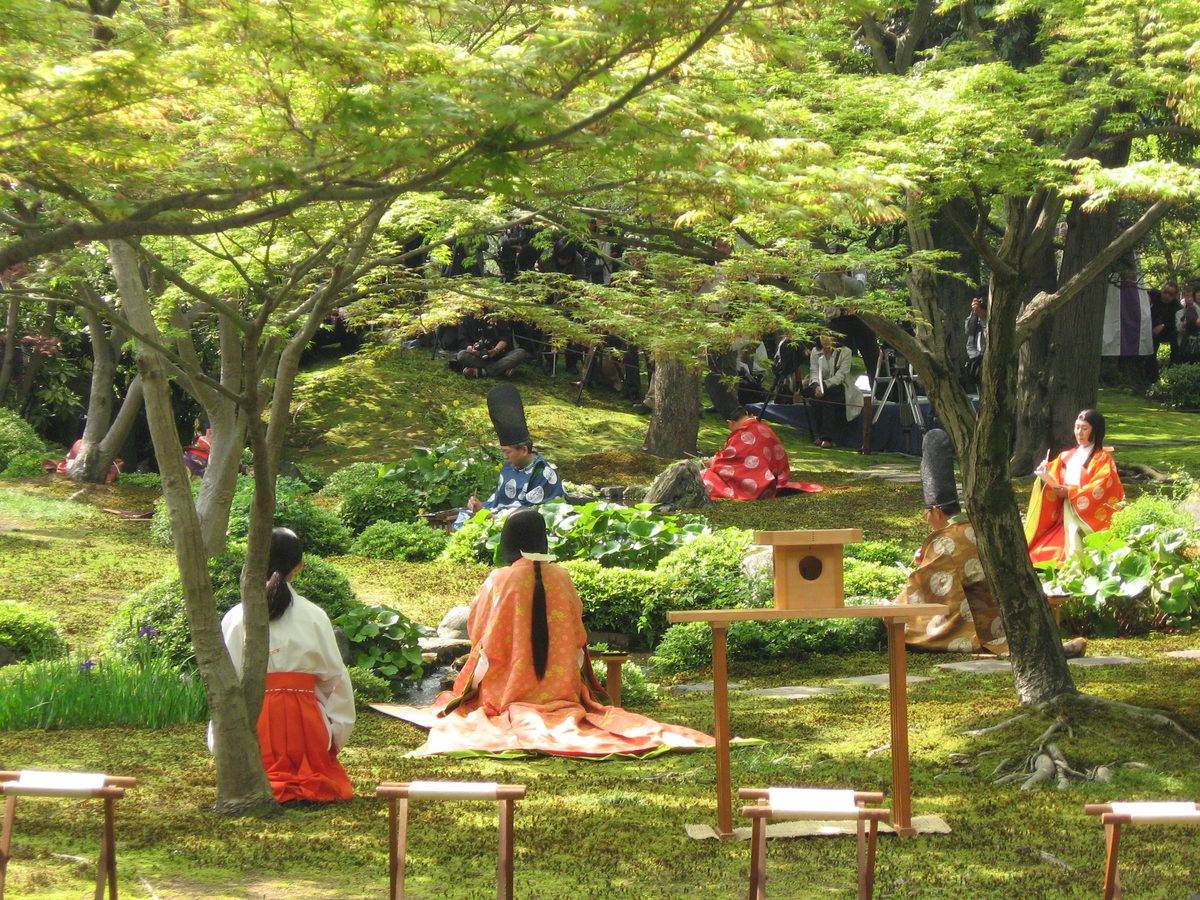
This is the Kyokusui-no-en, and it has been happening at Dazaifu Tenmangu shrine in Fukuoka Prefecture since 958 AD. The ceremony is a reenactment of something that court nobles in Kyoto used to do for fun during the Heian period — a poetry party with a drinking game built in. Over a thousand years later, it still happens every year on the first Sunday of March, when the plum trees around the shrine are at their peak.
What Is Kyokusui-no-en?
The name translates roughly as “meandering stream ceremony.” The concept is straightforward but the execution takes serious skill. Poets sit along the banks of a curved stream that runs through a landscaped garden. An attendant places a sake cup on a small floating board at the top of the stream and releases it. Before the cup reaches you, you have to compose a waka poem — a specific Japanese poetic form with strict syllable rules — on the announced theme, write it in calligraphy on a tanzaku strip of paper, and then drink from the cup when it arrives.
If that sounds stressful, it was supposed to be. The original Heian-era version was partly about composing beautiful poetry but also about purification — the act of creating something under pressure while water flows past you was believed to cleanse evil spirits from the body and soul. The drinking was medicinal too. This was not a casual afternoon.
The poets dress in full Heian-era court attire. The women wear junihitoe — the famous twelve-layered robes that weigh about twenty kilograms and take two assistants to put on. The men wear ikan, the formal court dress of Heian-era government officials. Children in matching period costume serve as attendants, carrying the tanzaku strips and serving sake. The whole thing looks like a scene from a historical painting brought to life.
The Garden at Dazaifu Tenmangu
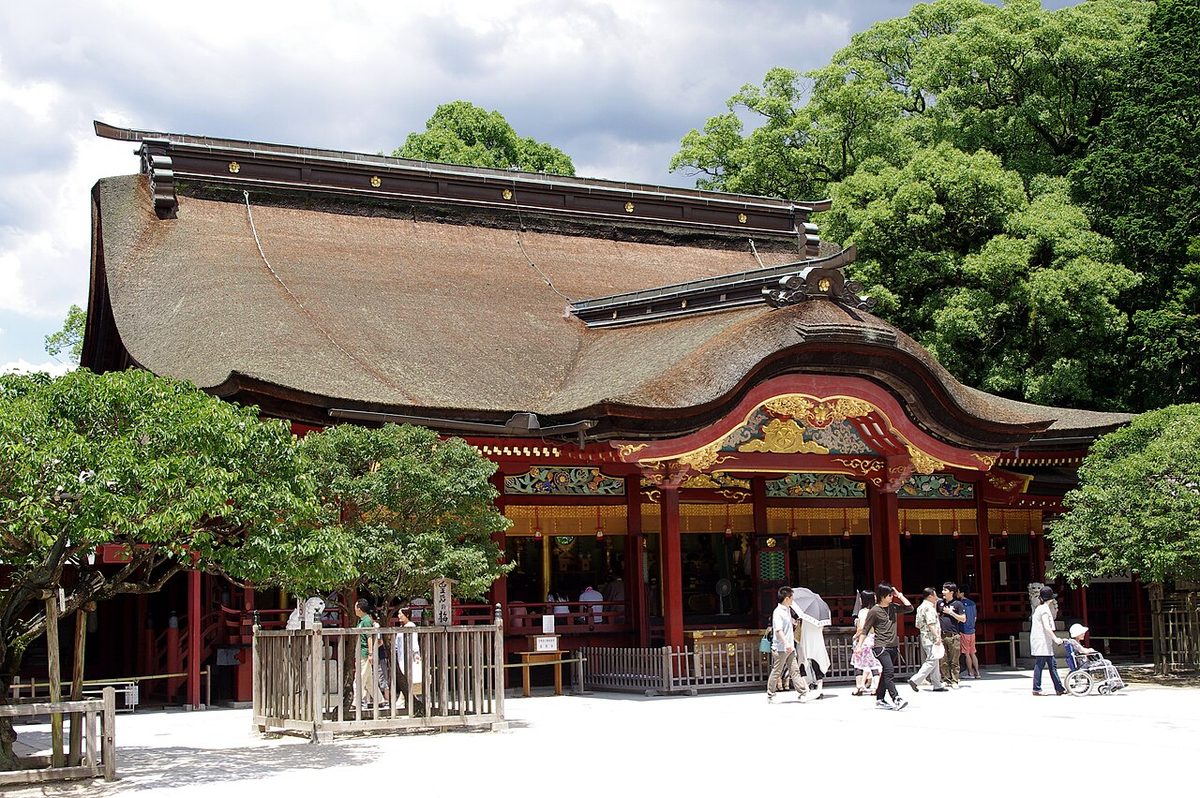
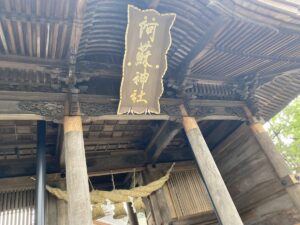
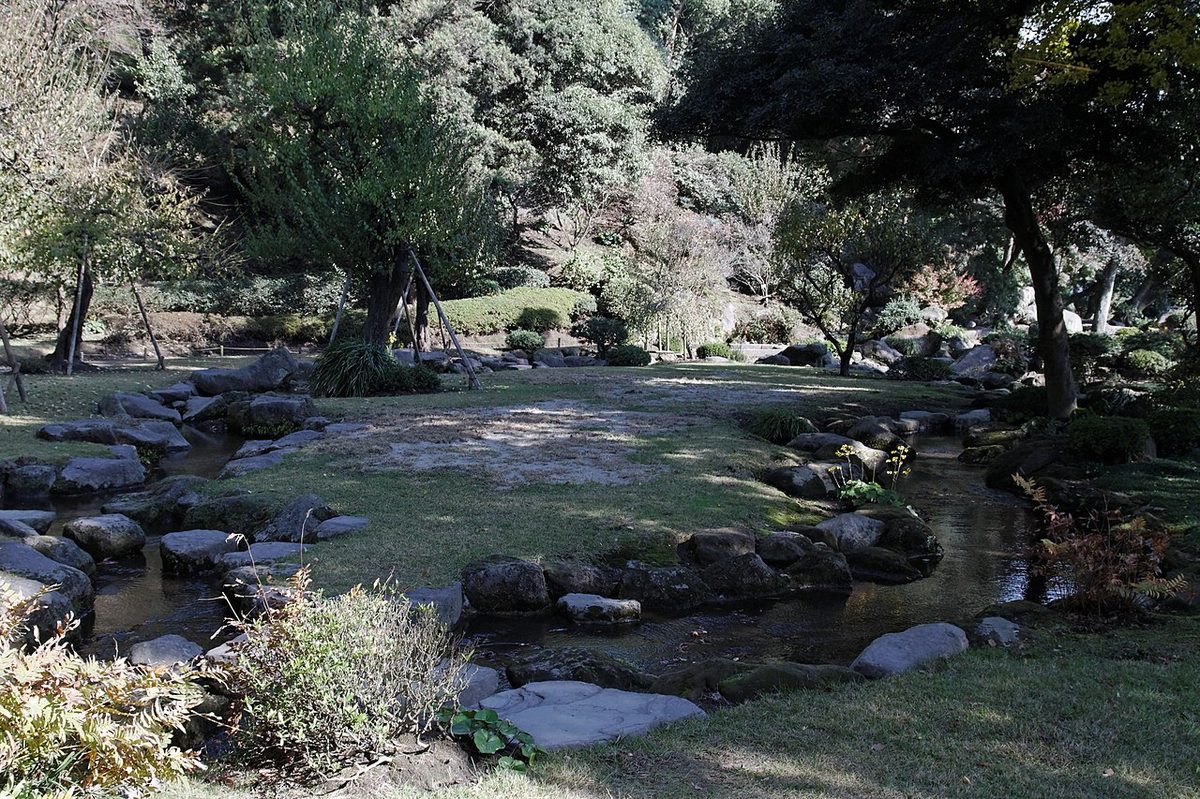
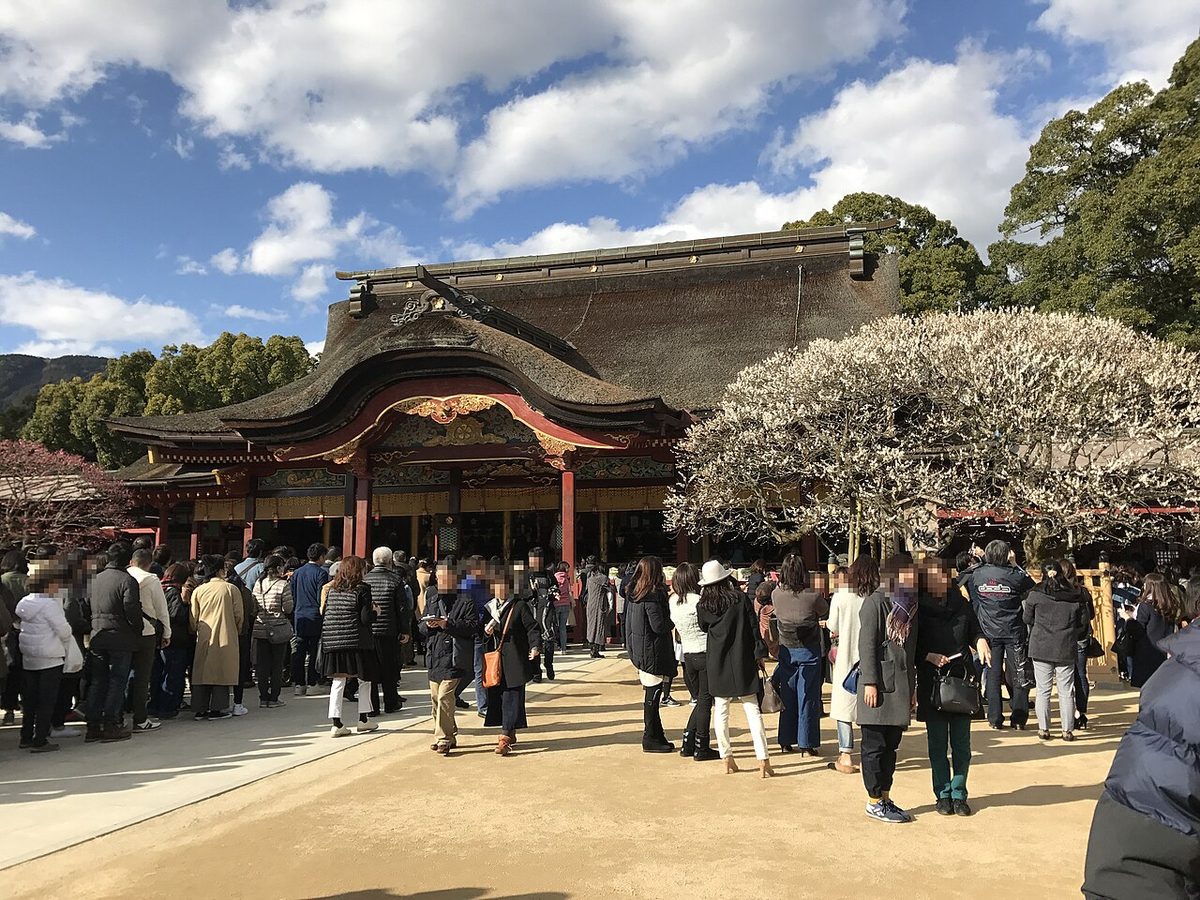
The Kyokusui Garden is on the east side of the main sanctuary at Dazaifu Tenmangu. The shrine itself is one of the most visited in all of Kyushu — about eight million people come through every year, most of them students praying for exam success. But the garden where the ceremony happens is a quieter corner of the grounds, tucked behind the main hall where most visitors do not go.
The present-day garden was rebuilt in the late 1970s. Water was drawn from the forested hills behind the shrine to feed the meandering stream, and the landscaping was designed specifically to recreate the kind of garden where Heian nobles would have held the original ceremony. It is a beautiful space even when nothing is happening there — smooth stones, carefully shaped banks, old trees leaning over the water.
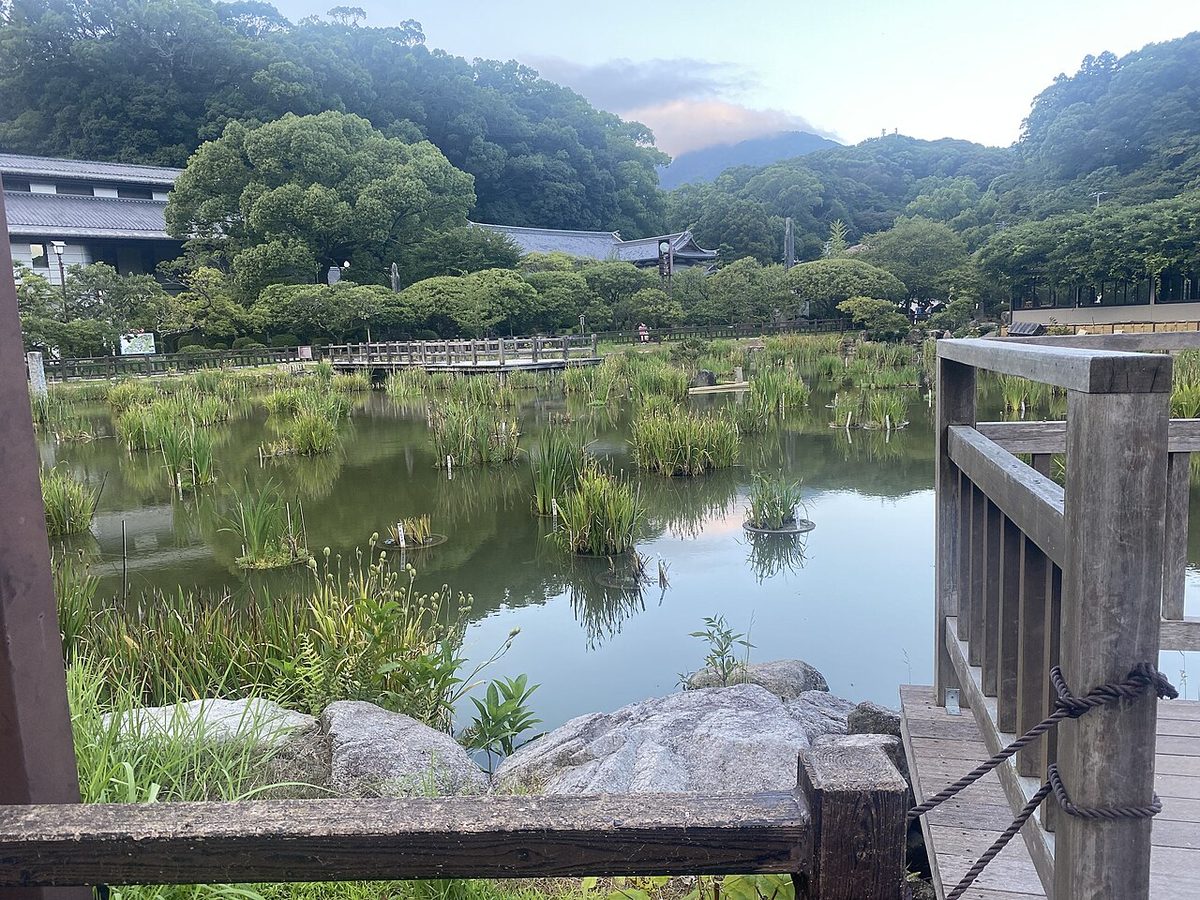
The whole garden complex at Dazaifu is called Byozen Teien, the Mausoleum Garden. It exists because of one man and one very old grudge.
Sugawara Michizane — The Man Behind the Shrine
You cannot understand the Kyokusui-no-en without knowing who Sugawara Michizane was. And his story is one of the strangest in Japanese history.
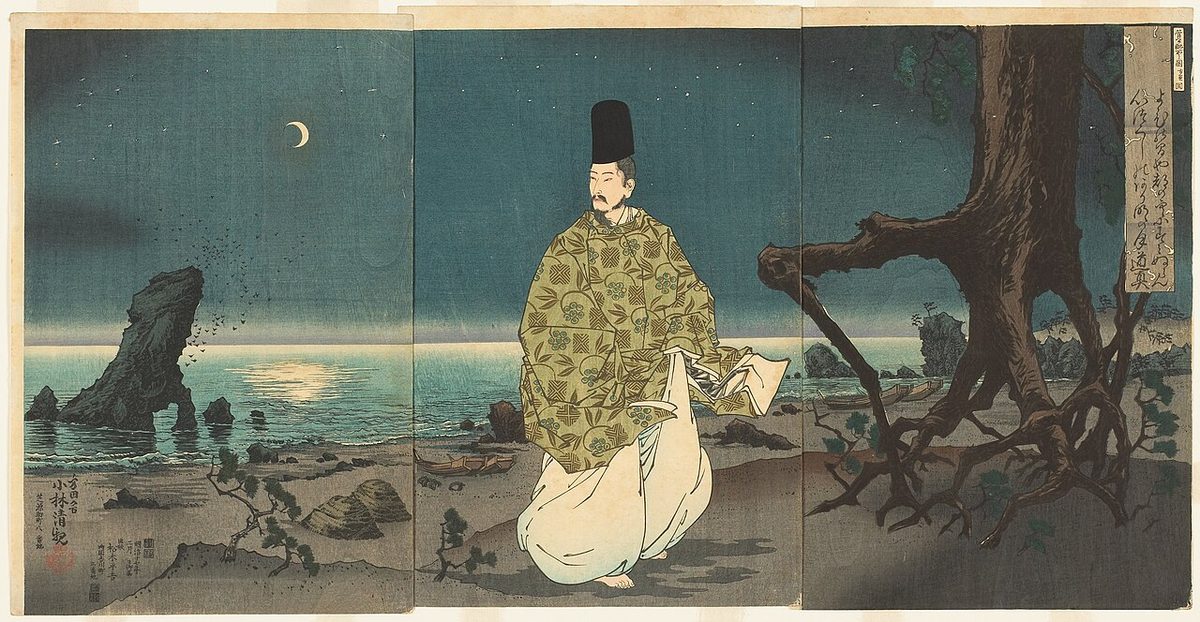
Michizane was born in 845 into a family of scholars. He rose to become one of the highest-ranking ministers at the Imperial Court in Kyoto — a remarkable achievement for someone who was not from one of the traditional ruling families. He was also one of the finest poets of his generation. His poems are still studied today, and one of his waka appears in the Hyakunin Isshu, the famous anthology of one hundred poems that Japanese schoolchildren still memorise.
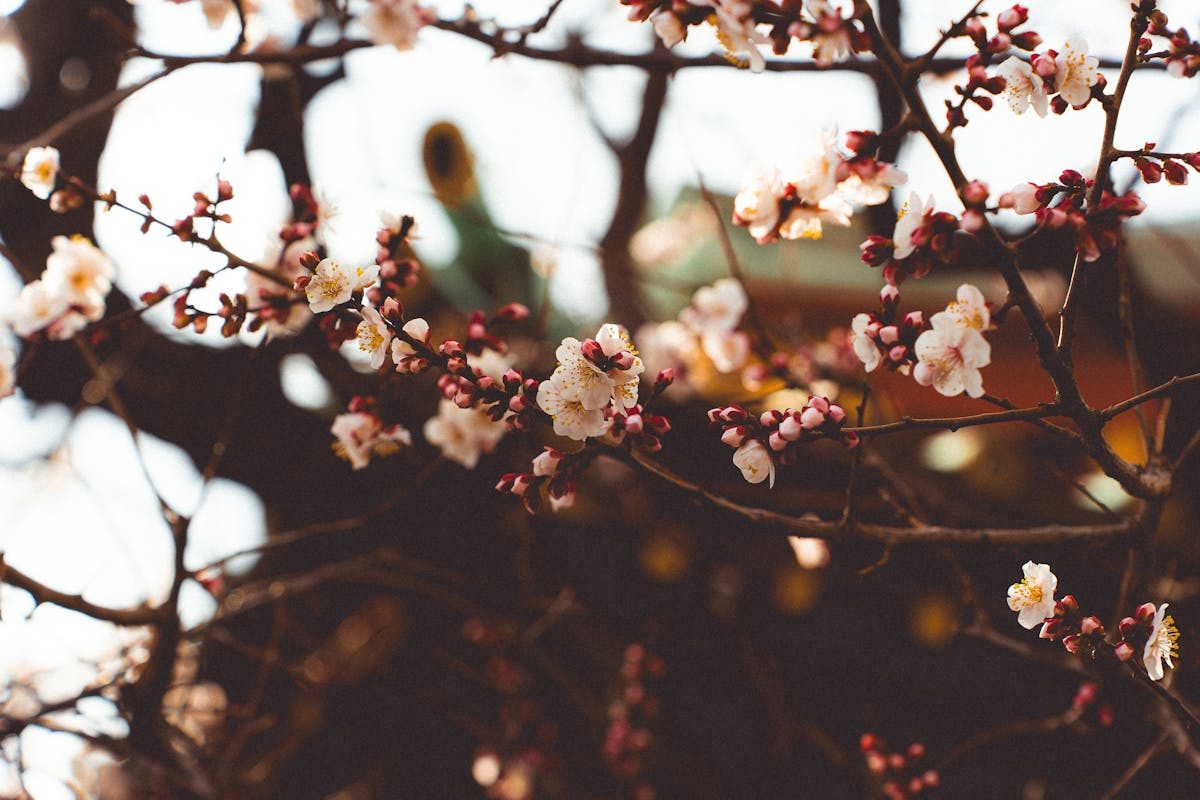
His most famous poem is about plum blossoms. When he was forced to leave Kyoto, he wrote to the plum tree in his garden: “When the east wind blows, send your fragrance to me, plum blossoms. Do not forget spring, even though your master is gone.” According to legend, the tree uprooted itself and flew to Dazaifu to be near him. A plum tree at the shrine today is said to be that very tree — the tobiume, the “flying plum.”
In 901, his political enemies — the powerful Fujiwara clan — accused him of plotting to overthrow the emperor. The charges were fabricated. Michizane was stripped of his rank and exiled to Dazaifu, which at the time was essentially the end of the known world. He lived here for two years in poverty and grief, and died in 903.
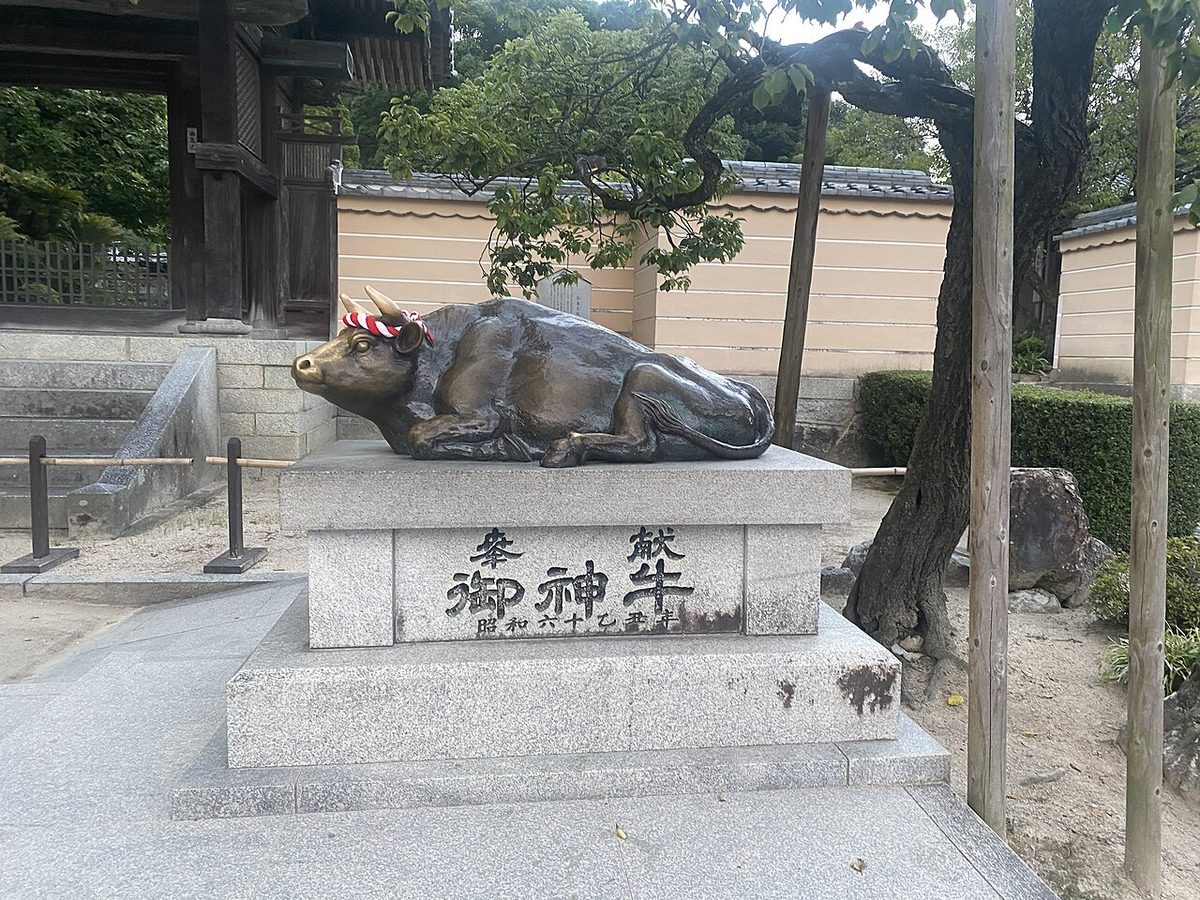
Then things got strange. After his death, Kyoto was hit by a series of disasters — plague, lightning strikes on the Imperial Palace, floods, the deaths of several of his accusers. The court became convinced that Michizane’s angry spirit was taking revenge. To appease him, they posthumously restored all his ranks and titles, and eventually promoted him to the highest position in the court — making him more powerful in death than he ever was in life. The shrine at Dazaifu was built over his grave, and he was deified as Tenjin, the god of learning.
That is why millions of students visit this shrine before exams. They are praying to a man who was destroyed by a corrupt system, died in exile, and then terrified an entire government into worship.
Attending the Ceremony
The Kyokusui-no-en at Dazaifu Tenmangu takes place on the first Sunday in March every year. It was cancelled in 2020 and 2021 due to COVID but has been running again since 2022. The timing is deliberate — early March is when the plum blossoms around the shrine are in full bloom, and the whole ceremony is themed around plum blossoms. The announced poetry topic is always related to plum blossoms.
The ceremony begins with a traditional dance performance. After that, the poets take their positions along the stream. The whole thing lasts about an hour. It is free to watch, but the garden area fills up fast. Get there early — by 10am at the latest — or you will be watching through a crowd of heads.
One thing that surprised me was the sound. Or rather, the lack of it. A thousand people are watching, but nobody talks during the poetry composition. You hear the water, the rustle of silk, the scratch of brush on paper. Then applause when a poet finishes in time. There is something genuinely moving about watching someone create art under pressure in absolute silence, wearing clothes that have not changed in a thousand years.
Getting to Dazaifu Tenmangu
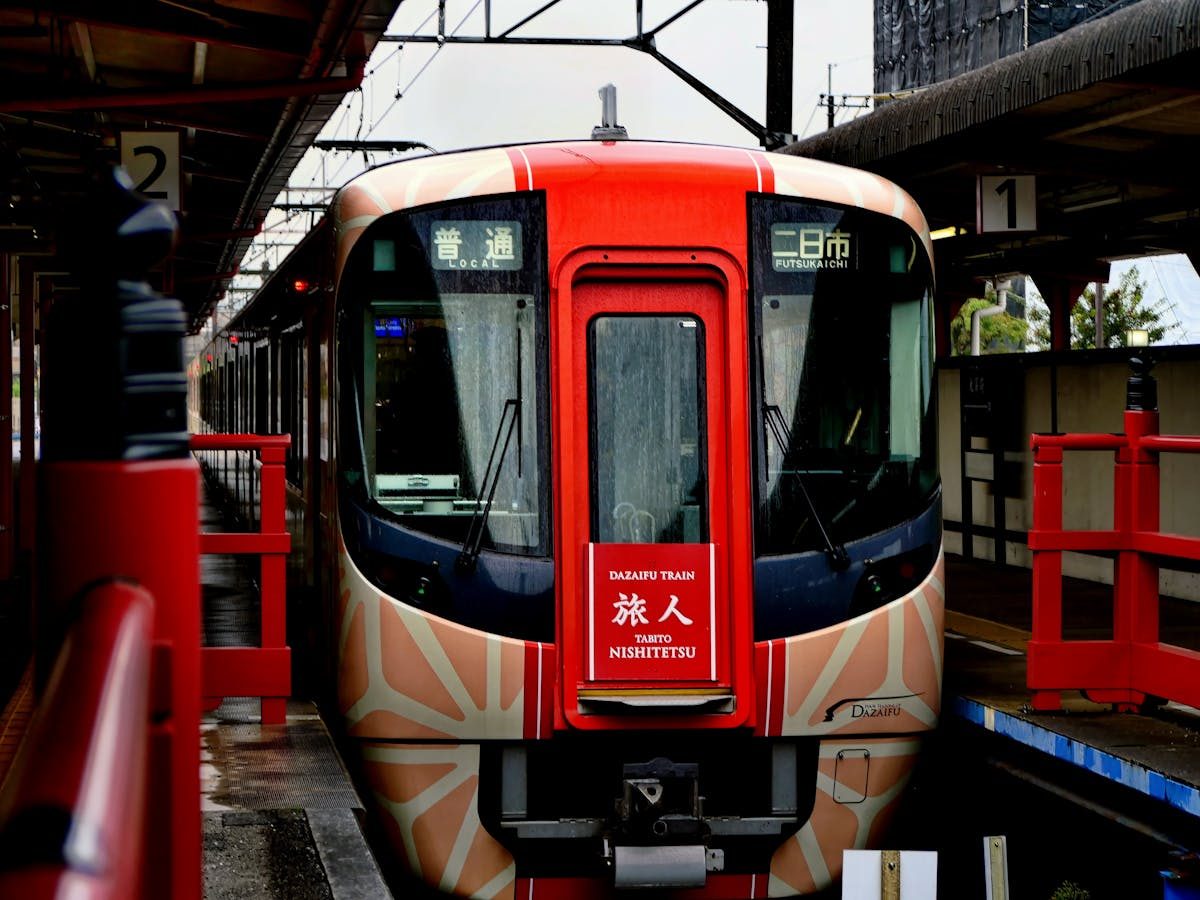
Dazaifu is about 40 minutes from central Fukuoka by train. Take the Nishitetsu line from Tenjin Station to Futsukaichi, then change to the Dazaifu branch line. The branch line is only two stops and the trains are sometimes decorated in shrine-themed livery. From Dazaifu station, it is a straight 10-minute walk through a covered shopping street directly to the shrine entrance.
You can also take the JR line to Futsukaichi Station, but the Nishitetsu route is more direct and drops you closer to the shrine. If you are coming from Hakata Station, it is faster to take the subway to Tenjin first and then switch to Nishitetsu.
If you are driving, there is parking near the shrine but it fills up quickly on ceremony day. The train is the better option.
The Shrine Grounds
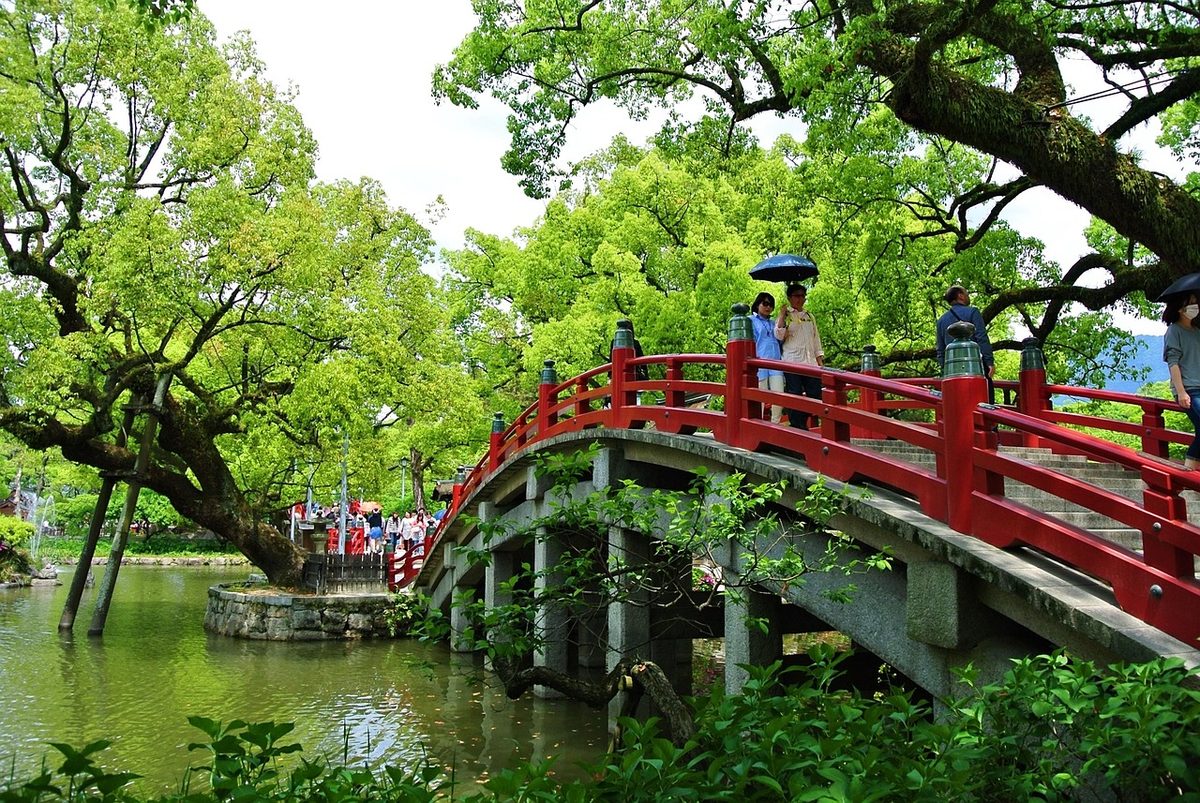
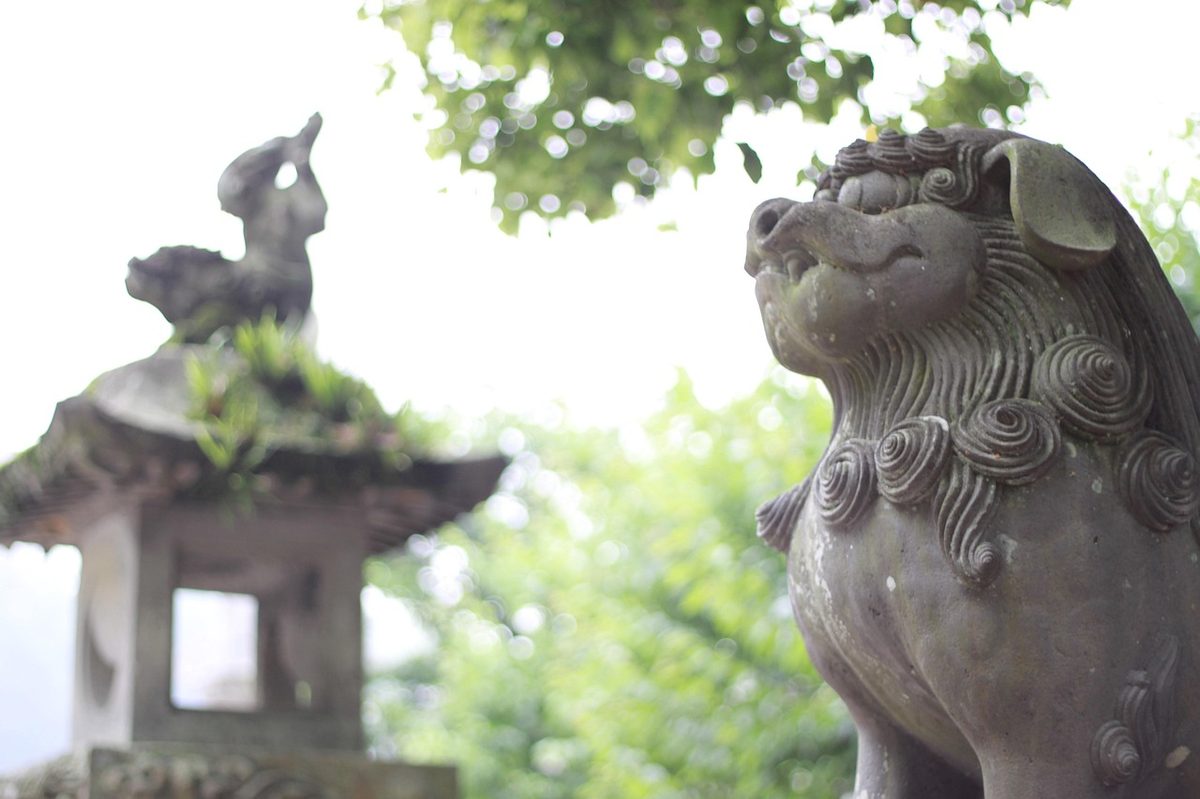
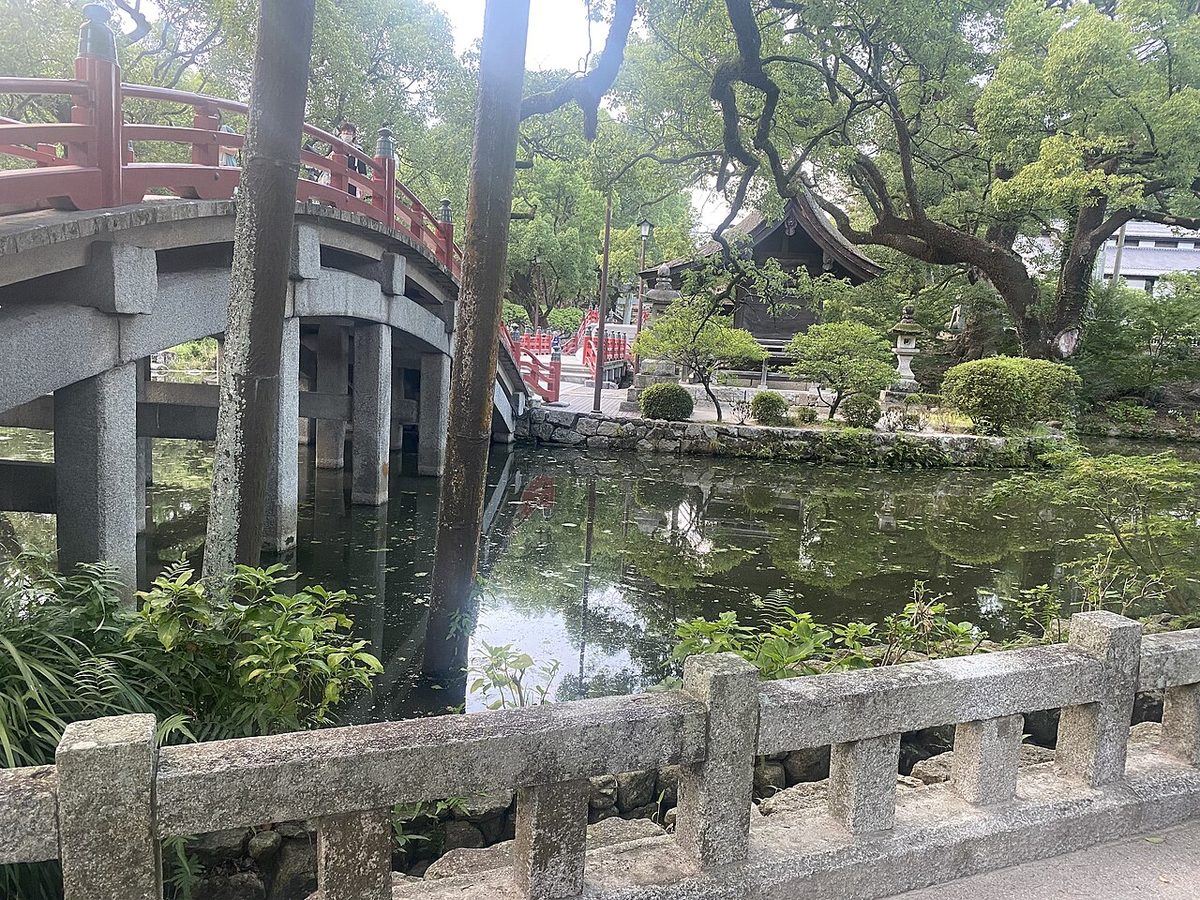
Even if you cannot time your visit for the ceremony, Dazaifu Tenmangu is worth a visit on its own. The approach to the main hall takes you over three arched bridges spanning a large pond filled with lotus and koi. The bridges represent the past, present, and future — tradition says you should cross them without looking back.
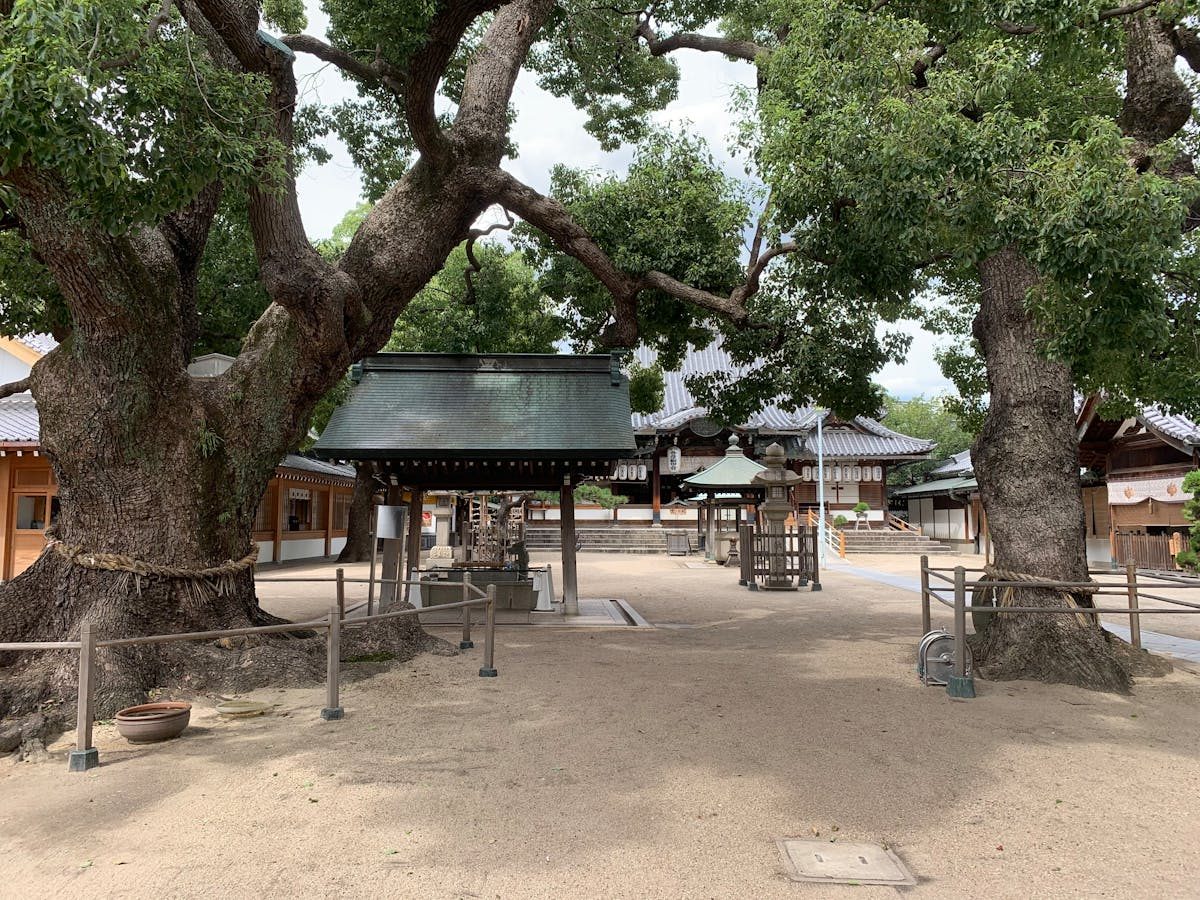
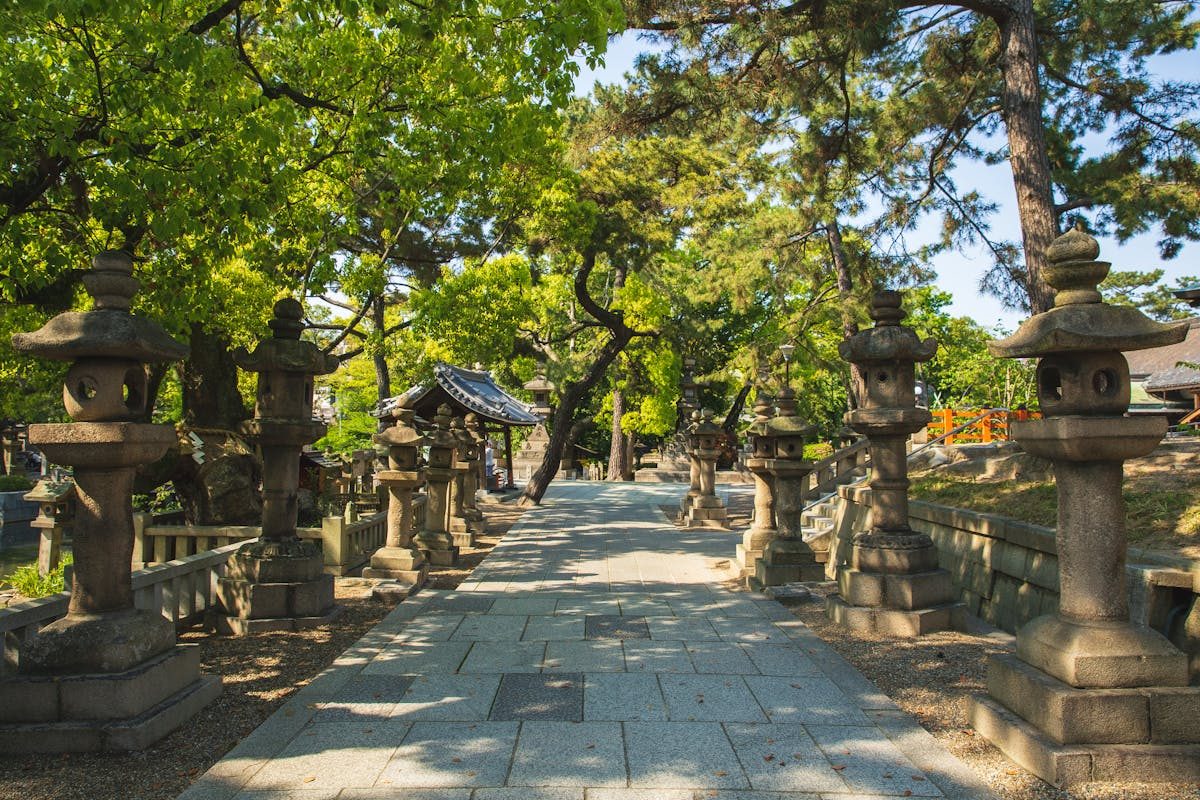
The grounds are massive. Behind the main hall, the paths wind through forests of camphor trees — some of them over a thousand years old. There are smaller sub-shrines, a treasure house with historical artefacts, and the Kyushu National Museum is just a short walk through the forest from the back of the shrine. You could easily spend half a day here.
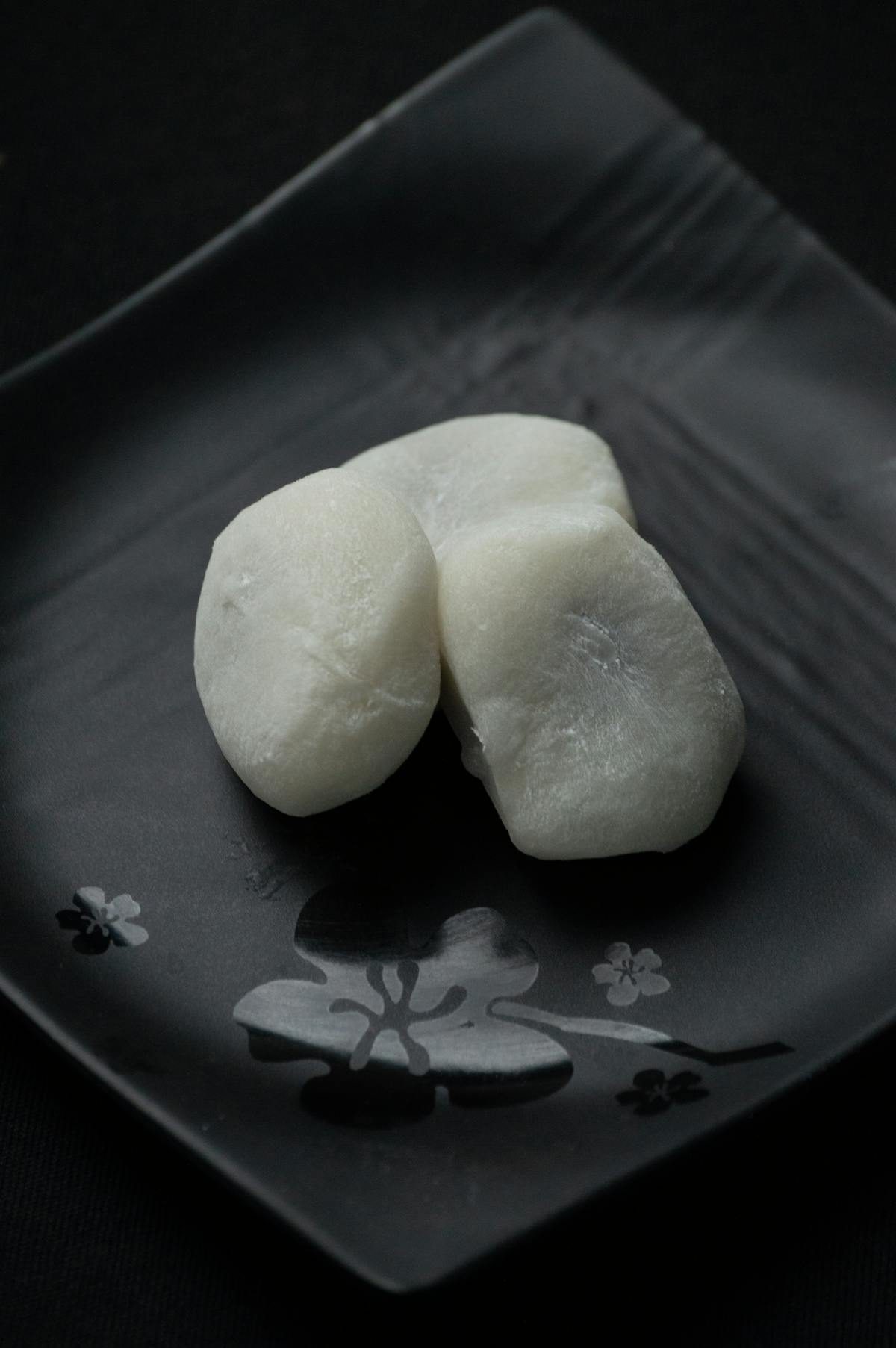
The shopping street between the station and the shrine is lined with mochi shops selling umegae mochi — grilled rice cakes with red bean paste, stamped with a plum blossom design. They have been selling these here since the Kamakura period. At about ¥130 each they are worth trying, and eating one warm from the grill while walking toward the shrine is one of those small perfect moments that travel is supposed to be about.
Other Kyokusui-no-en Ceremonies in Kyushu
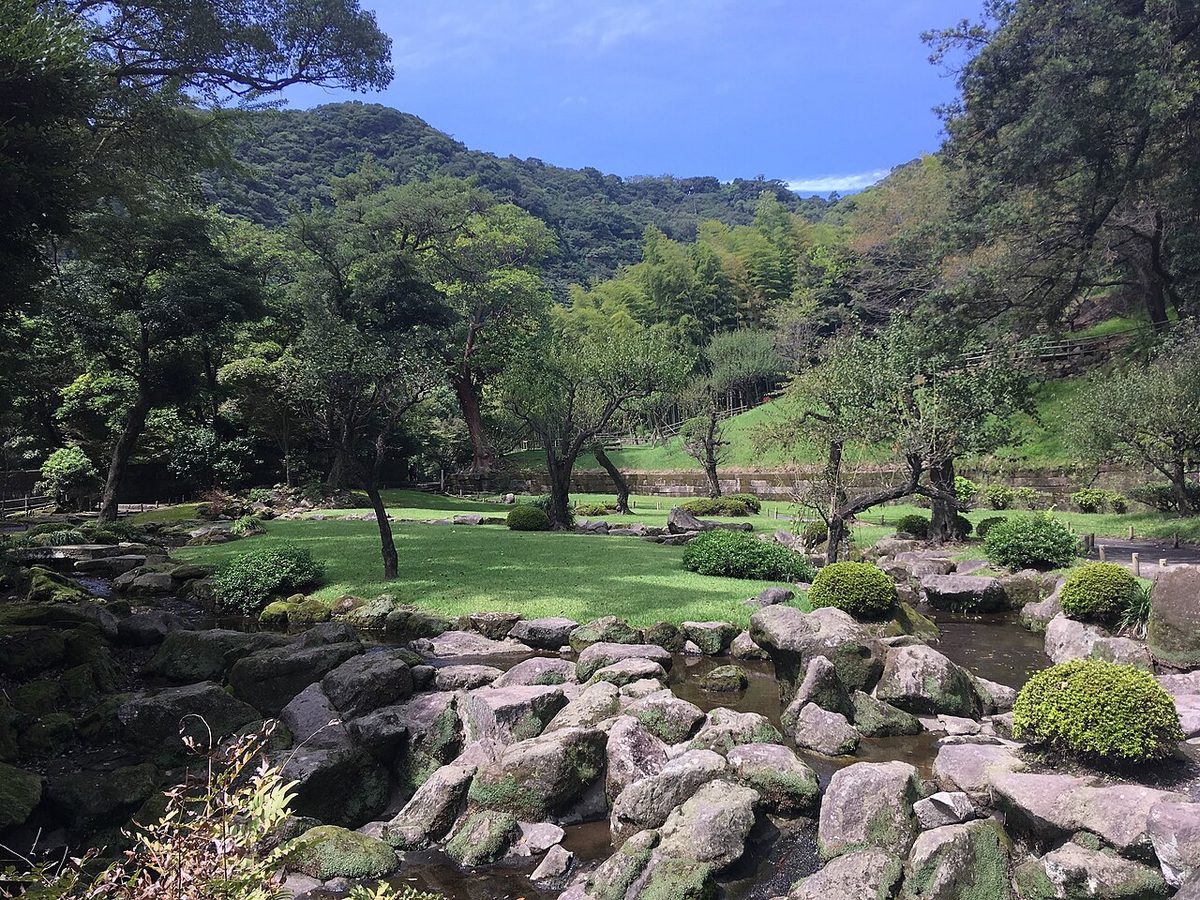
Dazaifu is not the only place in Kyushu where you can see this ceremony. Sengan-en garden in Kagoshima, the former villa of the Shimazu clan, also has a Kyokusui garden with its own version of the ceremony. The Sengan-en garden is smaller and more intimate than Dazaifu, and the backdrop — with Sakurajima volcano smoking across the bay — is hard to beat.
If you are interested in the poetry aspect rather than the spectacle, look for smaller versions of the ceremony at shrines around Kyushu in spring. Several Tenmangu shrines hold their own Kyokusui-no-en, though the Dazaifu version is by far the largest and most elaborate.
Practical Information
When: First Sunday of March, every year. The ceremony starts in the late morning — arrive by 10am for a good viewing position.
Where: Kyokusui Garden, east side of the main hall, Dazaifu Tenmangu. The garden is behind the main sanctuary — follow signs for the Kyokusui-no-en on ceremony day.
Cost: Free to watch. The shrine grounds are free to enter year-round.
Getting there: Nishitetsu train from Tenjin (Fukuoka) to Dazaifu, about 40 minutes with one transfer at Futsukaichi. 10-minute walk from the station.
How long: The ceremony lasts about an hour. Allow 2-3 hours total for the shrine grounds, museum, and the shopping street.
If you miss it: The Kyokusui Garden is open year-round and worth visiting even without the ceremony. The stream, the landscaping, and the quiet are the point — the ceremony just brings it all to life one day a year.
The Kyokusui-no-en is one of those rare events where you are watching something that has been done in more or less the same way, in more or less the same place, for over a thousand years. The costumes are the same. The poetry form is the same. The plum blossoms are the same. The only thing that has changed is that Michizane is no longer alive to watch — but given his track record, I would not be entirely surprised if he was.